The journal
Should I let my cat knead my blanket?
Clear, practical advice on when it’s fine to let your cat knead your blanket, quick safety checks, simple fabric protection and gentle redirection.
Short answer
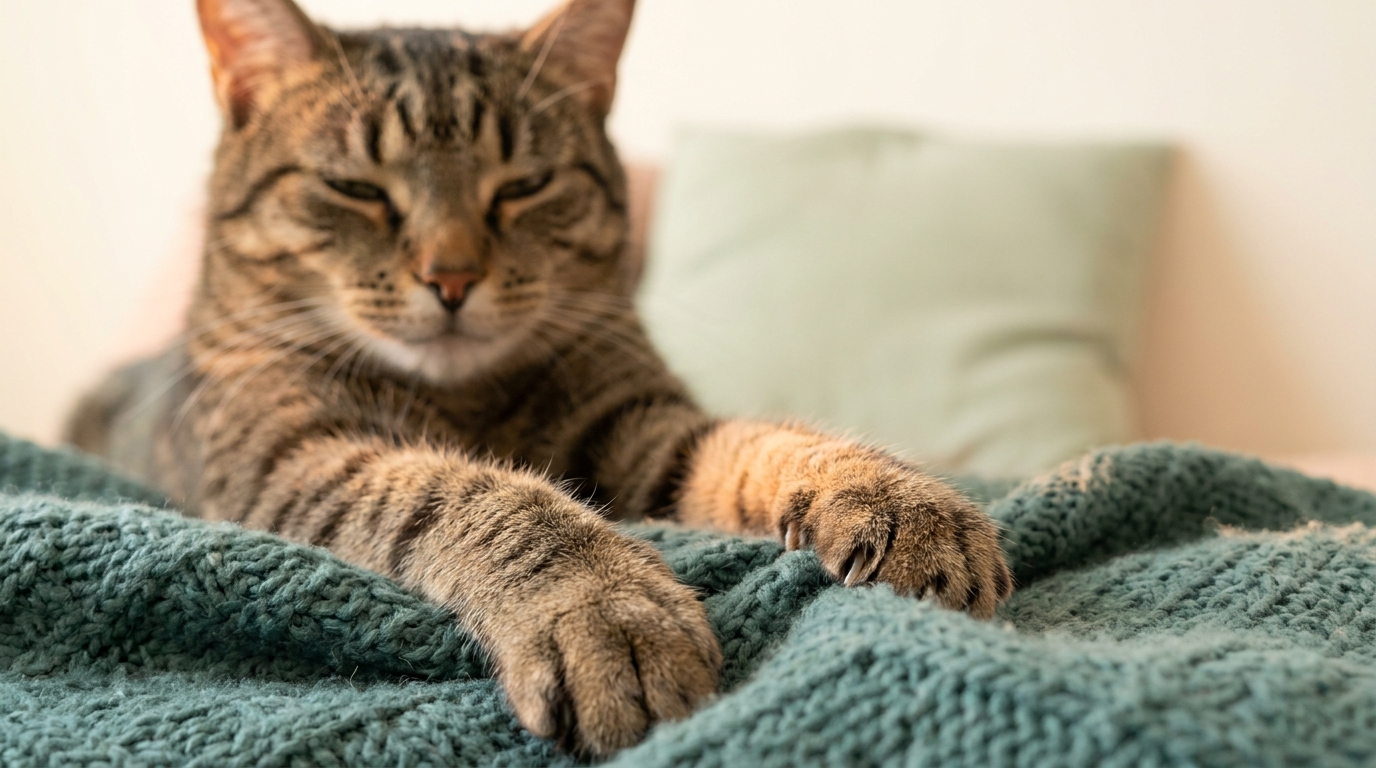
Yes, in most homes it’s fine to let your cat knead your blanket once you’ve checked there are no loose threads or bits that could snag or be swallowed. Kneading is a normal behavior many cats carry from kittenhood and often signals relaxation and comfort PetMD International Cat Care.
What kneading is and why cats do it
Kneading is the rhythmic in-and-out motion of the paws on a soft surface, sometimes with purring, drooling or a glazed, relaxed look. It commonly persists from kittenhood, when kittens knead while nursing, and it likely continues in adulthood because it feels calming. Cats may also knead to settle a resting spot and to leave their scent via glands in their paws, which helps them feel secure. Some females may knead more when in heat PetMD Purina guide Sheba guide International Cat Care.
Decision points: let it, protect it, or redirect it
Let it continue when
- The blanket is intact and free of loose threads, beads or buttons.
- Your cat is calm and not chewing the fabric.
Protect fabrics if
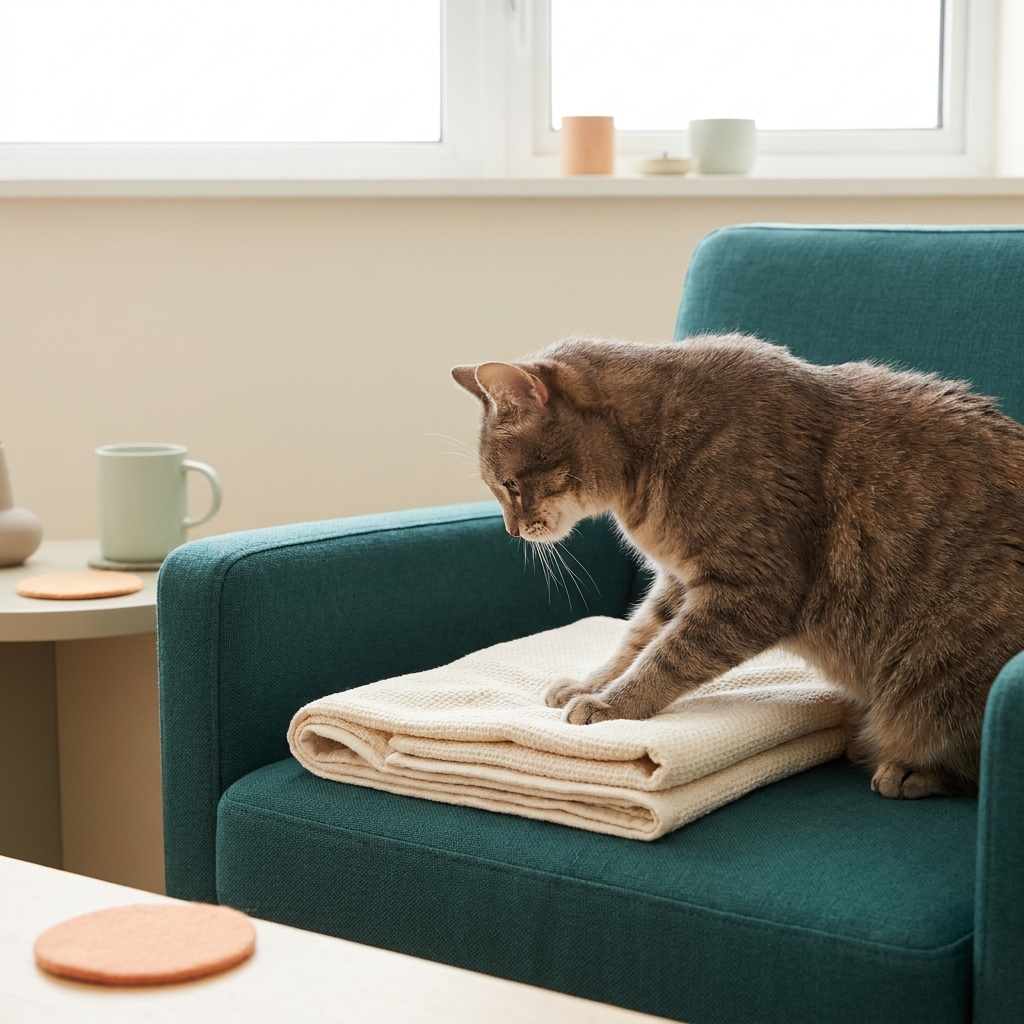
- Claws are uncomfortable or the blanket is delicate. Add a thick throw or folded towel as a barrier, or swap in a designated “kneading blanket” Purina guide Schertz Animal Hospital.
- Nails are sharp. Regular trims reduce accidental scratches PetMD.
Redirect gently when
- Your cat targets snag-prone fabrics or people’s skin. Move a kneading-safe blanket into the favorite spot and reward when they use it. Avoid punishment, which can harm your bond and increase stress International Cat Care PetMD.
Practical steps to keep everyone comfortable
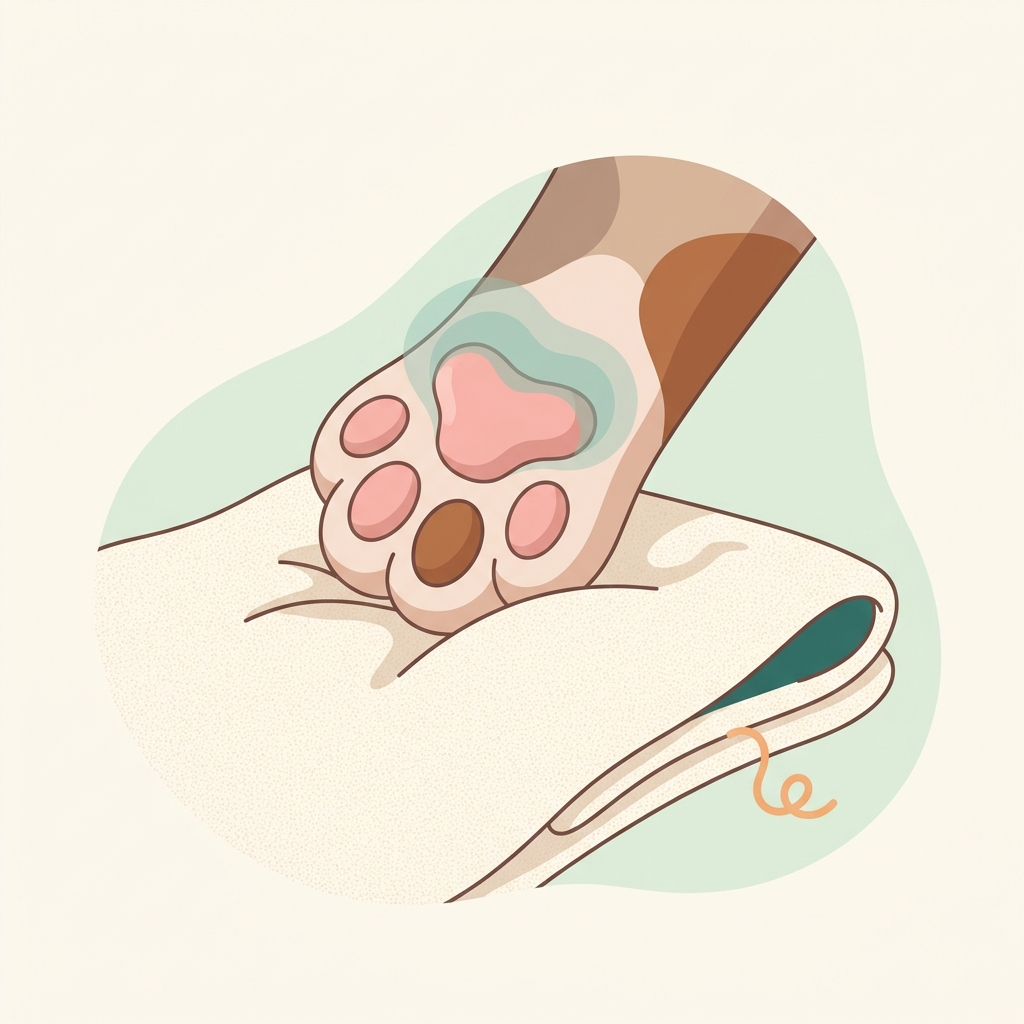
- Layer a thick, washable blanket where your cat likes to settle; store fragile knits out of reach Sheba guide.
- Before cuddle sessions, place a cushion or folded towel on your lap as a soft barrier Schertz Animal Hospital.
- Trim nails regularly; offer scratching posts elsewhere to keep claws healthy between trims PetMD.
- If your cat sleeps on your bed, designate a specific blanket section for kneading to save your duvet. For more on sharing a bed comfortably, see Should your cat sleep in your bed?
- If kneading ramps up during boredom or change, add brief daily play and predictable routines; see our indoor cat entertainment plan.
Set your cat up for safe, comfy kneading
When kneading may signal a problem
Kneading itself is normal. However, a sudden increase, signs of distress, or kneading paired with restlessness, vocalizing, changes in appetite or litter habits can point to stress, discomfort or pain. Excessive kneading can also be part of an anxiety pattern. Speak with your vet if you notice these changes or if kneading becomes compulsive. Do not punish your cat; instead, address stressors and provide suitable outlets PetMD International Cat Care Purina guide.
FAQ
Is kneading harmful to cats?
No. It’s typically a healthy, self-soothing behavior. Redirect only if claws hurt you or fabrics are at risk PetMD.
Why does my cat look “trance-like” or drool while kneading?
That deep relaxation is common during kneading and may include drooling. Many cats zone out when they feel safe and calm Purina guide.
What’s the best way to stop damage without scolding?
Use a thick barrier, keep nails trimmed, and move your cat to a designated blanket, then praise when they knead there. Avoid punishment Schertz Animal Hospital International Cat Care.