Write the trip before choosing the carrier
A visit to a local veterinary practice, a car journey and a commercial flight can have different requirements. Record the actual provider, route and carrier instructions before buying. A marketing phrase such as airline approved does not confirm acceptance for a specific booking. Keep the external size needed for transport limits separate from the usable internal space.
Look at the openings as well as the shell
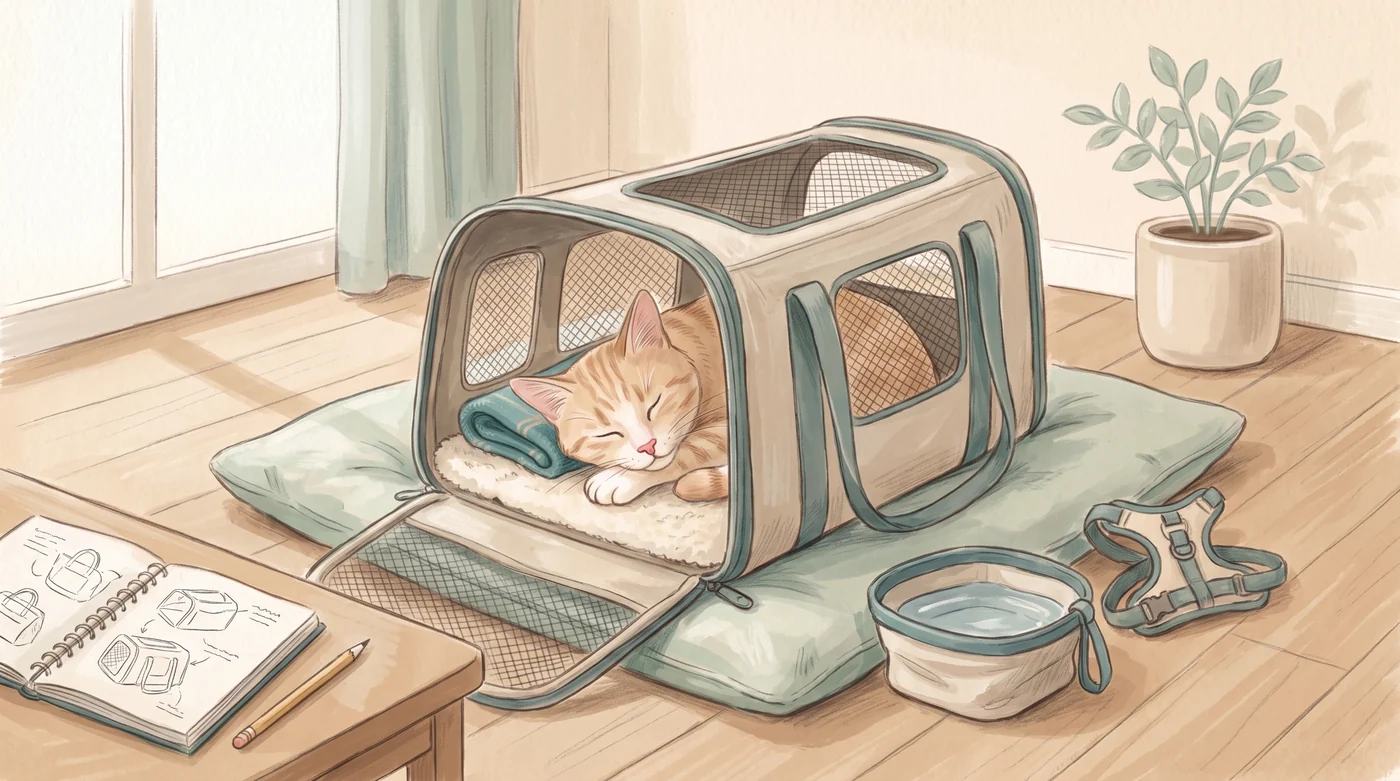
Compare the front opening, any top opening, closure hardware and whether the top can be removed as designed. FelineVMA’s caregiver guidance explains how a removable top can help the veterinary team examine a cat in the lower part of a suitable carrier. That is a handling consideration to discuss with the practice, not permission to improvise an opening or unsecured transport arrangement.
FelineVMA: visiting your veterinarian ↗ — Caregiver guidance on choosing a carrier and familiarizing it at home; ask the veterinary team about the actual trip.
Give the carrier a place at home
A carrier stored until the moment of travel gives little opportunity for familiarization. The FelineVMA handout recommends keeping it in the cat’s home environment with familiar bedding and allowing a gradual positive approach. Ask the veterinary team for help if this is difficult. Record the cat’s response without forcing a deadline or describing the carrier as calming every cat.
FelineVMA: visiting your veterinarian ↗ — Caregiver guidance on choosing a carrier and familiarizing it at home; ask the veterinary team about the actual trip.
Keep the trip record practical
Retain the carrier model, current instructions, required documents and the provider’s confirmed rules. Check the closures and condition before the trip. Follow the appropriate carrier and vehicle arrangements, and ask the veterinary team about stress, motion sickness or other concerns. The equipment guide does not recommend medication, establish fitness to travel or replace the actual transport requirements.
Keep these details together.
- Internal dimensions and cat fit
- Door and top access
- Current transport-provider rules