Measure the usable space before the footprint
Keep the outside dimensions for your room plan and the usable interior dimensions for the cat. Curved walls, a hood, steps or internal mechanisms can change the relationship between the two. Ask the manufacturer when the listing only supplies a shipping or overall size. A large exterior does not establish that the actual toileting area is large.
Use the length guideline as one comparison
AAFP and ISFM caregiver guidance gives a litter-box length of 1.5 times the cat’s length from the nose to the base of the tail. Our length tool shows that calculation beside a supplied interior box length. It does not assess width, entry, posture, location or individual needs, and it cannot certify a box as suitable. Do not include the tail in the body-length input.
AAFP and ISFM: litter-box guidance ↗ — The published length guideline is 1.5 times nose-to-tail-base length. Size is one part of the setup; changes in toileting need veterinary attention.
Think through the route and the routine
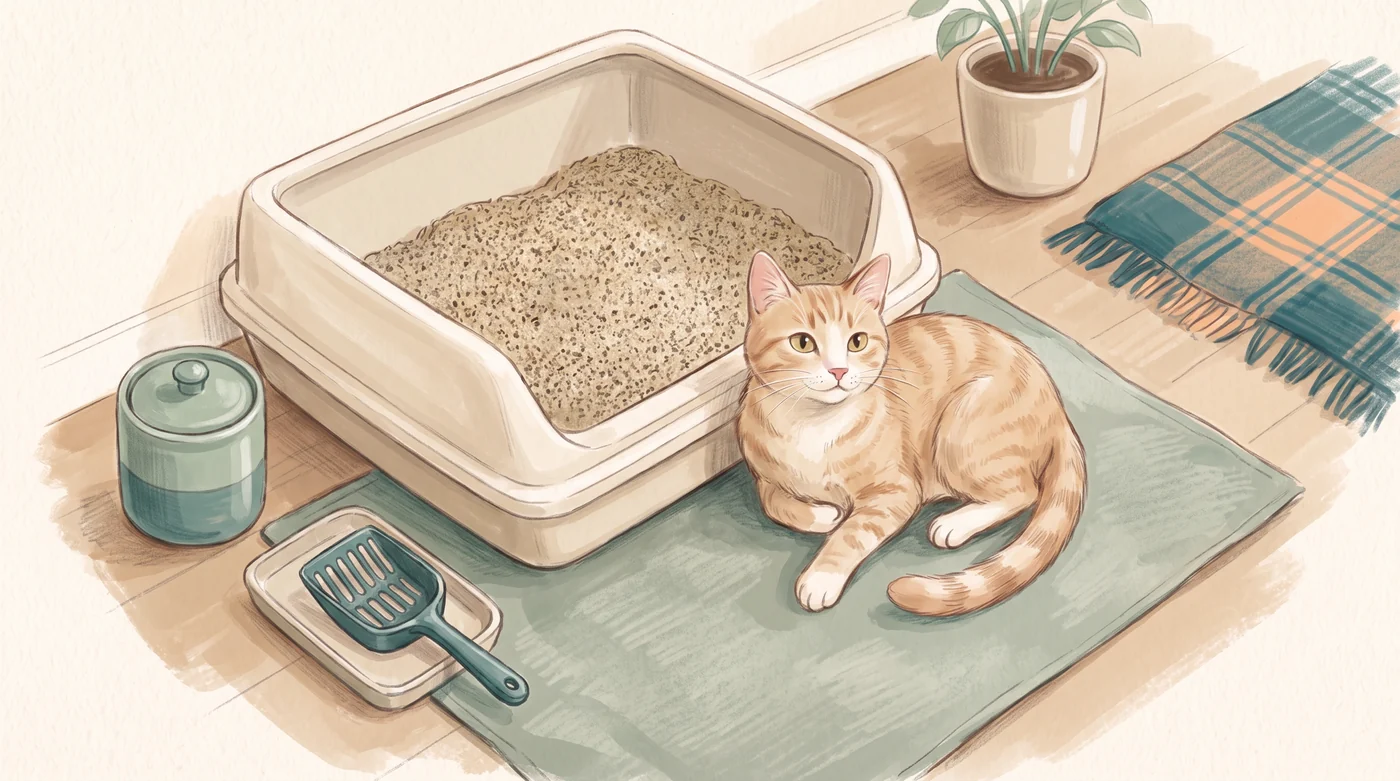
Look at the entry height, the path to the box and where cleaning equipment will be stored. Keep the actual cat’s mobility and household context in view. For automatic equipment, read the exact model’s animal-size restrictions, sensors, operating sequence and maintenance requirements. A mechanical feature or an attractive app cannot resolve a mismatch in access or usable space.
Keep a change in toileting separate from shopping
If your cat begins toileting outside the box or its toileting behavior changes, contact your veterinary team. Equipment is only one part of the context and a new purchase is not a diagnosis or treatment. Keep a dated note of the change, current setup and recent household changes to help that conversation. The length tool is for comparing measurements, not explaining symptoms.
Keep these details together.
- Entry and internal dimensions
- Location and access routes
- Cleaning method and maintenance