Use the right body-length endpoints
The published comparison uses the nose to the base of the tail, not the tip of the tail. Use an existing calm measurement or ask your veterinary team for help if measuring is awkward. Do not restrain or upset the cat merely to complete this tool. A guessed measurement should remain marked as a guess in your own notes.
Compare against usable interior length
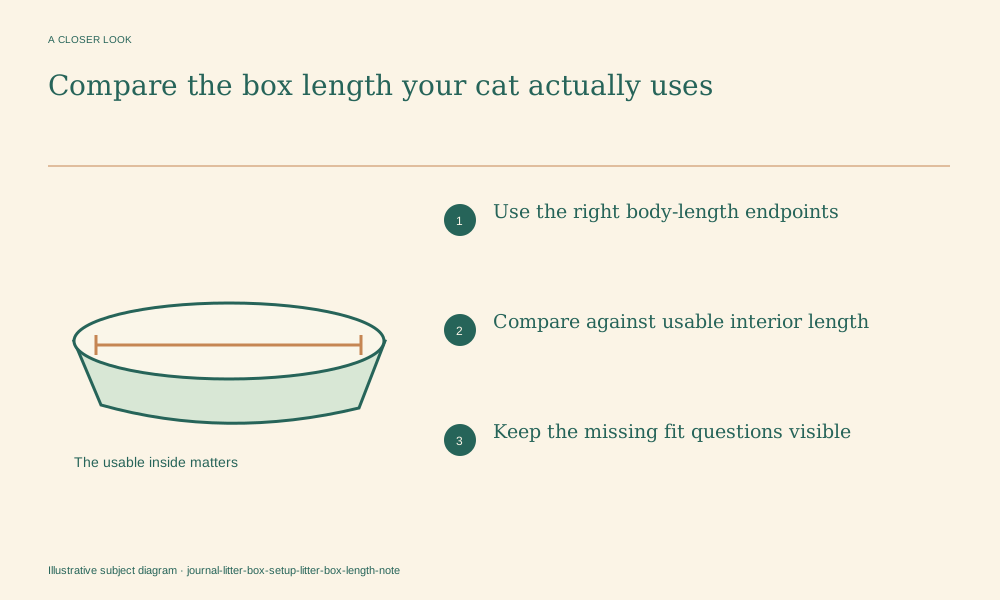
A product’s external dimension can include a rim, hood or mechanism. Look for the internal measurement in the exact model drawing. The AAFP and ISFM guideline uses 1.5 times the nose-to-tail-base length; the tool performs that arithmetic and shows the difference from the interior length you enter. It is a reference comparison, not a veterinary approval of the product.
AAFP and ISFM: litter-box guidance ↗ — The published length guideline is 1.5 times nose-to-tail-base length. Size is one part of the setup; changes in toileting need veterinary attention.
Keep the missing fit questions visible
Width, entry height, room to turn, accessibility and household placement remain separate checks. The calculation cannot inspect those features or the individual cat. Matching the reference length does not establish that an automatic mechanism is appropriate, that an older cat can enter comfortably or that a particular setup will be accepted.
Use the result in a shopping note
Write down the exact model, the stated internal dimensions and the source of those dimensions. Keep questions for the manufacturer or veterinary team beside the arithmetic. Changes in toileting need veterinary attention; do not use a dimensional comparison to explain a new symptom.
Equipment recommendations need model identification, dimensions, cleaning observations and documented use. Nutrition targets and clinical advice belong with a veterinary professional; this site does not diagnose symptoms.