
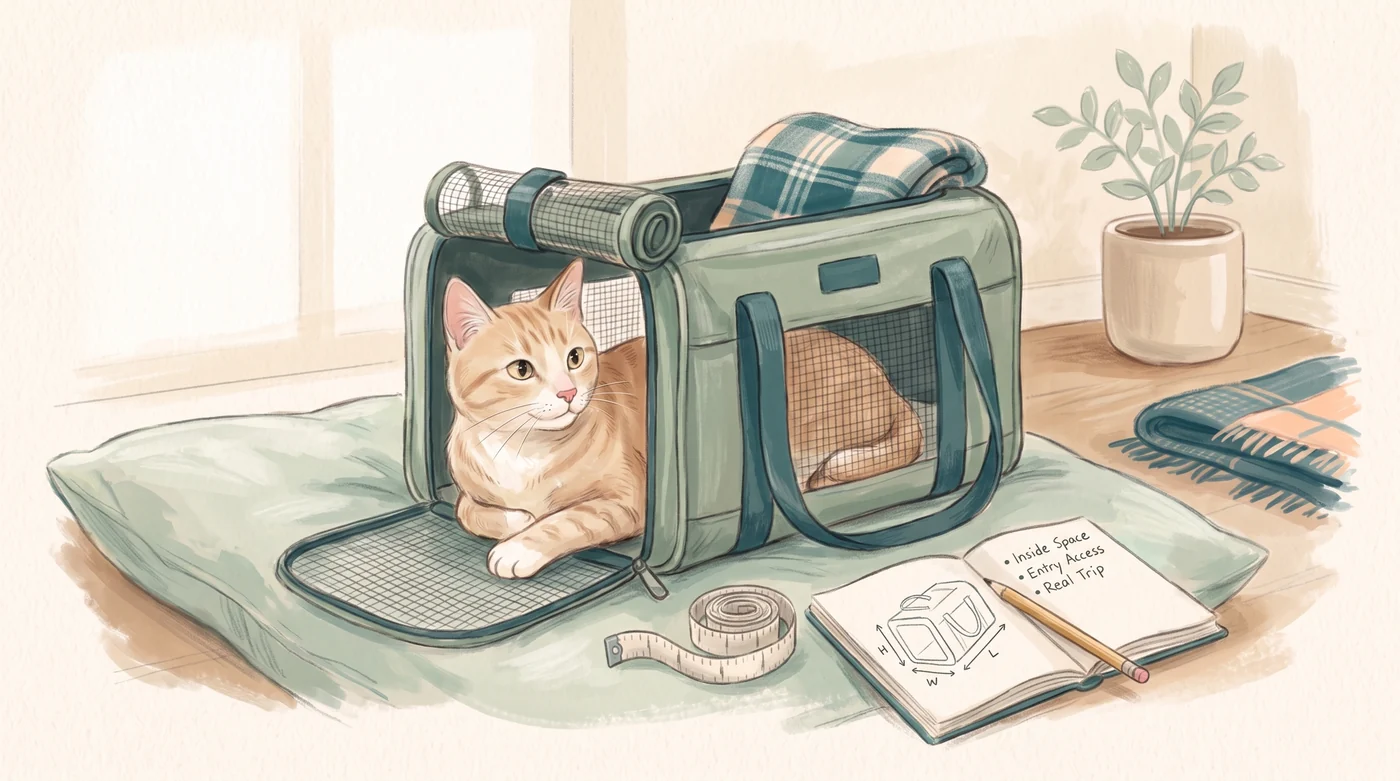
Record both sets of dimensions
Keep external dimensions and usable internal dimensions in separate fields. Handles, curved walls and fittings can change the relationship between them. Ask the manufacturer when usable space is unclear.
Consider access
Look at door size, top access and closure hardware. Think through getting the cat in and out, cleaning the interior and carrying the loaded carrier. A removable top and a front opening serve different handling needs.
Plan the real trip
For commercial transport, verify current rules with the specific provider before buying. A general label such as airline approved is not a guarantee of acceptance for your route. Secure transport arrangements also depend on the actual vehicle and carrier instructions.
Keep an observation record
Make the carrier a familiar object at home and note your cat’s response without forcing a result. Your veterinary team can help with travel-related stress or handling concerns. An equipment comparison cannot diagnose or treat those issues.
FelineVMA: visiting your veterinarian ↗ — Caregiver guidance on choosing a carrier and familiarizing it at home; ask the veterinary team about the actual trip.
Equipment recommendations need model identification, dimensions, cleaning observations and documented use. Nutrition targets and clinical advice belong with a veterinary professional; this site does not diagnose symptoms.