The journal
How to say I love you in cat language
Say I love you in cat language with a gentle slow blink, predictable routines, and short, positive play sessions.
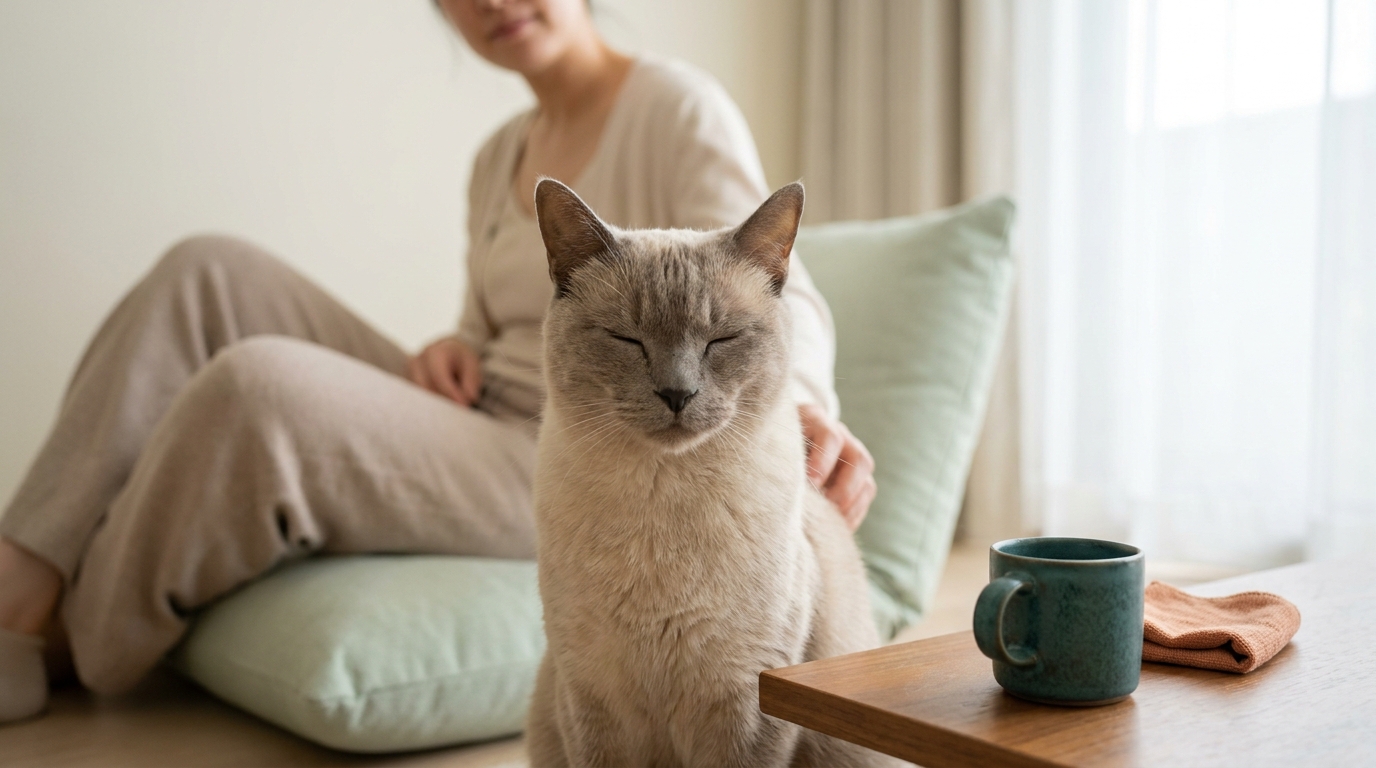
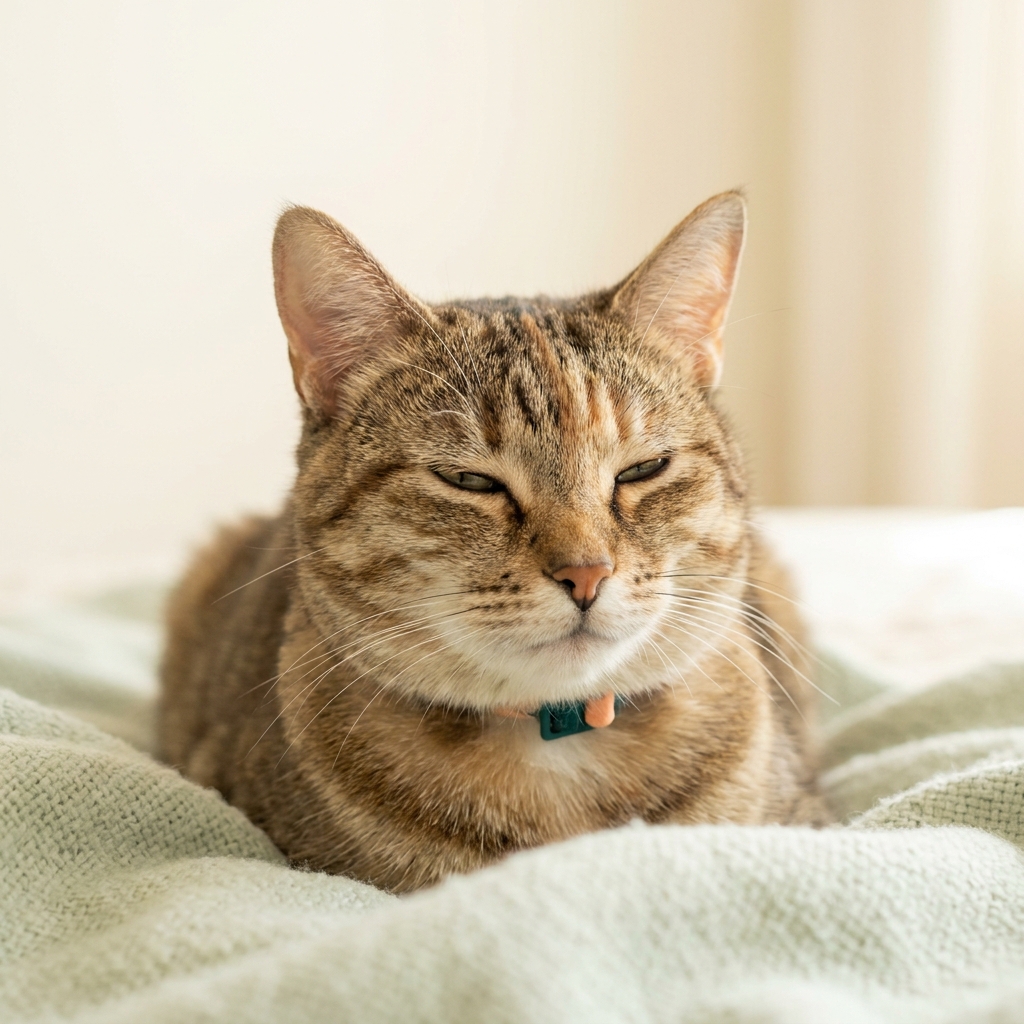
There is no literal cat-language translation of “I love you”. A gentle slow blink can be a relaxed, low-pressure way to interact with a cat that feels comfortable around you. Soften your gaze, close your eyes slowly, pause, and open them slowly. Many behavior guides interpret the slow blink between cats and people as a relaxed, friendly signal; returning your cat’s slow blink is a low-pressure way to communicate trust and affection (VCA Animal Hospitals; PetMD).
How to do the slow blink
Try this when your cat is calm and has room to move away:
- Sit or kneel at your cat’s level so they are not cornered.
- Soften your face; avoid a hard stare, which cats can read as confrontational (VCA Animal Hospitals).
- Close your eyes slowly, pause briefly, then open them slowly.
- Wait a few seconds. Repeat once or twice if your cat stays relaxed.
- Accept any response. Some cats blink back, others approach, and some simply relax. Not all cats slow blink, and a lack of slow blinking does not mean they don’t trust you (VCA Animal Hospitals).
A 2020 shelter-cat study found an association between eye closure during slow-blink interactions and quicker adoption. That is a specific research observation, not proof that every cat interprets a blink in the same way or a guarantee of affection. See the shelter-cat slow-blink study.
Other cat-friendly ways to say it without words
Build a predictable routine
Consistency helps cats feel safe. Keep mealtimes, short play sessions, and quiet time on a regular schedule. Predictability reduces stress and supports bonding (PetMD). For more structured play ideas, see How to entertain an indoor cat: a simple daily plan.
Use short, interactive play
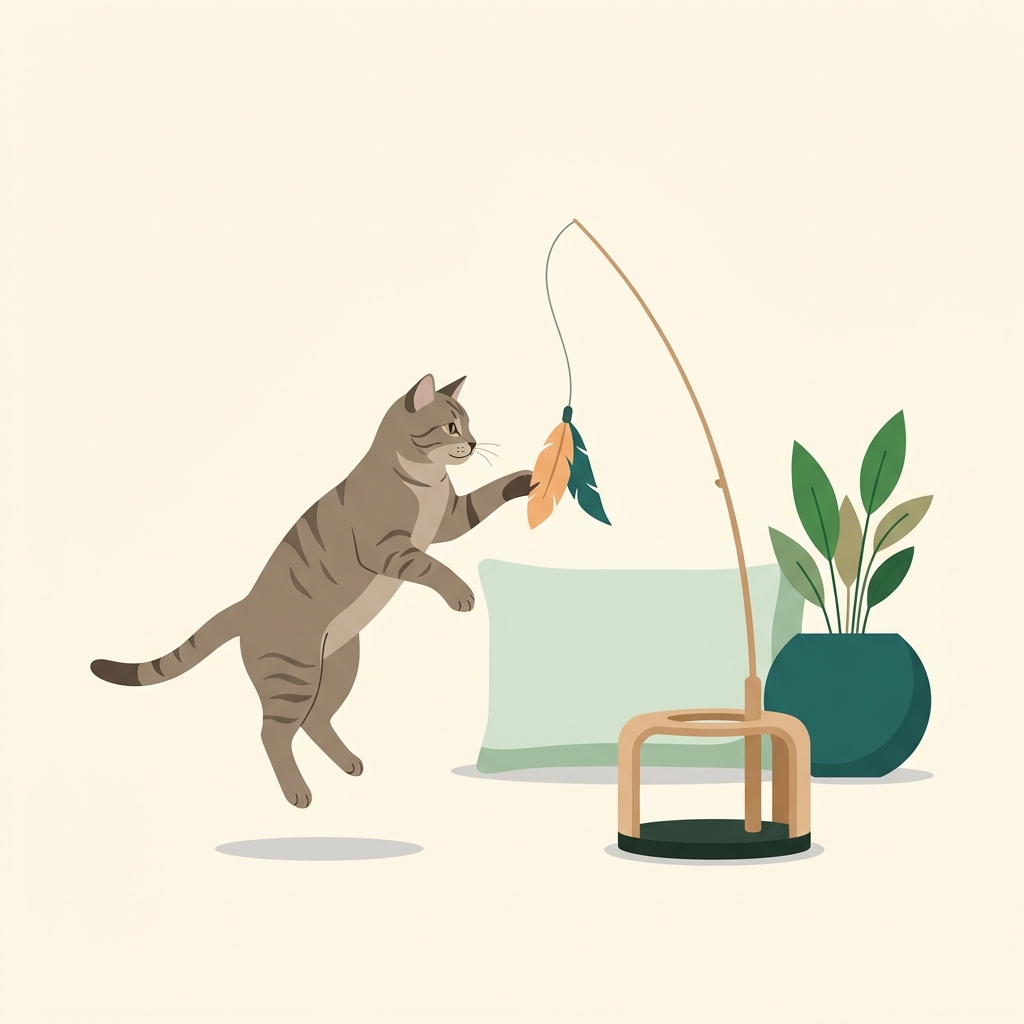
Bond through play that mimics hunting with a wand toy that flutters, crawls, or skitters. Keep sessions short and end by letting your cat "catch" the toy, then offer a small treat or meal to complete the hunt cycle (PetMD). Curious to add variety? Try a gentle food puzzle as a finale: Do cats enjoy puzzle feeders?
Be consistent and respect boundaries
Use the same cues and a calm voice so your cat knows what to expect. Let your cat approach first, then pet the head, cheeks, or chin. Pause often and stop if you see tail thumps, flattened ears, backing away, or dilated pupils, which are common signals to give space (PetMD).
When not to push it
- Don’t force eye contact. A fixed stare can feel threatening to cats (VCA Animal Hospitals).
- Don’t repeat slow blinks rapidly if your cat looks tense. Try later during a quiet routine moment (PetMD).
- Remember: some cats never slow blink. They may show affection through head bunts, gentle rubs, or choosing to rest near you (VCA Animal Hospitals).
- If you notice sudden behavior changes, persistent hiding, or signs of pain, contact your veterinarian rather than relying on social cues alone.
Try this tonight: simple love-in-cat-language checklist
Quick examples
Greeting after work: crouch at your cat’s level, offer one slow blink, then invite a short wand-toy game. End with a treat to complete the “hunt” (PetMD).
Bedtime wind-down: give a single slow blink, wait to see if your cat approaches, and offer gentle head or cheek strokes only if invited (PetMD).
FAQ
Will saying the words “I love you” help?
Words won’t hurt, but cats rely more on body language and consistent care. A slow blink plus predictable, positive routines communicates love more clearly (PetMD).
What if my cat doesn’t blink back?
That’s normal for some cats. Look for other friendly signs like choosing to sit near you, head bunts, or relaxed posture. Keep interactions gentle and never force eye contact (VCA Animal Hospitals).