The journal
Do cats enjoy puzzle feeders? Practical steps for calm introductions
how to introduce puzzle feeders to cats with stepwise tips for calm introductions, choosing feeders and troubleshooting to keep meals enriching and stress-free.
Do cats enjoy puzzle feeders? Definition and what to expect
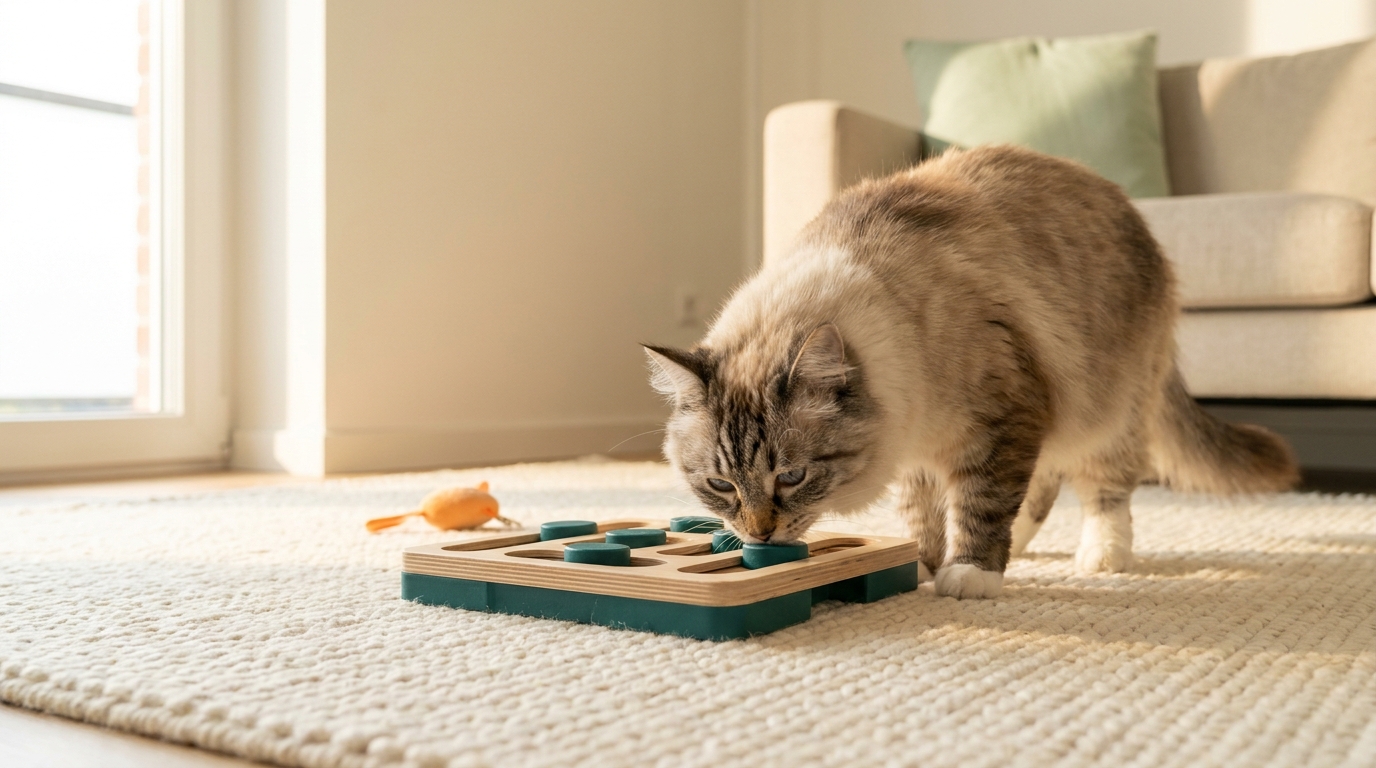
Puzzle feeders are feeding devices designed to make a cat work a little to get food, encouraging foraging behavior rather than instant consumption from a regular bowl. For many cats, these tools add novelty and mental stimulation because the act of seeking or manipulating food echoes natural feeding routines.
If you are wondering how to introduce puzzle feeders to cats, start with the idea that a slow, low-pressure approach helps most animals accept a new object. Expect a range of responses: curiosity and brisk interaction from food-driven individuals, cautious sniffing from shy cats, and occasional avoidance by cats who associate change with stress. Watch body language closely to tell the difference between interest and discomfort.
Common types of puzzle feeders vary in complexity but share the same aim of turning a meal into a short task. Some present scattered compartments, others require pawing or nudging to release portions. Unlike bowls, which deliver food immediately and in one place, puzzle feeders space out bites and slow the feeding pace, which can lengthen mealtimes and create engagement.
Knowing what to expect helps owners set realistic goals. Look for active engagement such as focused sniffing, pawing, and return visits, and be alert for signs of stress like flattened ears, puffed fur, avoidance, or aggressive guarding of the device. If a cat shows repeated stress signals, simplify the task or stop and try again later.
What a puzzle feeder is
A puzzle feeder can be as simple as a scatter mat that creases and hides kibble, or as complex as a multi-chamber rotating unit that dispenses small amounts after a push or spin. The core idea is to require more effort than scooping from a bowl, encouraging the cat to solve a small challenge to access food.
Why owners offer them
Owners choose puzzle feeders for several practical reasons: to slow rapid eaters, to add daily enrichment, or to give indoor cats an outlet for natural foraging drives. They also help break up routine by making meals interactive. Remember that not all cats will like the same type, so matching device to personality matters.
Engaged cats often show relaxed postures, a steady paced approach, repeated interaction, and short breaks between efforts. Stressed cats may avoid the device entirely, retreat to a hiding place, display distressed vocalizations, or appear tense. If you see any of these signs, reduce the challenge immediately and return to a familiar feeding routine before trying again.
How puzzle feeders work: types, mechanics and cat motivation
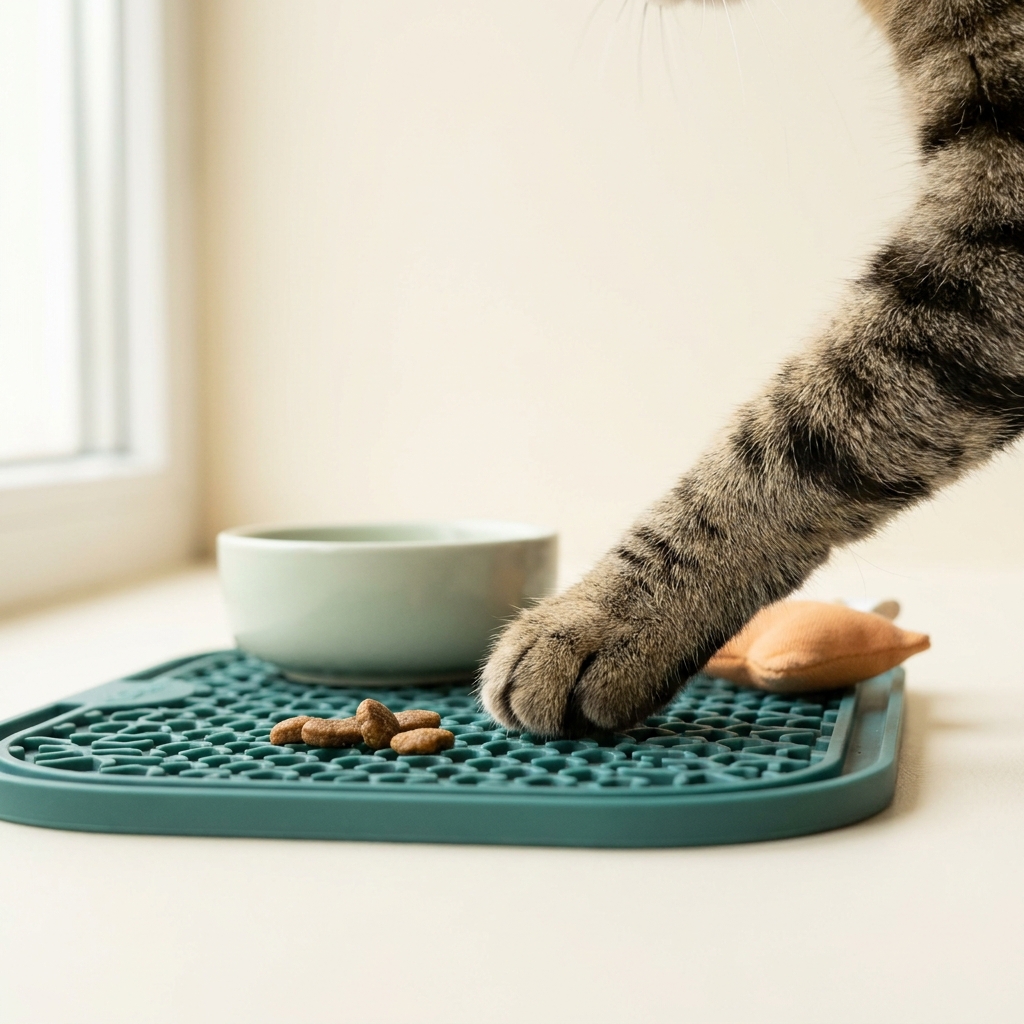
Feeder designs vary by how they release food. A treat-mat hides kibble in textured pockets so the cat scrapes or licks pieces free. A ball-style feeder dispenses bits as the ball rolls and is pushed. Rotating feeders present covered compartments that line up with an opening after a push, and slow-dish models hold food behind barriers that require nudging. Each design translates a specific motion into a small food reward.
Do cats enjoy puzzle feeders and how should owners introduce them?
Cats vary in their response; gentle, staged introductions that match feeder difficulty to the cat and that use short, reward-rich sessions help most cats accept puzzle feeders without stress.
Cat motivation for using a feeder usually ties back to foraging behavior and the immediate reward of food. If the effort required matches the expected reward most cats will give a device a few tries. Overly predictable feeders that offer the same immediate payoff with no challenge may get bored responses, while devices that are too hard can frustrate cats and be ignored.
Main feeder designs and how they release food
Ball feeders release food when rolled, so they encourage kinetic interaction. Treat-mats ask for scraping and licking, which is gentle and often well suited to cats who prefer low-energy tasks. Rotating feeders and puzzle boxes require targeted pushes or pawing to align openings and can be excellent for cats that enjoy manipulation. Slow-dishes typically have ridges or compartments that spread out kibble to slow fast eaters.
How foraging instincts relate to feeder engagement
Many cats retain an instinct to hunt or search for food even when fed at home, so devices that mimic search behavior can be satisfying. Foraging-style tasks offer small, repeated rewards that tap into that instinct. Note that individual preference varies: some cats prioritize ease and speed, others find the search itself motivating.
How portion size and reward timing affect interest
Portion size and how often a feeder yields bites matter. If the device gives too little, a cat may lose interest because the reward feels insignificant. If it gives too much too quickly, the purpose of slowing intake is lost. Balance portioning so the cat gets regular little successes without finishing too fast.
Consider the type of food you use. Dry kibble is versatile for most mechanized feeders, while wet food can be messy and may not work well in devices with small channels or rolling parts. Match kibble size to the feeder openings to avoid jamming or oversized rewards.
Step-by-step: how to introduce puzzle feeders to cats
Preparation: selecting food and location
Choose a quiet, familiar spot where your cat already eats or spends time. A low-traffic corner of a kitchen or a quiet part of the living room reduces distractions and potential stress. Use your cat's preferred dry kibble or small treats for the first sessions to keep the association positive.
Set the feeder on a stable surface at the cat's shoulder height so reaching inside does not require awkward stretching. Before filling it, let the cat sniff an empty unit so it can explore the new object without pressure.
Slow introduction stages: how to introduce puzzle feeders to cats
Stage 1, familiarization: leave the closed or empty feeder where your cat can see it for a day or two so it becomes part of the environment. Place a few pieces of kibble around and on top of the device so the cat learns there might be food nearby.
Stage 2, low-effort access: create obvious, easy rewards by leaving pieces in shallow, open compartments or setting the device so food falls out with minimal effort. Keep sessions short, around five minutes, to prevent fatigue or frustration and to build positive memories.
Stage 3, guided practice: deliver a short play session just before introducing the feeder to increase interest. After a brief play bout, offer the feeder with slightly increased challenge so the cat is motivated but not overwhelmed. Praise softly or offer a gentle pet after successful attempts to reinforce calm engagement.
Stage 4, gradual difficulty increase: once the cat reliably gets food with the easy setting, make the task slightly harder by partially covering openings, increasing the time between drops, or using a feeder setting that requires more movement. Progress in small steps and only when your cat looks confident and curious.
When to stop, pause or adjust
If your cat freezes, avoids the area, or shows signs of stress like hiding or reduced appetite, stop the session and return to the previous easier step. Give the cat a normal meal from a bowl that day, and try again later with shorter sessions and more obvious rewards. If avoidance continues over several tries, consult your veterinarian or a certified behaviorist for tailored advice.
Tailor the pace for special cases. For shy cats, extend familiarization; let them investigate the device when it is empty and leave it out for several days. For highly food-motivated cats, you can safely raise difficulty faster while monitoring that the cat still gets regular rewards. For senior cats, prioritize softer textures and minimal lifting or reaching to avoid joint strain.
Positive reinforcement is useful at every stage. Reward calm interaction with a brief praise, a small pet, or a tiny extra kibble piece. Avoid scolding or forcing the cat to engage, as that can create negative associations with the feeder and slow progress.
Choosing the right puzzle feeder: decision criteria
Match feeder complexity to your cat's skill level. Start with a low-complexity option for first-time users, such as a treat-mat or simple slow-dish. If your cat masters that quickly and seeks more challenge, consider an intermediate rotating feeder or a ball feeder that requires deliberate pawing.
Materials matter. Look for units made from safe, non-toxic plastics or silicone that are easy to wash. Avoid devices with many tiny detachable parts that could break off and create a choking hazard. For multi-cat homes think about access: feeders that require individual attention or that can be assigned to one cat at a time reduce the chance of resource guarding.
Match feeder complexity to your cat
Assess a feeder for difficulty by imagining the sequence your cat must perform. If it requires multiple precise steps it may be best reserved for experienced or very curious cats. Simpler feeders reward small, repeatable actions and often work well for most households.
Material, cleaning and safety considerations
Feeder hygiene is key. Choose options that disassemble easily for washing, or that have smooth surfaces where food residue cannot collect. Wet food often demands more frequent cleaning to prevent odor and bacterial buildup. Regular checks for cracks and worn pieces help avoid small part hazards.
Budget and multi-cat households
Affordable feeder options can be highly effective, especially initial low-effort mats or muffin-tin setups. In multi-cat homes, provide multiple feeders or supervise sessions to prevent dominant animals from monopolizing devices. If resource guarding appears, separate feeding areas and staggered feeding times help ensure all cats get access without conflict.
Quick at-home trial to match feeder difficulty to your cat
Common mistakes, troubleshooting and safety tips
Beginners often introduce too much complexity too quickly. A common starter error is loading a new feeder at full difficulty and expecting immediate success. Start easy and increase challenge in small increments.
Another frequent mistake is using inappropriate food sizes. Kibble that is too large can jam a mechanism, while crumbs that are too small can make rewards negligible. Test with a handful of the cat's usual kibble before committing to full sessions.
Starter errors owners make
Introducing the feeder in a noisy or high-traffic area can reduce engagement. Avoid placing the device near doorways or loud appliances during early sessions. Also, leaving a device out all day without supervision can cause dominance issues in multi-cat households.
What to do if a cat ignores or becomes stressed by a feeder
First, simplify: make the device easier to access and fill visible pockets with food so the cat can see immediate wins. Move the feeder to a different location that your cat prefers, and pair it with a short play session to raise interest. If anxiety persists, pause and offer meals from a bowl for a few days before trying again.
Hygiene and monitoring rules
Clean the feeder regularly according to the manufacturer instructions or wash food bowls with hot, soapy water after each use, including dry food; follow the device manual for the hopper and electronics. Monitor your cat's weight and appetite. If weight loss, persistent avoidance of food, or behavioral changes appear, contact your veterinarian to rule out health causes.
Practical examples: daily routines and three simple scenarios
Below are three short, adaptable routines. Each one shows timing, portioning and a suggested feeder type so you can copy and modify them to fit your household.
Single-cat morning routine
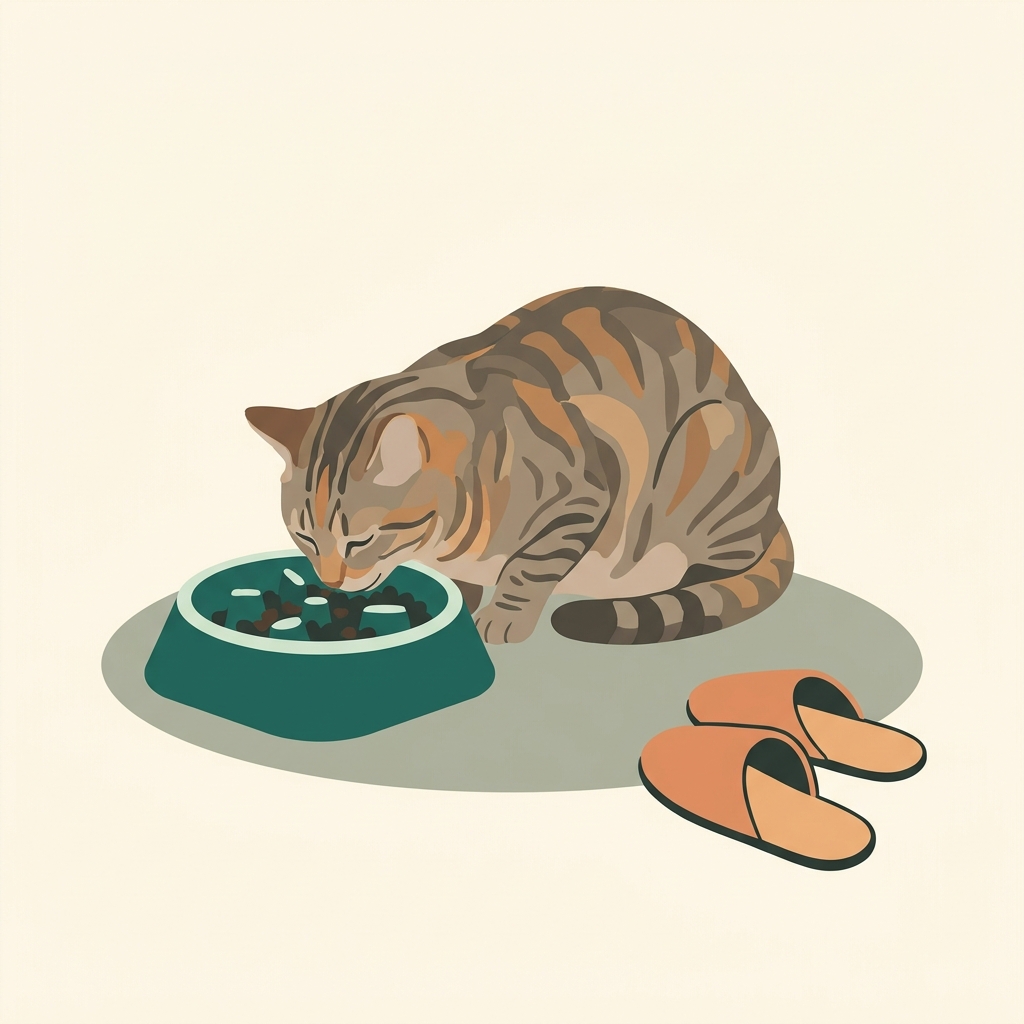
Morning: After a brief play session of five to ten minutes, offer a treat-mat filled with the cat's regular morning portion divided into small batches. Let the cat work for 5 to 10 minutes, then offer the final portion in a shallow bowl if needed. Monitor appetite and adjust so the cat finishes comfortably.
Multi-cat feeding setup
In a multi-cat home, give each cat a separate feeder in different rooms or corners. Stagger start times by a few minutes and supervise early sessions. For one confident cat, use a moderate-challenge rotating feeder. For a shy companion, a low-effort slow-dish will reduce competition and stress.
Slow-feeder schedule for senior or overweight cats
For senior or weight-management cases, split daily rations into several short sessions using an easy-to-access slow-dish that spreads kibble across ridges. Keep sessions gentle and avoid feeders that require climbing or complex manipulation. Monitor weight weekly and consult your veterinarian if progress stalls.
Track progress over two to four weeks. Look for consistent engagement, steady appetite, and no increase in stress behaviors. If difficulty continues beyond this trial period, speak with your veterinarian or a certified behaviorist to explore health or deeper behavioral causes.
Frequently asked questions
How long does it take a cat to learn a puzzle feeder?
Most cats show noticeable progress within a few sessions, but full comfort may take several days to a few weeks depending on the cat and the feeder.
Can puzzle feeders replace regular meals?
Puzzle feeders can supplement or replace some meals but ensure total daily food matches your cat's needs and consult a veterinarian for special diets.
Are puzzle feeders safe for every cat?
Many cats tolerate them well, but avoid complex devices for very elderly cats or those with dental or mobility issues and consult your veterinarian if unsure.
A calm, steady approach helps most cats adapt to puzzle feeders. By matching difficulty to personality, watching body language closely and adjusting pace, owners can add meaningful enrichment without creating anxiety. If your cat shows persistent avoidance, weight loss, or signs of distress, consult a veterinarian or certified behaviorist for personalized guidance.
References
- https://pmc.ncbi.nlm.nih.gov/articles/PMC11148901/
- https://pmc.ncbi.nlm.nih.gov/articles/PMC10814572/
- https://www.ucdavis.edu/health/news/study-finds-nearly-third-cat-owners-use-food-puzzles
- https://catnibbles.com/guides/cat-feeding-equipment/
- https://catnibbles.com/guides/cat-enrichment/
- https://catnibbles.com/journal/cat-feeding-equipment/read-food-calories/
Food safety reference
FDA: safe handling of pet food and treats. Its bowl-washing advice applies after each use.