
The journal
How to get an unwilling cat into a carrier? Practical steps and handling tips
how to get cat used to carrier, practical reward-based steps, safe loading techniques, and when to get veterinary help.
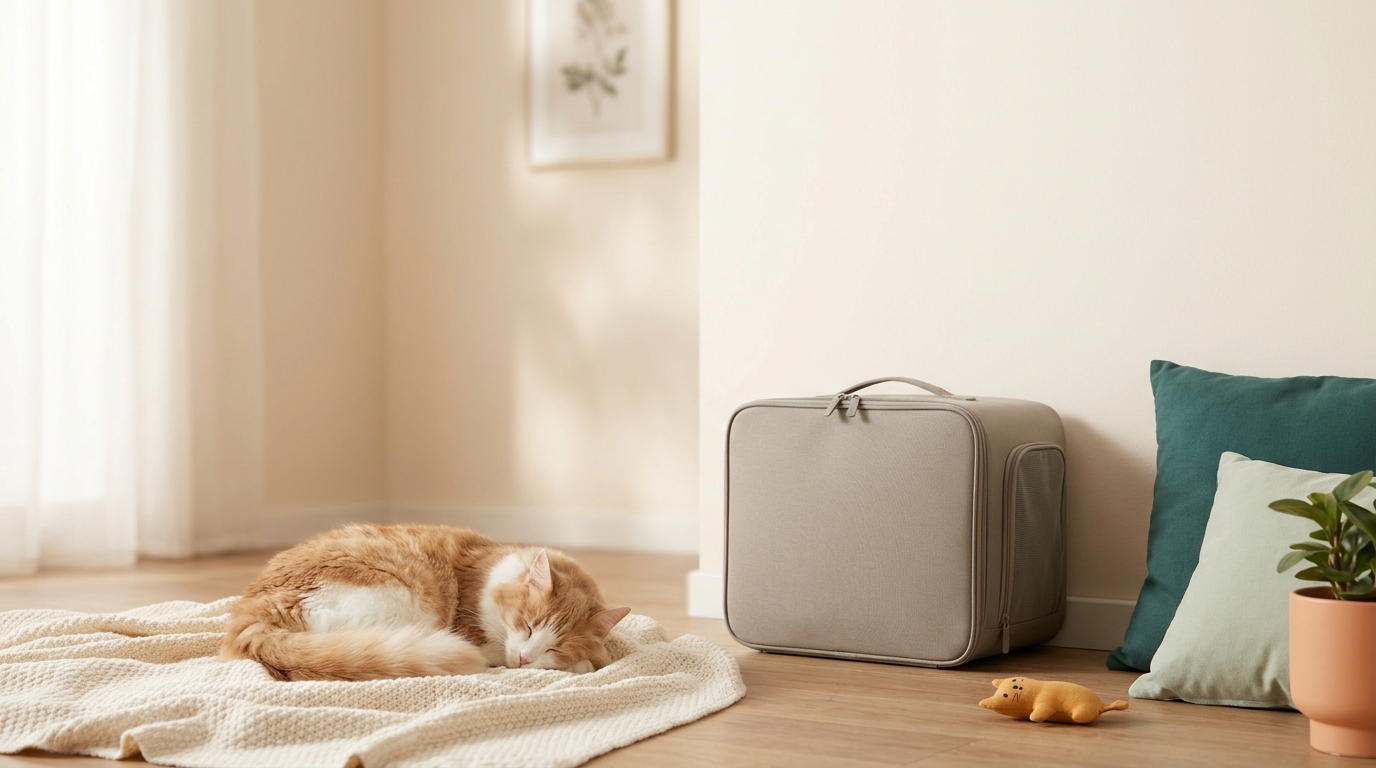
Short answer and what to expect
One-sentence practical answer
Start by making the carrier an everyday, inviting object and use short, reward-led sessions so your cat chooses to go in voluntarily; avoid forcing the cat and use calm handling instead, and if needed ask a veterinarian for an individualized plan Cat Friendly carrier guidance.
What a realistic timeline looks like
Some cats start showing curiosity within days, while others need weeks of gentle, consistent practice before they willingly enter and stay in a carrier; progress depends on past experience, temperament, and how consistently owners follow short, frequent sessions International Cat Care notes on gradual training. See our guides for related tips.
On a single travel day you can combine short soothing steps to reduce stress, for example using food to lure a cat into the carrier, covering the carrier during transport, and keeping the car ride brief and steady to help the cat remain calmer Humane Society on on-the-day steps.
Why some cats fear carriers and how to choose the right carrier
Common triggers for carrier fear
Cats often learn to associate carriers with unpleasant experiences such as vet visits or travel, which can make the carrier itself a cue for anxiety; making the carrier neutral or positive helps break that association.
Other triggers include cramped feeling inside a small carrier, sudden movements during transport, or a carrier that is awkward to load; addressing both the physical comfort and the handling process reduces fear over time.

Carrier types: hard-sided, soft-sided, top-opening and why top access helps
Hard-sided carriers are durable and easy to clean, soft-sided carriers can be lighter and more comfortable in some situations, and carriers with top-opening access let you lift a cat in vertically which can be easier and safer when a cat resists being pushed horizontally RSPCA notes on carrier types.
When loading is difficult, top access reduces awkward wedging and lets handlers support the cat vertically so the animal feels less trapped; for owners who expect occasional resistance, a sturdy carrier with secure fastenings and a top opening can make the moment of loading safer for both cat and caregiver Humane Society on top-opening safety.
What to look for: size, security, and easy cleaning
Choose a carrier that lets the cat stand and turn around comfortably, with secure fastenings that do not open under stress, and internal bedding that holds the cat's scent to make it more inviting. Also see our cat-friendly home guide.
Practical extras include a removable top for easier access, washable pads or blankets for familiarity, and a solid base that resists tipping during a car ride; these features reduce the chances of escape and help owners keep the carrier clean between uses Humane Society on carrier selection.
Step-by-step acclimation plan: making the carrier part of daily life
Phase 1: carrier as safe room - leaving it out with bedding and scent
Phase 1 begins by leaving the carrier out, open and accessible so it becomes part of normal room furniture; add a blanket or towel that carries the cat's scent and place it in a quiet corner where the cat already likes to rest Cat Friendly on leaving carriers out.
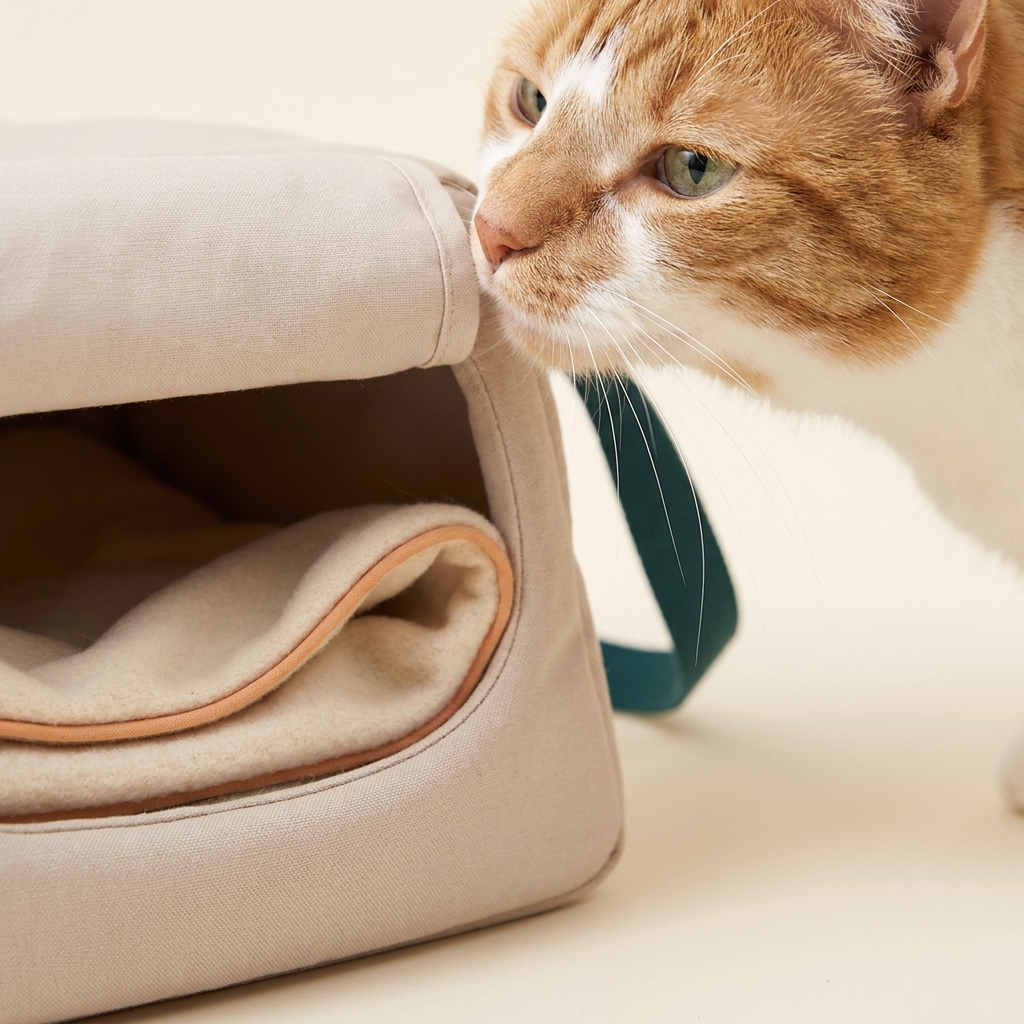
Keep sessions very short and avoid directing the cat; let curiosity drive the interaction and reward small steps such as sniffing the entrance with praise or a calm treat to reinforce investigation.
Phase 2: reward-led investigation - treats, toys and short sessions
Introduce high-value treats or a favorite toy at the carrier entrance, and move rewards slightly deeper over several sessions so the cat learns to enter to retrieve them; work in several two to five minute sessions per day rather than a single long attempt International Cat Care on shaping entry.
If you use a clicker or a soft sound marker, pair the marker with treats to reinforce voluntary steps such as stepping inside, staying near the back, and then exiting calmly.
a short checklist of basic props and treats to support carrier training
Phase 3: shaping voluntary entry and closing the door briefly
Once the cat will enter for treats, begin closing the door for a few seconds before reopening and rewarding calmly; gradually increase the closed duration across sessions while keeping the cat relaxed and immediately rewarding calm behavior Cat Friendly on shaping voluntary entry.
If the cat shows signs of stress such as hissing, frantic scratching, or freezing, reduce the challenge to the prior step and use more rewards before trying again.
Phase 4: short lifts and practice car rides
After the cat accepts brief door closures, practice short lifts in the house so the animal becomes accustomed to being moved while inside the carrier; keep these lifts low and gentle and return the cat to the floor promptly with a reward.
Next, take very short car rides, for example three to five minutes, and build up slowly so the cat learns that carriage can lead to ordinary returns rather than only to clinic visits; place the carrier on the car floor behind the passenger seat or on a secured seat to minimize motion RSPCA on short practice rides. For additional acclimation timelines see AAHA.
Low-stress handling and safe loading techniques
Handling rules: calm approach and no scruffing
Do not use scruffing or force; calm, deliberate movements and a quiet voice reduce escalation and the risk of bites or scratches, and handlers should plan each move so the cat never feels surprised or trapped AAFP and ISFM feline-friendly handling. See AAFP and ISFM guidelines for more detail.

Approach the cat at its level, avoid looming overhead, keep hands visible, and give the cat time to make a small choice such as stepping onto your lap or into a carrier entrance before you proceed.
What is the quickest humane way to get an unwilling cat into a carrier?
Use gradual, reward-based acclimation: leave the carrier out with familiar bedding, reward investigation, shape voluntary entries with treats and short sessions, and use calm handling and towel wraps when needed. For very fearful cats, consult your veterinarian for an individualized plan.
Towel wrap technique and using top access
A gentle towel wrap can calm a resistant cat and protect handlers; place the cat on a towel, wrap the body snugly while leaving the head free, and then lift or slide the wrapped cat into the carrier if the animal will not volunteer entry International Cat Care on towel wraps. See Veterinary Partner for additional towel-wrap techniques.
When a carrier has top access, you can lower the wrapped cat vertically into the carrier which reduces the need to force the cat through a small front opening and lessens the risk of a frightened escape attempt Humane Society on top access loading.
When to ask for help and safety tips for humans and cat
If the cat becomes aggressive or a handler risks injury, stop and give the animal space; consider asking a household member to help or seek veterinary assistance rather than escalating forceful attempts which can worsen fear and cause injury AAFP and ISFM on when to pause.
Always wear protective clothing if you anticipate scratches, keep first aid supplies handy, and plan for a calm exit strategy so the cat can leave the carrier at home without punishment once the session ends.
On the day: making the trip less stressful
Preparing the carrier and car
Pack familiar bedding or a small item with the cat's scent to place inside the carrier, and ensure the carrier is clean, dry, and stably fastened so it will not shift during the drive. See our carrier and travel guide for packing tips.
Bring extra treats, a towel to cover or restrain the cat if needed, and a carrier that closes securely but allows sufficient ventilation for comfort.
Covering, securing and minimizing jostle
Covering the carrier with a breathable cloth can reduce visual stressors for many cats, and secure the carrier in the car with a seatbelt or place it on the floor behind the front seat to minimize tipping and jostle RSPCA on covering and securing.
Drive smoothly, avoid sudden braking or loud music, and check the carrier periodically in a calm, brief stop if the trip is long.
Calm routines at drop-off and brief waiting strategies
At the destination, keep the arrival routine low-key; open the carrier only when the environment is quiet and let the clinic staff handle coming into exam rooms when appropriate to reduce confrontation Cat Friendly on calm clinic arrival.
If waiting in a car or reception area is necessary, place the carrier out of direct view of other animals, keep the carrier covered, and offer a treat through the carrier door to remind the cat of positive experience.
When training alone is not enough: fearful cats and veterinary options
Signs that you need professional help
Consider professional help when a cat shows extreme avoidance, escalating aggression that risks injury, or no improvement after consistent, patient training; these signs suggest the need for a tailored clinical plan AAFP and ISFM on signs for professional help.
Veterinary staff can assess medical causes of fear, review training history, and recommend next steps so the cat's welfare remains central.
Veterinary desensitization plans and possible pre-visit medication
A veterinarian may design a desensitization program that parallels owner training and, for highly fearful cats, discuss short-term pre-visit pharmaceuticals to reduce distress during transport or examination Fear Free Happy Homes on vet-assisted strategies.
Such medications are prescribed and tailored to the individual cat, and are used alongside training rather than as a replacement for gradual acclimation.
Next steps and how to prepare for a successful vet-assisted plan
Before a veterinary visit, document what techniques you have used, show short videos of the cat during practice where possible, and communicate any triggers or calming cues the cat responds to so the clinic can plan a low-stress approach.
Work with the clinic on stepwise goals that match what you practice at home so the cat experiences consistent cues and rewards across environments.
Frequently asked questions
How long will it take for a cat to accept a carrier?
It depends on the cat; some respond in days while others need weeks of short, consistent sessions. Progress varies with past experiences and temperament.
Is it ever okay to force a cat into a carrier?
No. Forceful methods increase fear and risk injury. Use calm handling, towel wraps, and seek veterinary help if needed.
Can my vet give medication to help with transport?
Yes, veterinarians may prescribe short-term medications for highly fearful cats, but these are used alongside a training plan and tailored to the individual.
Building calm carrier behavior takes time and patience, but most cats improve when owners use short, consistent reward-led steps and make the carrier part of everyday life. If progress stalls or the cat becomes aggressive, partner with your veterinarian for a tailored plan that protects both welfare and safety. With steady practice and attention to handling, many owners find that trips become less fraught and the carrier becomes a familiar, manageable part of life.
References
- https://catfriendly.com/cat-care/behavior/how-to-get-your-cat-to-love-its-carrier/
- https://icatcare.org/advice/how-to-get-your-cat-into-a-carrier/
- https://www.aaha.org/resources/helping-your-cat-get-comfortable-in-a-travel-crate/
- https://pmc.ncbi.nlm.nih.gov/articles/PMC11107994/
- https://veterinarypartner.vin.com/doc/?id=9135575&pid=19239
- https://catnibbles.com/guides/
- https://catnibbles.com/guides/cat-friendly-home/
- https://catnibbles.com/guides/cat-carriers-and-travel/
Product options for this topic
As an Amazon Associate I earn from qualifying purchases. These are researched options, not hands-on test results. Check the exact size or model, current price and availability on Amazon.
| Product option | Fit and limits to check | Retailer |
|---|---|---|
| Product imageSleepypod Air, Jet Black | A carrier candidate for travel planning. Compare the actual dimensions with your cat and the specific airline; a product label does not guarantee acceptance. | View on Amazon |