The journal
How to calm a stressed cat in a carrier
Positive, practical steps to help your cat relax in a carrier using gradual training, familiar scents and calm travel-day setup.
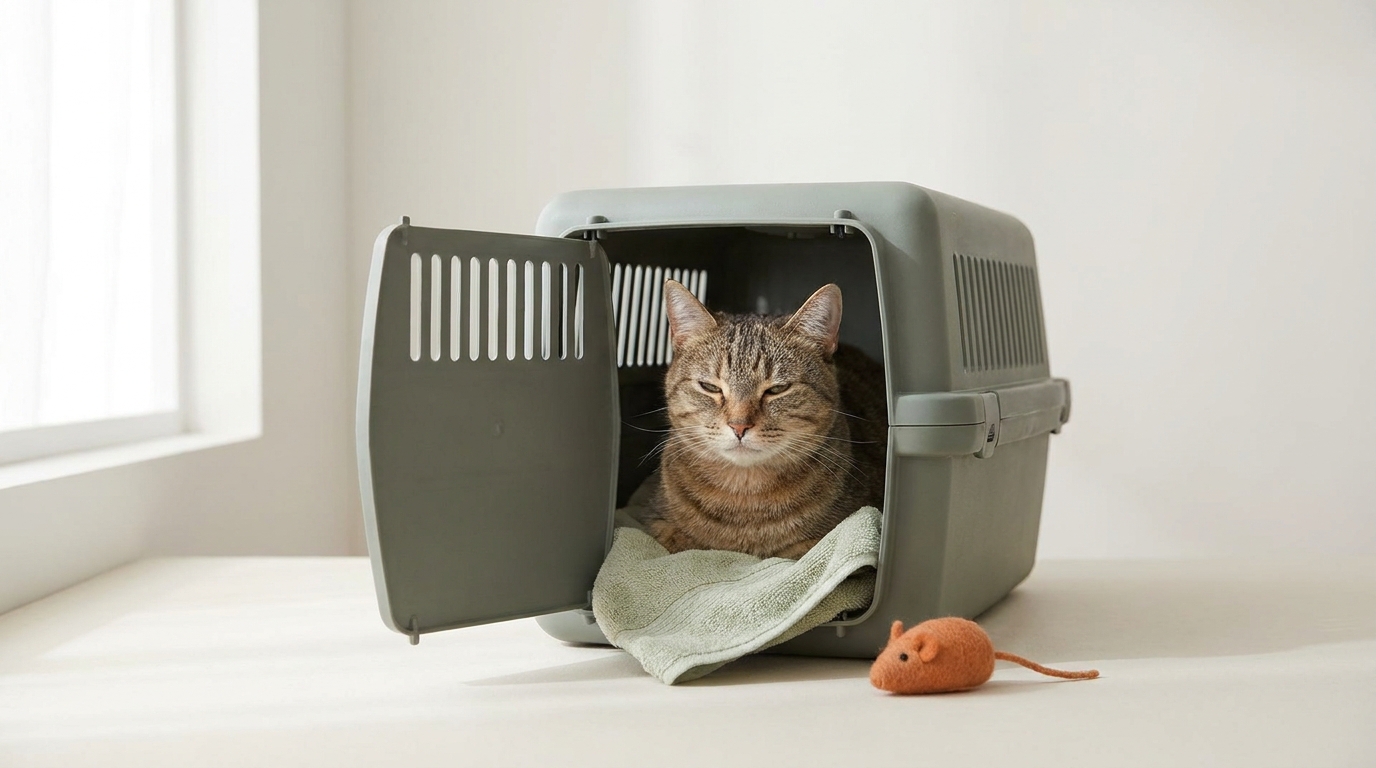
A useful way to reduce future carrier stress is to turn the carrier into a familiar, safe place well before travel and to pair every interaction with gentle, consistent rewards. On the day, set it up with your cat’s scent, consider a pheromone spray, cover it lightly, secure it in the car and drive smoothly. If your cat is very anxious, pause and return to earlier steps; don’t force it (Cats Protection; VCA Animal Hospitals).
Progress at your cat’s pace. These stages are not a seven-day deadline, and urgent veterinary travel may require a different plan from your vet. A cat that remains very distressed needs individual advice.
Make the carrier a safe place before you travel
Choose a sturdy carrier that opens from the top or has a removable lid, with ventilation on more than one side. These make gentle handling and vet exams easier, and they’re simpler to clean (Cats Protection; VCA Animal Hospitals).
- Leave the carrier out, open, in a quiet spot your cat already likes. Add a soft towel or blanket that smells like your cat.
- Reward curiosity: drop a few treats or part of a meal inside so your cat discovers good things happen there (Cats Protection).
- Build gradually: when your cat is relaxed going in, briefly close the door, then reopen and reward; later lift the carrier for a moment, then set it down and reward. Keep sessions short and end on a success (Cats Protection).
For more handling ideas, see our companion guide How to get an unwilling cat into a carrier? Practical steps and handling tips.
Use positive reinforcement (and lots of easy wins)
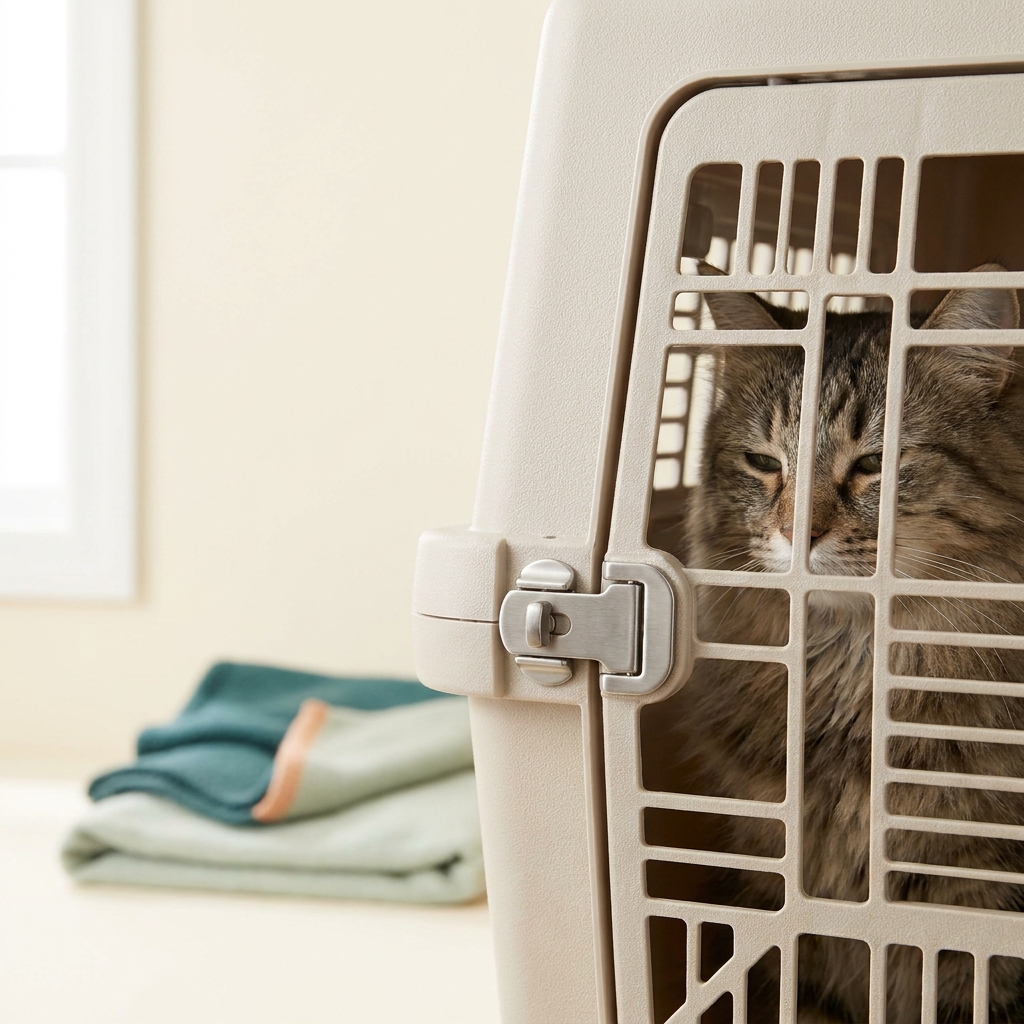
- Train in very short bouts (a few minutes) and use high-value rewards. Don’t force your cat into the carrier; let curiosity and rewards lead the way (VCA Animal Hospitals).
- Add pleasant, low-stress car practice once carrier time is calm: short drives that end back home. Aim for many positive trips for each vet trip; VCA suggests at least ten positive car rides for every one that might be a bit scary (VCA Animal Hospitals).
On the day: small details that lower stress
- Fresh familiar scent: line the carrier with your cat’s own blanket or towel. If the carrier smells like past stress or the vet, wash it first so it’s neutral and inviting (Cats Protection). Need cleaning tips? See Can you wash a cat carrier? Yes: here’s how to do it safely.
- Pheromone support: lightly spray the inside 15 minutes before your cat goes in; use sparingly (Cats Protection).
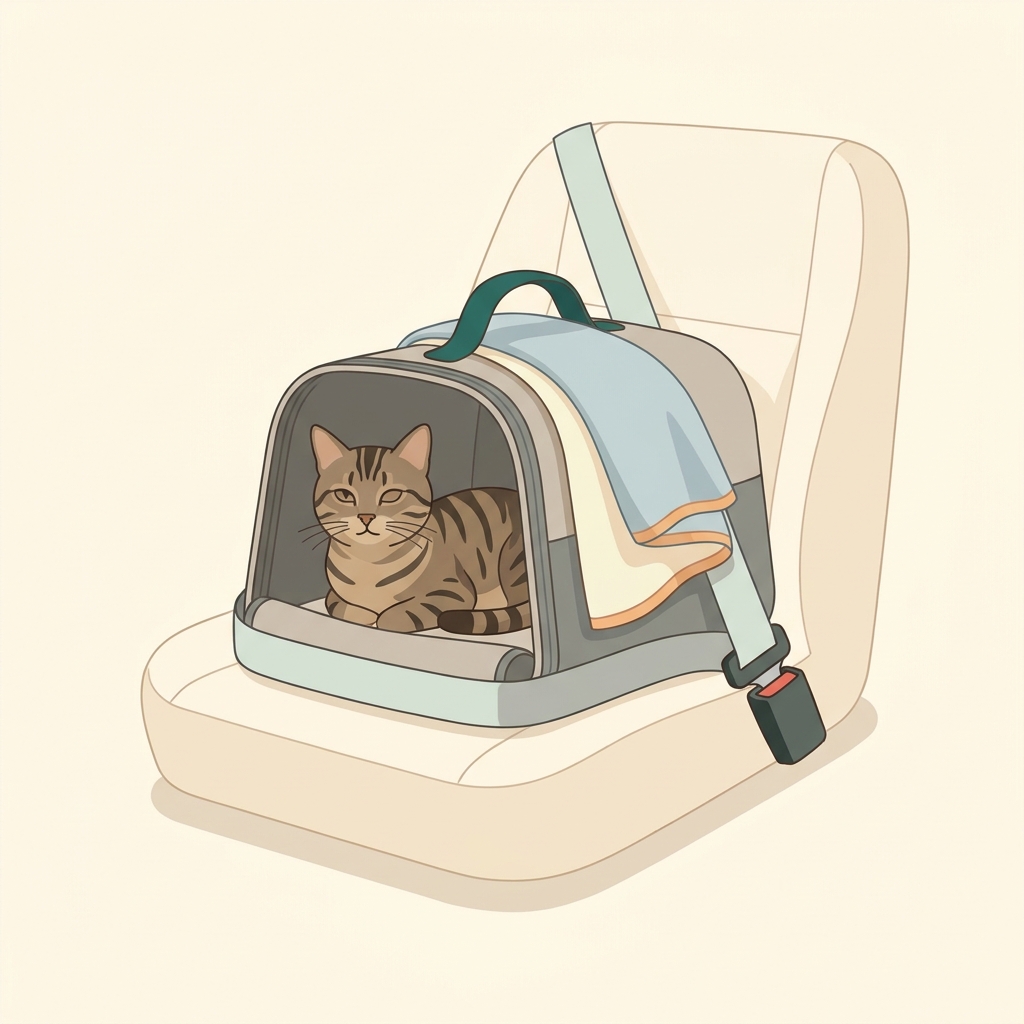
- Cover the carrier: drape a familiar towel over the top to reduce visual overload; remove if it makes heat or airflow an issue (Cats Protection).
- Travel setup: secure the carrier upright with a seatbelt, avoid air vents blowing directly on your cat, and drive smoothly. Each cat should travel in their own carrier; never travel with a cat loose in the car (Cats Protection).
- Food timing: unless your vet advises otherwise, limit food for a few hours before the journey to reduce carsickness and accidents (Cats Protection).
If your cat is already stressed right now
- Slow everything down: move calmly, keep your voice soft, and avoid direct staring. Give hiding options and keep handlers to a minimum (Cats Protection Behaviour Guide).
- Offer the carrier as the safe place: place it nearby, cover with a towel, and let your cat enter on their own if possible. If distress escalates, stop and try again later (Cats Protection Behaviour Guide).
- When anxiety is severe despite training, your vet may suggest short-term anti-anxiety or motion-sickness medication to support future travel alongside continued positive training (VCA Animal Hospitals).
A simple one-week conditioning example
This is an example pace; go slower if your cat needs it.
- Stage 1: Carrier base out in a quiet spot with your cat’s blanket; toss treats in a few times daily.
- Stage 3: Add the carrier top; door open. Feed part of a meal just inside.
- Stage 4: Close the door for 3-5 seconds while your cat eats, then open and reward.
- Stage 5: Lift the carrier a few centimeters for a second, set down, open, and reward.
- Stage 6: Sit the carrier in the car, engine off, reward calm, then return indoors.
- Stage 7: One-minute driveway drive, back home, then a favorite play session and meal.
Put this into practice
Practise with the carrier during a calm period, leaving the exit available. Note the first stage the cat can approach comfortably; work from there rather than saving every carrier encounter for a stressful trip.
Quick steps to calm carrier time
Short FAQ
Should I cover the carrier? Often yes. A light towel can reduce sensory overload; ensure good airflow and remove it if your cat overheats (Cats Protection).
Do pheromone sprays help? They can help some cats feel safer. Spray the carrier interior sparingly and allow about 15 minutes to dry before use (Cats Protection).
Cat Nibbles is independent. We link to trusted welfare and veterinary sources and keep related, deeper dives separate so each guide has a clear purpose.