
The journal
Is there crate training for cats?
Yes. For cats, “crate training” means teaching your cat to see the carrier as a safe, comfortable place and to travel calmly. Here’s a practical, step‑by‑step plan grounded in veterinary and welfare guidance.
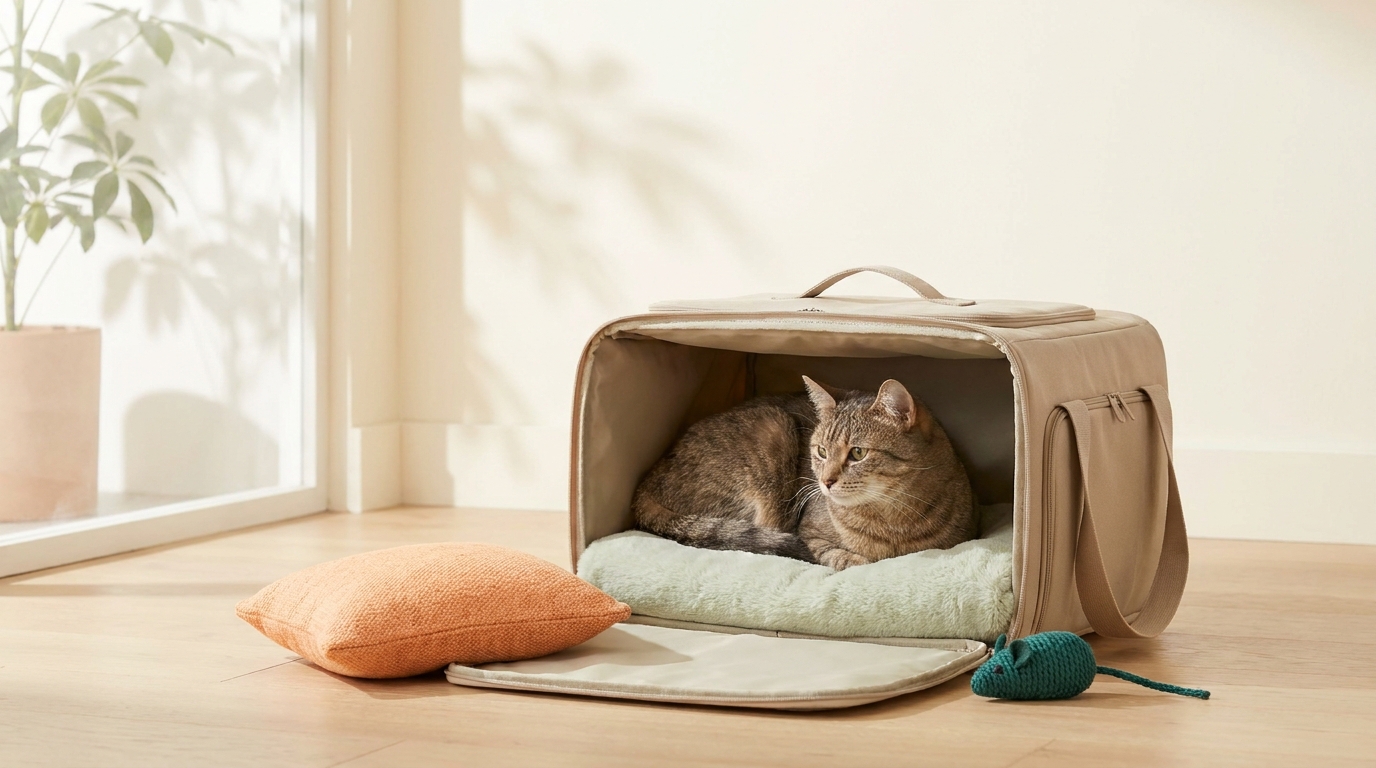
Yes. For cats, crate training is really carrier training: you teach your cat to relax in a carrier and to travel calmly through slow, reward-based steps. This approach is recommended by feline welfare groups and veterinarians and can start at any age (VCA: Crate Training and Travel; Cats Protection: Cat carrier training).
What “crate training” means for cats
Unlike dogs, cats don’t need confinement practice for house training. The goal is to make the carrier a familiar, positive den at home and a secure seat-belted space for transport. Cats should never ride loose in the car, and one cat per carrier is advised (Cats Protection). With consistent, pleasant experiences, most cats can learn to travel well; kittens may adapt faster, but it’s never too late to start (VCA).
Choose and set up the right carrier
- Pick sturdy and easy-to-clean: plastic or metal wire carriers are generally recommended. Top-openers or hard carriers with removable tops help with calm handling; good ventilation on at least two sides is important (Cats Protection).
- Skip backpack styles for routine travel. Many don’t allow enough space to stand, lie, or turn, and the motion can feel unstable (Cats Protection).
- Furnish it: add a washable blanket or towel with familiar scent; keep another light blanket to drape over the carrier during travel if it helps your cat relax (Cats Protection).
- Optional pheromones: spray a feline facial pheromone (e.g., Feliway) into the carrier and onto bedding, letting it dry before use; this can help some cats feel safer (Cats Protection; VCA).
At home, leave the carrier out and open in a quiet, lived‑in area so your cat can explore it, nap inside, and discover good things there over time (Cats Protection).
Step-by-step carrier training plan
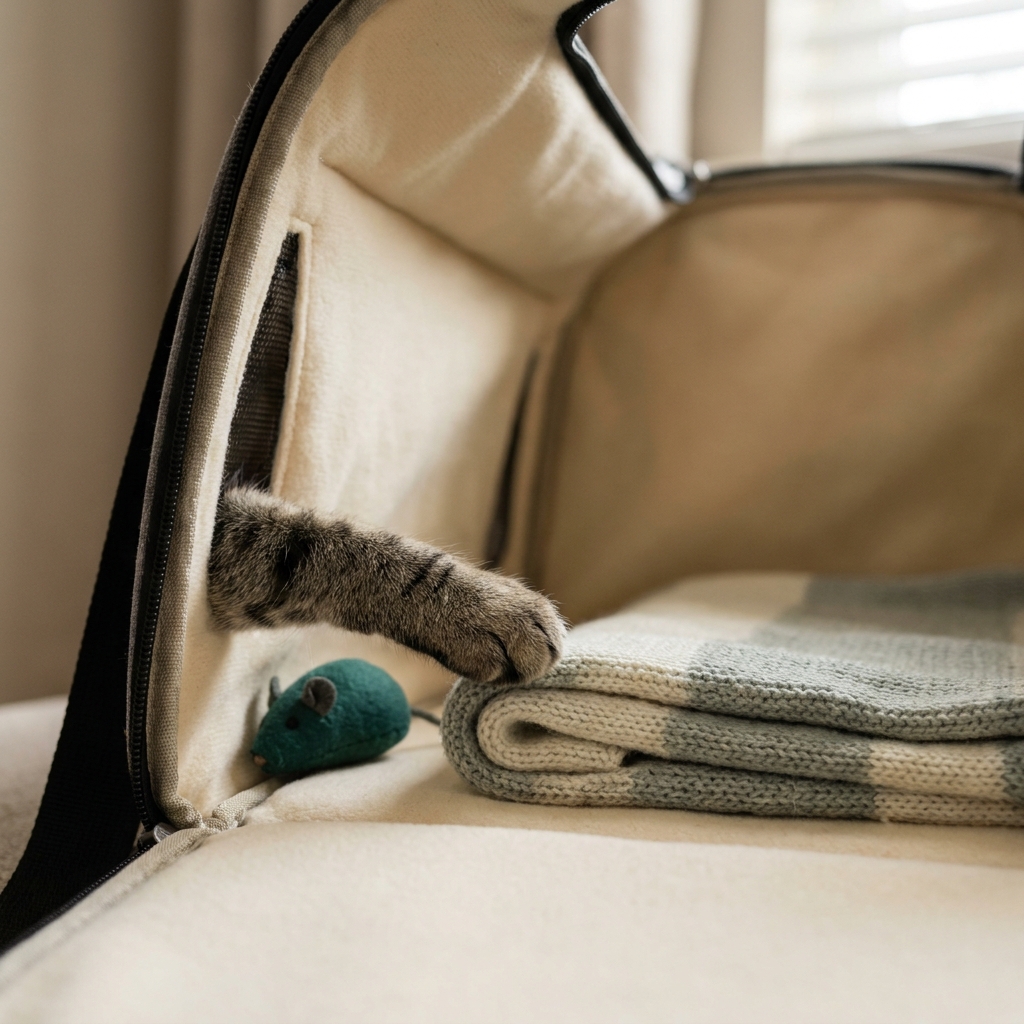
- Make the carrier a den. Keep it open with comfy bedding and occasionally drop treats or part of a meal inside. Let your cat “find” the rewards. Praise softly if you happen to be nearby (Cats Protection).
- Build positive associations with you near the carrier. While your cat is relaxed inside, drop a treat in, then step away. Repeat until your presence predicts good things (VCA tips).
- Close the door briefly. Start with a second or two, feed a treat, then open. Increase slowly while your cat remains calm. If they fuss, go back a step (Cats Protection; VCA tips).
- Lift and carry at home. With the door closed, lift the carrier an inch or two, treat, set it down, and open. Gradually carry it a few steps, then across a room as your cat stays relaxed (VCA tips).
- Introduce the car gradually. Place the carrier in the parked car, treat, and return inside. Then progress to starting the engine, then a 1-2 minute drive, building up duration over sessions. Aim for many pleasant trips; VCA suggests roughly ten positive drives for every one necessary but less fun visit, and continuing with occasional weekly drives to maintain confidence (VCA).
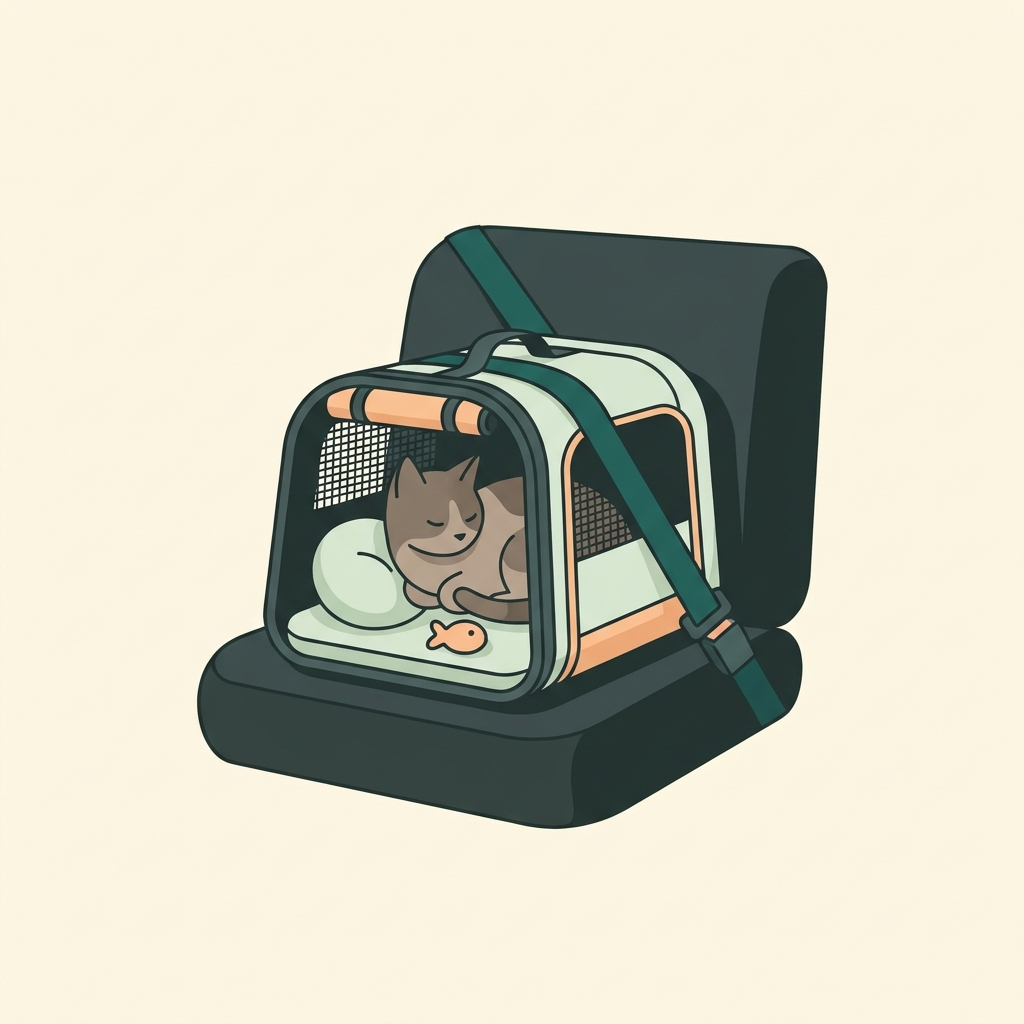
- Travel setup. In the car, keep the carrier upright and secure it with the seatbelt. Drive smoothly, avoid blasting vents at the carrier, and never leave your cat unattended in the car (Cats Protection).
Important: cats should always travel inside a safe carrier, not loose in the vehicle (Cats Protection; VCA).
If you must travel before training is complete
Use familiar bedding, add pheromone spray after it has dried, and avoid introducing a brand-new carrier for a stressful trip if you plan to train with it later (VCA). Keep early drives short and calm.
Emergency-only handling
For a very nervous cat that must be crated urgently, a brief towel-wrap technique can get the cat safely into the carrier. Use this only as a stop-gap and return to slow training afterward (Cats Protection).
Troubleshooting and when to get help
- Signs of distress such as persistent escape attempts, salivation, or nonstop vocalizing mean you should slow down, return to an easier step, and rebuild comfort (VCA tips).
- Ask your vet about anti-nausea or short-term anti-anxiety options if your cat struggles despite careful training. Medication augments training; it does not replace it (VCA).
- After any accidents, clean the carrier with mild, non-toxic soap and rinse thoroughly to remove strong scents; air-dry to keep it neutral and inviting (Cats Protection).
Related reading on Cat Nibbles
For handling tips and gear choices, see How to get an unwilling cat into a carrier? Practical steps and handling tips and Do cats prefer hard or soft carriers? Practical guide for calm travel.
Put this into practice
Decide whether you mean voluntary carrier familiarity or longer confinement before choosing a setup. For travel preparation, practise brief comfortable entries; do not treat a transport carrier as a substitute for an appropriate living environment.
Quick checklist: make the carrier a safe place
FAQ
How long will training take? It varies by cat and past experiences. Kittens often adapt quickly, but older cats can learn too. Go at your cat’s pace and keep sessions short and positive (VCA).
Are backpack carriers a good idea? They’re generally not recommended because many don’t give cats enough space to stand, lie, or turn, and walking movement can feel unstable (Cats Protection).
Can two cats share one carrier? Best practice is one cat per carrier, even if they’re friendly at home. Sharing can add stress when traveling (Cats Protection).