
The journal
Train your cat to love the carrier with positive reinforcement
A calm, step-by-step carrier training plan that uses rewards and gentle desensitization so your cat chooses to go in and settles for travel.
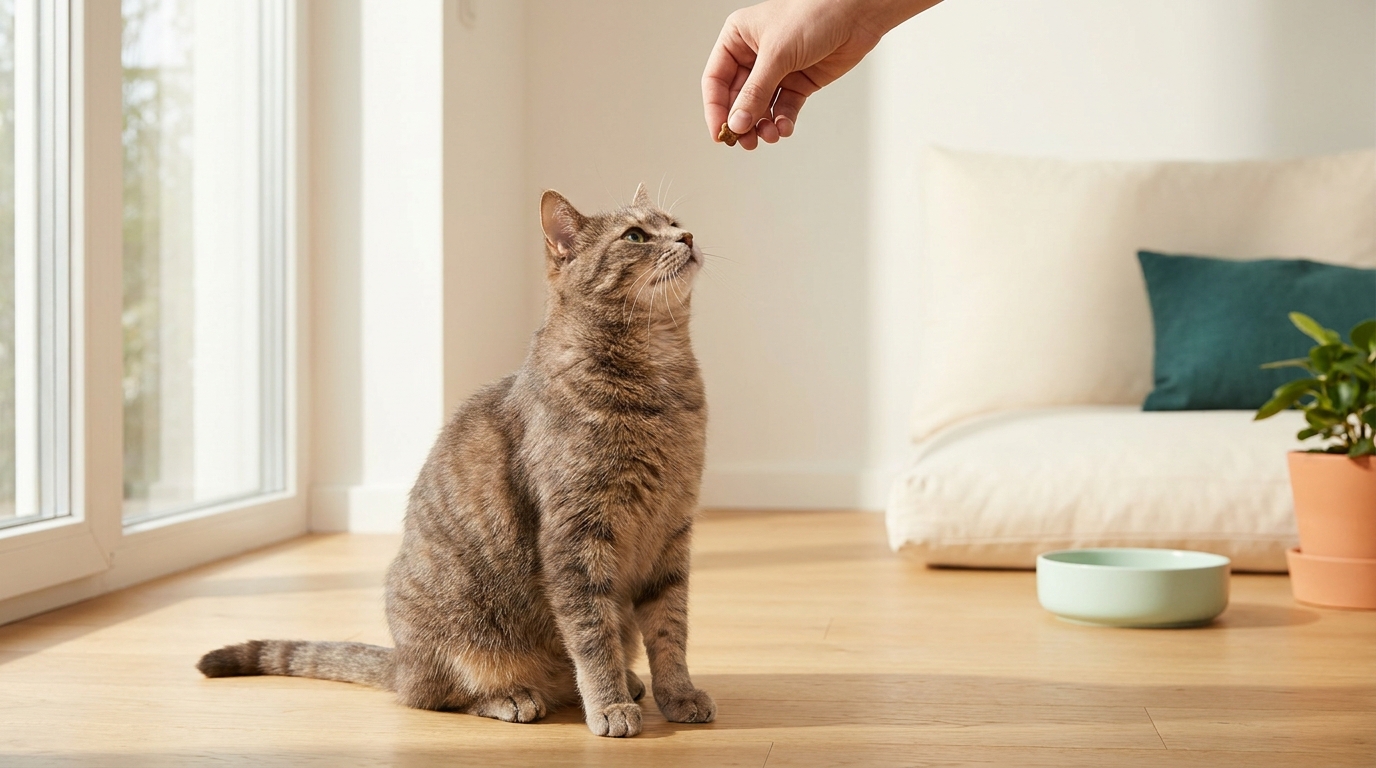
Pick a carrier that makes training easier
Choose a sturdy, easy-to-clean handheld carrier with good ventilation. Top openings help you gently lower a cat in, while front-loaders with a removable top are excellent for vet exams and training. Ensure it’s big enough to lie down and turn around, but not so large the cat slides around in transit. Backpack-style carriers are generally not recommended because space and stability are limited for many cats. See Cats Protection’s carrier guidance for details on fit, ventilation and why handheld carriers are preferred.
Progress at your cat’s pace. These stages are not a seven-day deadline, and urgent veterinary travel may require a different plan from your vet. A cat that remains very distressed needs individual advice.
Make the carrier a safe, rewarding place
Set the carrier up where your cat already relaxes. Leave it open and available every day so it becomes part of the furniture, not a signal for scary trips. Line it with your cat’s familiar blanket and periodically drop treats or a few pieces of regular food inside to build positive associations. This turns the carrier into a predictable source of comfort and rewards, not a trap (VCA crate training and travel; Cats Protection carrier training).
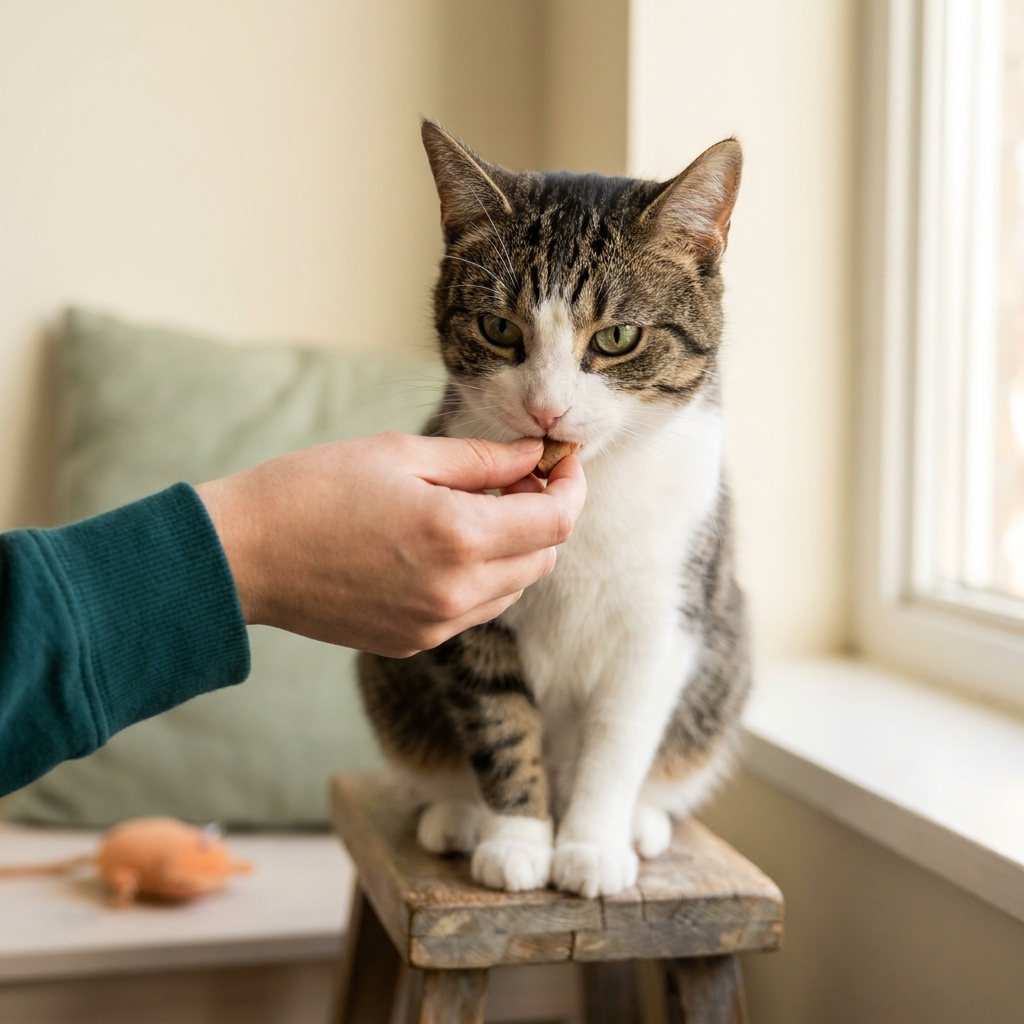
Step-by-step shaping with rewards
- Reinforce curiosity: toss a treat just at the doorway; when your cat eats it calmly, end the session.
- Gradually increase criteria: place treats further inside until your cat will step in, turn, and relax while eating.
- Add your presence: quietly sit nearby and drop another treat into the carrier while your cat is inside to pair you and the carrier with rewards (Cats Protection).
If your cat hesitates at any step, go back to the previous easy success and repeat. Avoid any forcing; progress only when your cat looks loose and comfortable, not frozen.
Close, lift, then travel: gentle progressions
1) Brief door closures
When your cat is happily spending a minute in the carrier, briefly close the door for one or two seconds, drop a treat through the top or front, and open again. Build up a few seconds at a time. If your cat seems uncertain, shorten the duration and sweeten the reward. Cats Protection advises not to rush this step and to repeat earlier stages if your cat looks unhappy (guide).
2) Add movement
With the door closed, lift the carrier a few centimeters and set it down, then reward. Gradually increase the distance you carry it across the room. A familiar blanket draped over the carrier can help some nervous cats feel secure (Cats Protection).
3) Short, positive car rides
Secure the carrier on a car seat with the seatbelt, keep it upright, and drive smoothly. Start with a one- or two-minute loop that ends at home and a reward, so car trips don’t only predict vet visits. Aim for several pleasant rides for every necessary trip to maintain confidence (VCA). For travel comfort, some cats benefit from a light cover over the carrier and the use of a feline pheromone spray applied inside at least 15 minutes before loading ( Cats Protection).
Safety first: cats should always travel in a secured carrier, never loose in the car (Cats Protection; VCA).
Troubleshooting and what not to do
- If your cat freezes or bolts at the sight of the carrier, change the picture: try a different style (e.g., soft-sided if a hard one is scary), relocate it to a quiet room, and restart with easy, treat-based steps (VCA).
- Don’t chase, stuff, or tip the carrier. Forced entries set training back and create negative associations. If you ever must use an urgent handling method, return to slow, reward-based training afterward (Cats Protection).
- Keep the carrier out and “active” between trips. Randomly feed a snack inside once or twice a week to maintain the positive link (Cats Protection).
- For cats with a history of restraint-related fear, a tailored desensitization and counter-conditioning plan from a qualified behaviour professional can help (Cats Protection on gradual introductions).
- Multi-cat homes: transport each cat in their own carrier to reduce stress (Cats Protection).
Related reading on Cat Nibbles
- How to get an unwilling cat into a carrier? Practical steps and handling tips
- Should you put a blanket in a cat carrier?
Put this into practice
Break the task into approaching, entering and remaining briefly, rewarding voluntary progress. Record the current comfortable stage and keep sessions easy enough that you do not need to force the next step.
Carrier training quick checklist
FAQ
Should I use a pheromone spray? Many owners find a synthetic feline facial pheromone, applied inside the carrier at least 15 minutes before use, helps some cats feel safer; use sparingly and allow it to dry before loading (Cats Protection).
How often should I do practice drives? Occasional short drives that end at home and treats help maintain a positive association so travel doesn’t only predict vet visits (VCA).