
The journal
How to trim your indoor cat’s claws safely
A calm, step-by-step guide to trimming an indoor cat’s claws safely, with tool tips, handling advice and clear stop points.
Short answer
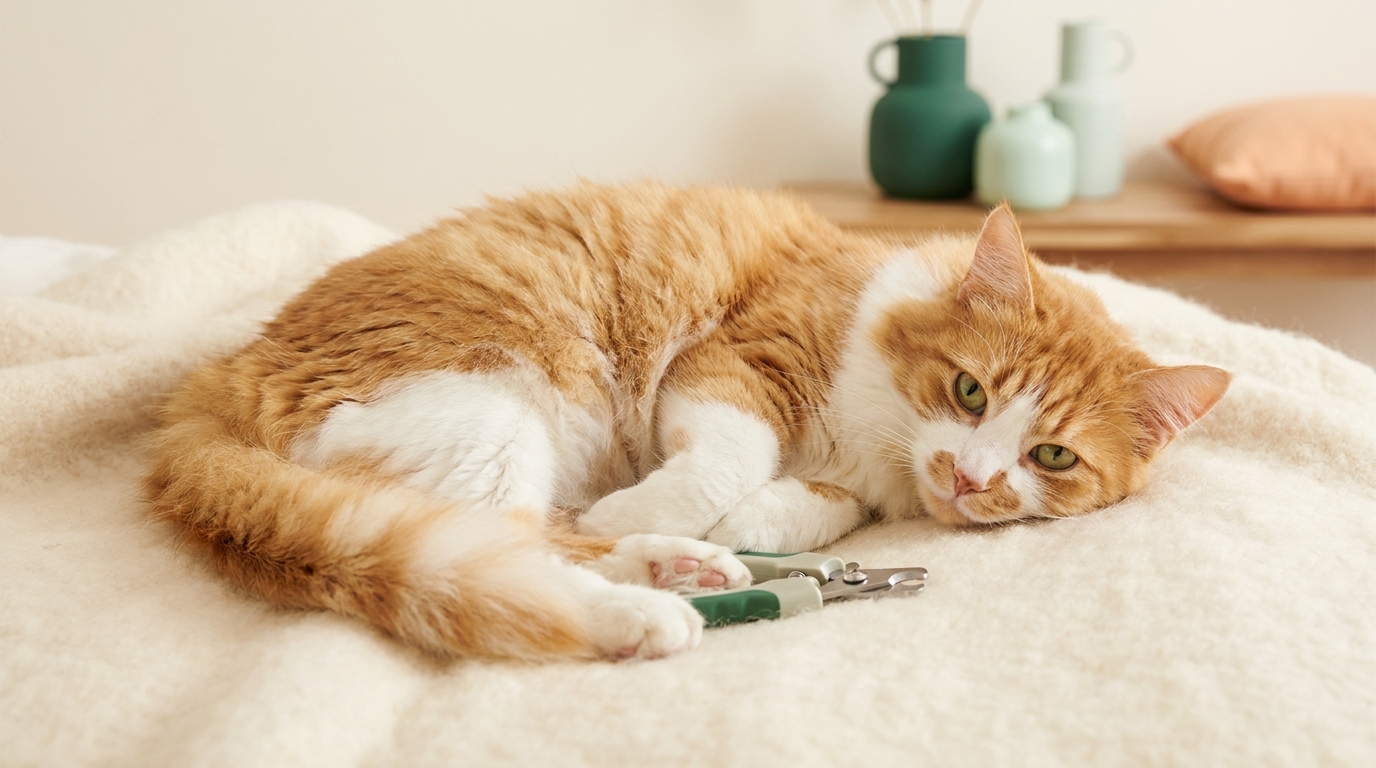
Trim your indoor cat’s claws in a quiet spot. Gently press a toe to extend the claw, then clip only the translucent tip and avoid the pink quick. Work in short sessions, reward often and stop if your cat struggles. A vet nurse or groomer can demonstrate or do it for you if needed (Cats Protection: how to trim cat claws; Cat Care Society: trimming guide).
What to know before you start
Do all indoor cats need trims?
Active younger cats often maintain their claws by scratching, but older or less mobile cats may need help. Signs claws are too long include snagging fabrics, visible tips at rest and tapping on hard floors (Cats Protection). Regular trims can also reduce the chance of nails curving toward paw pads and causing problems (Cornell Feline Health Center).
Basic anatomy helps you cut safely
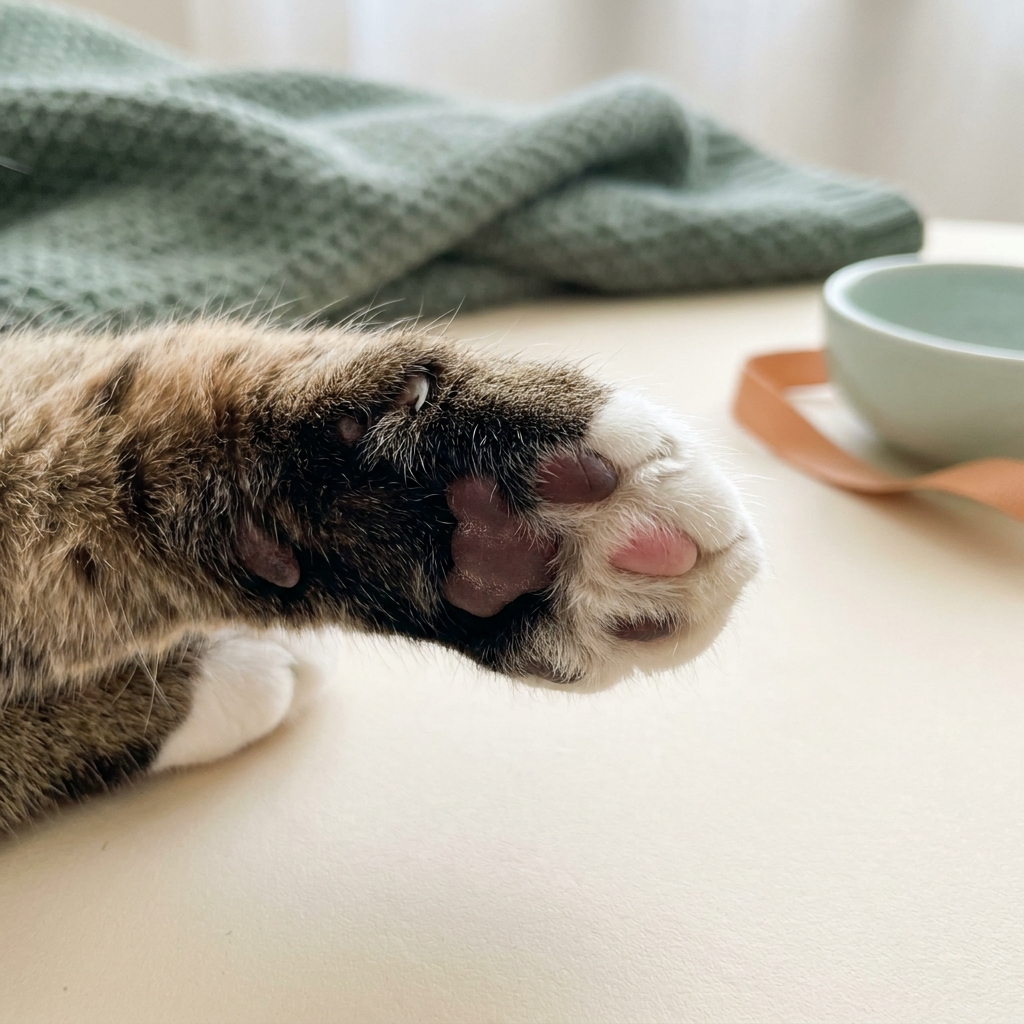
Cats’ claws are retractable. To see the tip clearly, hold a paw and press gently to extend the claw. The pink area near the toe is the quick; avoid it. Don’t forget the front dewclaws, which don’t wear down naturally and often need trims (Cats Protection; Cat Care Society).
Choose and prepare your tools
Use a pet claw trimmer you can hold comfortably. Scissor, plier and guillotine styles are common; sharp, clean blades make smoother, safer cuts (Humane World for Animals). Some groups advise that human nail clippers can work if sharp (Humane World for Animals), while others advise against them due to shape and risk of splitting (Cats Protection). Our take: prefer a purpose-made pet trimmer.
Before you clip: quick setup checks
Keep a small amount of styptic powder, cornstarch or even a dry bar of soap handy to help stop bleeding if you accidentally nick the quick (Humane World for Animals).
Step-by-step: trim your indoor cat’s claws safely
1) Set up and position
Gather tools and treats, then settle your cat comfortably. Many cats do best sitting on a lap or a non-slip surface with calm, gentle restraint. Close doors and windows to prevent bolting (Cats Protection).
2) Expose the claw
Hold a paw between thumb and forefinger and press lightly on the top and bottom of the toe to extend the claw fully (Humane World for Animals).
3) Clip only the tip
In good light, trim just the clear, sharp tip. Stay well clear of the pink quick. Short, controlled snips are safer than taking a big cut. Reward after each nail or paw. If your cat gets fidgety, pause and try later; it’s fine to spread trims over several sessions. Don’t forget the front dewclaws (Cats Protection; Cat Care Society).
4) If you nick the quick
Apply gentle pressure to the tip and use styptic powder or cornstarch. Stop the session if your cat is upset and monitor to ensure bleeding stops (Humane World for Animals).
Handling tips, common mistakes and safety calls
- Go slow. Most cats tolerate only a few nails per sitting; plan short sessions with treats (Cats Protection).
- Use sharp, appropriate tools to avoid crushing or splitting nails (Humane World for Animals).
- A towel “burrito” can help some anxious cats feel secure; if stress stays high, stop and get professional help (Cat Care Society).
Aftercare and when to see your vet
Offer praise or a favorite game once your cat relaxes. It’s common to trim one paw per day. If you notice claws curving toward or into paw pads, any signs of pain, or persistent bleeding after a cut, contact your vet. Many clinics and groomers can trim for you or demonstrate proper technique (Cats Protection; Cat Care Society).
Support natural claw care
Giving your cat scratching options helps maintain claws between trims. See our practical posts on what type of scratching post cats prefer and whether cats prefer cardboard or sisal.

FAQ
How often should I trim an indoor cat’s claws?
Check weekly and trim as needed; many indoor cats need a tidy-up about every 2-4 weeks. Front claws often require more frequent trims than rear claws (Cat Care Society).
Do I need to trim rear claws?
Often the focus is front claws, but do check rears too and trim if the tips are sharp. Start with the fronts if your cat is fussy, and space sessions over days (Humane World for Animals).
Should I use claw caps?
Claw covers are not a trimming method and can cause stress; they also interfere with natural scratching. Focus on trims and providing approved scratching options (Cats Protection).