The journal
What type of scratching post do cats prefer? A practical guide
Learn how to choose a cat scratching post that your cat will use, with practical steps on materials, height, placement and testing for best results.
Why cats scratch: behavior and welfare context
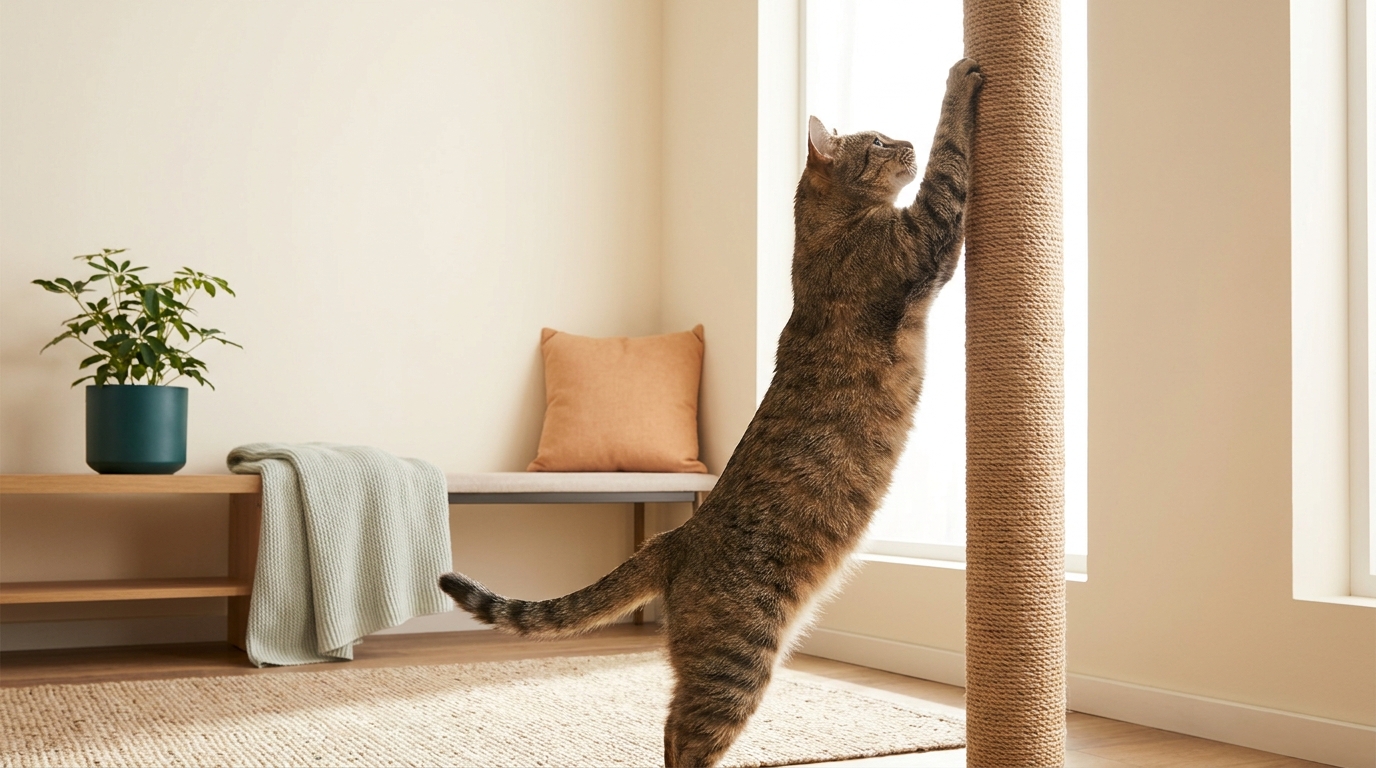
Scratching is a normal feline behaviour that helps with claw maintenance, stretching and scent or visual marking, so the aim is to give cats acceptable outlets rather than trying to stop the behaviour without replacement; this approach supports the cat's welfare and reduces harm to furniture, and it is central to current guidance for owners and veterinarians.
Veterinary and welfare bodies are clear that environmental modification and suitable scratching options should be used instead of surgical measures when possible; owners are advised to provide appropriate outlets, routine nail care and other supports as humane alternatives to declawing AVMA pet owner guide on declawing alternatives.
Understanding the reasons behind scratching makes it easier to choose posts that a cat will accept. When owners design solutions that match the cat's needs the cat is more likely to use the post and less likely to damage household items; try to think of posts as enrichment tools that meet natural behaviour rather than as barriers to it.
What type of scratching post do cats tend to prefer: materials and orientation
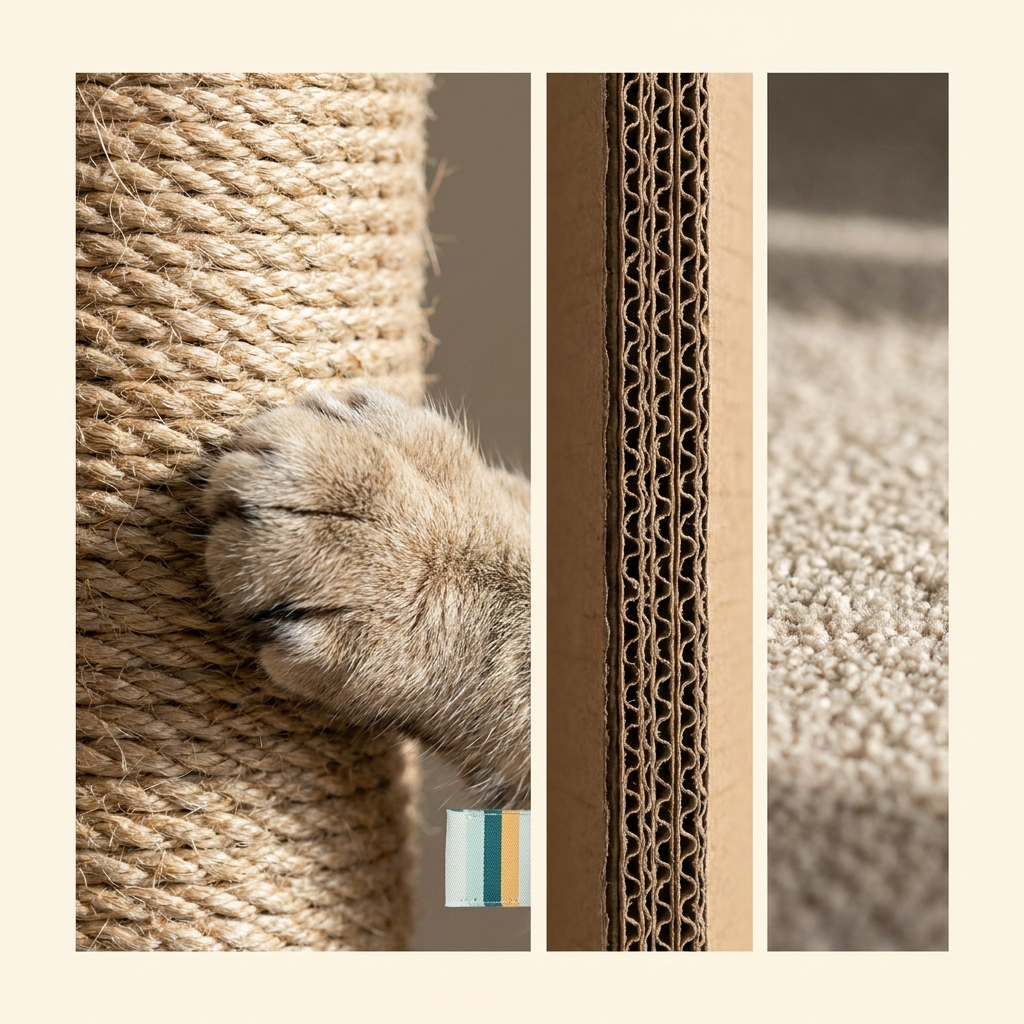
Many cats show clear preferences for textures and orientations, so a helpful start is to offer a small variety rather than expecting a single product to suit every cat; rough textures such as sisal rope or sisal fabric and corrugated cardboard are commonly accepted and recommended for many cats.
Describe the textures you can try as you would materials at home. Sisal feels rough and fibrous under a cat's claws, corrugated cardboard offers a flaking, layered bite that many cats enjoy, and carpeted posts are plusher and can feel closer to fabric surfaces; because cats differ, carpet may work for some and not for others, so trial two to three materials to see what your cat chooses.
a short observation sheet to compare three scratcher types side by side
Orientation matters as much as material. Many adult cats favour tall vertical posts that allow a full-body stretch, because standing and extending the forelimbs gives a strong stretch across the shoulders and back; others prefer horizontal or angled surfaces they can rake with front paws while lying down, so both vertical and horizontal options should be available during testing AAFP position statement on declawing and welfare.
There is no universal winner among materials and orientations. While rough surfaces like sisal and corrugated cardboard are widely recommended, individual preference is common and predictable testing at home remains the best way to identify the right post for a particular cat.
How to choose a cat scratching post: a step-by-step decision framework
Step 1, measure your cat and pick height and stability. Select a post tall enough for your adult cat to stand on its hind legs and reach full extension; a post that lets the cat stretch fully supports the natural stretching behaviour and encourages use, and stability matters because posts that wobble are likely to be avoided.
Step 2, pick materials to trial. Choose at least one vertical sisal option and one horizontal corrugated cardboard option, and include a carpeted surface if you suspect your cat prefers plush textures; testing distinct materials reduces the chance you miss a genuine preference.
What type of scratching post do cats prefer?
Cats prefer different textures and orientations, but many accept rough surfaces like sisal and corrugated cardboard and posts that allow a full-body stretch; offer a mix of vertical and horizontal options and run short trials to find the best fit for your cat.
Step 3, plan placement and a reward strategy. Place posts near sleeping areas, room entrances or where your cat already scratches, and use attractants such as catnip or silver vine sparingly to encourage first use; reward voluntary use with praise or a small treat rather than forcing the cat's paws onto the post.
When choosing between free standing and wall mounted designs, remember that wall mounted scratchers often provide extra stability and can be fixed at a height aligned with your cat's full stretch. A heavy base can also prevent wobble for tall posts. These factors make it easier for the cat to use the post confidently.
How to test and evaluate which post your cat prefers
Set up a short trial at home with consistent conditions. Try two to three different posts in similar positions for a few days each, and keep placement, time of day and small rewards consistent so you can compare use fairly; do not draw firm conclusions from a single encounter.
Measure success by frequency of voluntary use, number of full body stretches performed on the post and whether the cat returns repeatedly; note the cat's age and mobility because a senior or stiff cat may prefer lower or angled options rather than tall vertical posts.
If a post is unused after reasonable trial length and placement changes, swap the material or orientation rather than force the cat to use the existing post. A switch to a different texture or a wall fixed option often solves avoidance problems.
Common mistakes, troubleshooting and alternatives to declawing
Do not punish the cat for scratching. Punishment reduces trust, increases stress and does not teach the cat an acceptable alternative; rewarding voluntary use and offering more appropriate outlets is more effective and humane.
Avoid flimsy, wobbly posts and single material strategies because poor stability and lack of variety are common reasons posts are ignored. If a post moves or tips when the cat uses it, replace or secure it to improve uptake.
Major veterinary and welfare organisations discourage declawing and promote environmental changes, multiple appropriate scratching surfaces and routine nail care as humane alternatives. Consult your veterinarian or a certified behaviourist when scratching presents persistent problems or if the cat shows signs of fear or pain Cat Friendly guidance on alternatives to declawing.
Practical examples and a short checklist to take away
Scenario 1 single indoor cat. Offer a tall vertical sisal post next to the cat's favourite nap spot and a horizontal corrugated cardboard scratcher by an entry point. Use a short trial of three to five days per item and note which one the cat uses for full body stretches and repeated visits.
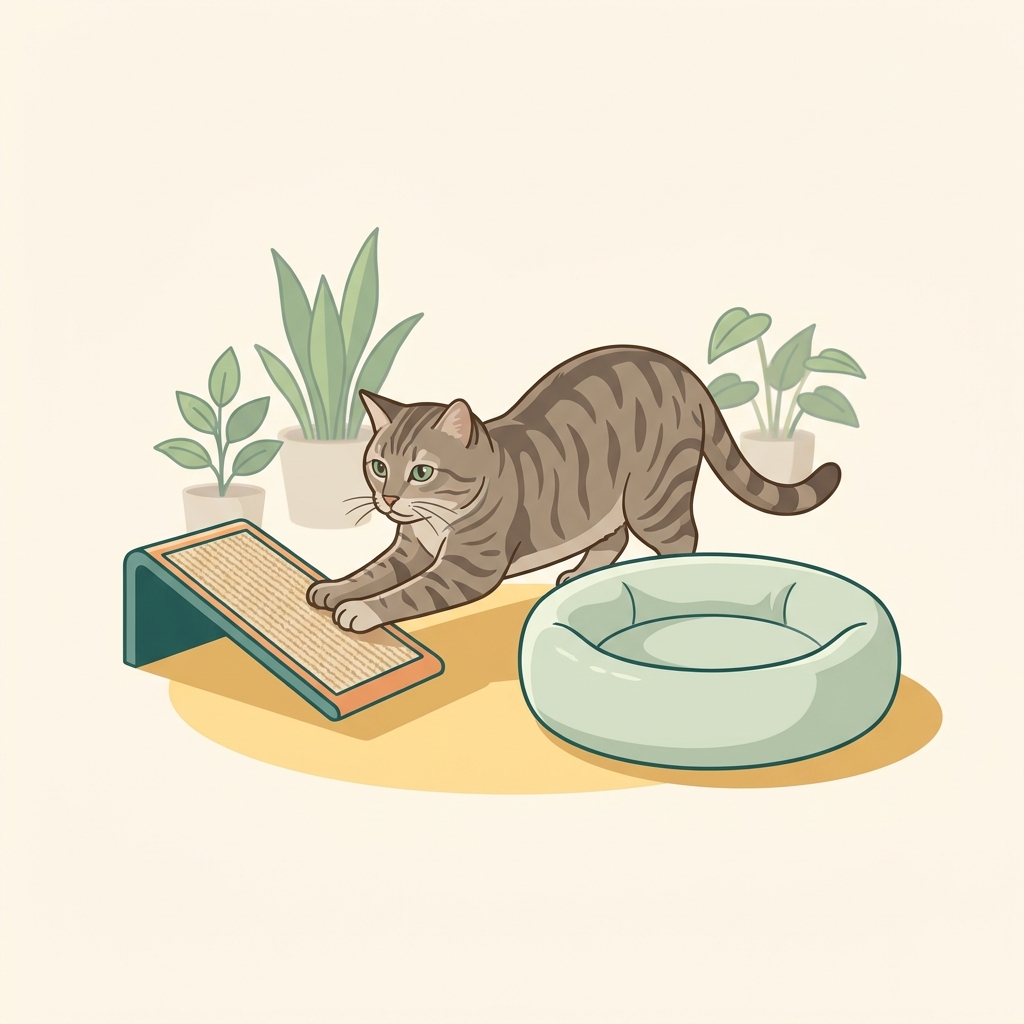
Scenario 2 multi-cat household. Provide multiple posts in several rooms so cats can claim separate scratch sites. Include a mix of vertical and horizontal options and place them near each cat's preferred rest area; competition can reduce use if posts are scarce so ensure there is at least one post per cat plus one extra.
Scenario 3 older or less mobile cat. Choose shorter or angled scratchers that allow good shoulder and forelimb motion without forcing a full upright stretch, and prioritise stable, low entries that feel secure; senior cats may also prefer softer, carpeted options over rougher textures.
Buying and testing checklist. Look for height that allows full-body stretch, a stable base or wall fixing, at least one vertical and one horizontal option, try sisal and corrugated cardboard first, place near sleep spots or previously scratched areas, use catnip or silver vine to encourage exploration, trial for several days per item and change material if unused; this approach favours the cat's welfare and reduces the need for surgical measures AVMA pet owner guide on declawing alternatives.
Frequently asked questions
How long should I trial a new scratching post before deciding it is not suitable?
Trial a new post for several days in a consistent location, ideally three to seven days, while offering similar options nearby to compare use patterns.
Is corrugated cardboard better than sisal for all cats?
No, corrugated cardboard works well for many cats but others prefer rougher sisal or plush carpet; test both to find your cat's preference.
Will using catnip force my cat to like a post?
Catnip can encourage initial exploration but should not be used to force interaction; reward voluntary use and change materials if the cat avoids the post.
Choosing the right scratching post is a simple way to support your cat's natural behaviour and protect your home. With patience, a few different textures and careful placement you can find a solution that both you and your cat accept.
References
- https://indoorpet.osu.edu/cats/basic-indoor-cat-needs/scratching
- https://www.avma.org/resources/pet-owners/petcare/declawing-cats-feline-onychectomy
- https://catnibbles.com/guides/cat-enrichment/
- https://pmc.ncbi.nlm.nih.gov/articles/PMC6661717/
- https://www.sciencedirect.com/science/article/abs/pii/S0168159120300800
- https://journals.sagepub.com/doi/10.1177/1098612X18719918
- https://catfriendly.com/cat-care/declawing-and-its-alternatives/
- https://catnibbles.com/guides/cat-friendly-home/
- https://catnibbles.com/guides/
Product options for this topic
As an Amazon Associate I earn from qualifying purchases. These are researched options, not hands-on test results. Check the exact size or model, current price and availability on Amazon.
| Product option | Fit and limits to check | Retailer |
|---|---|---|
| Product imagePetFusion Ultimate scratch lounge | A horizontal cardboard scratching surface and lounging option. Check the footprint and replace it when worn; cats differ in preferred scratching orientation. | View on Amazon |