The journal
How to teach your cat to scratch a cardboard pad
A practical plan to get your cat using a corrugated cardboard scratcher with positive reinforcement, smart placement and simple setup.
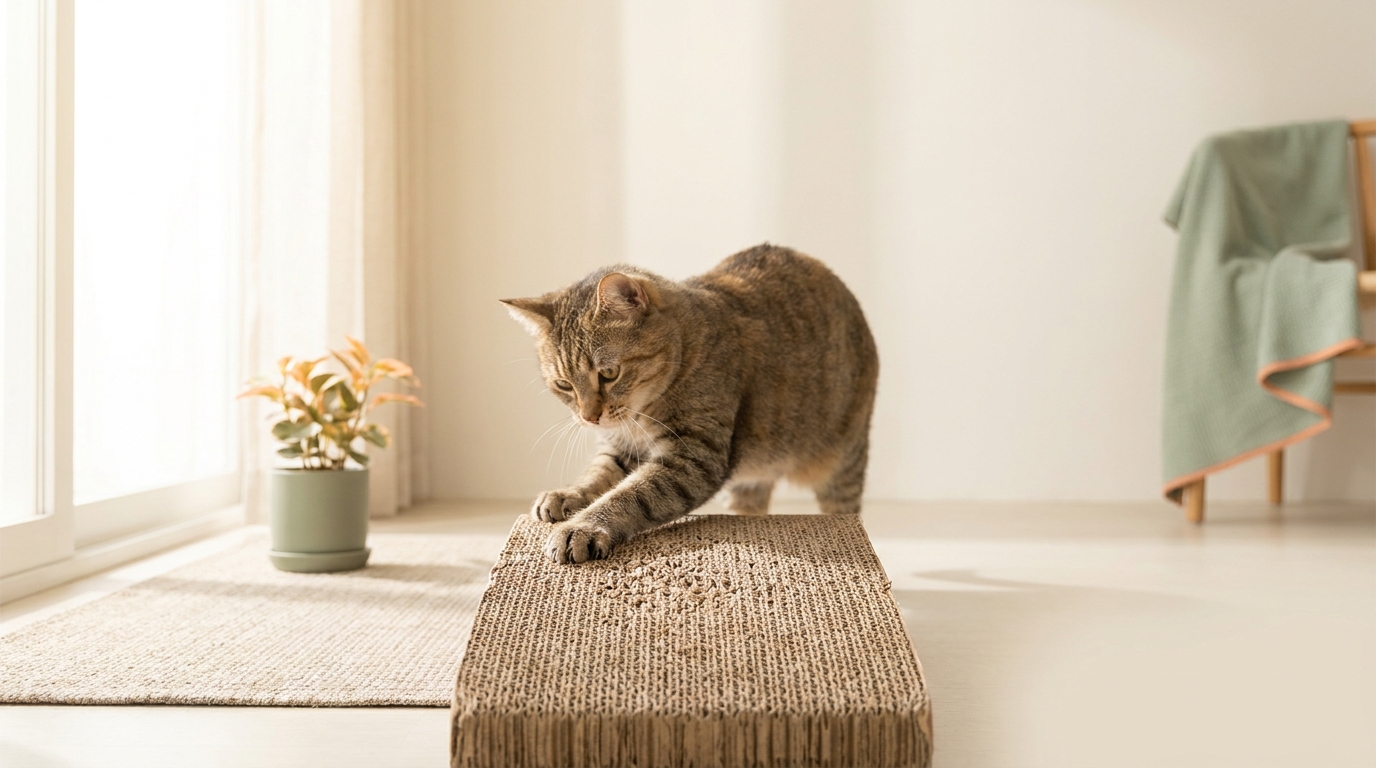
Put a stable corrugated cardboard scratcher right where your cat already scratches or next to their bed, make it hard to ignore, then reward every use. Entice with a pinch of catnip or a couple of kibbles on the surface, praise when they scratch the pad, and temporarily protect old targets so the cardboard becomes the best option (Cats Protection: Scratching).
Why cats scratch (and why cardboard can be ideal)
Scratching is normal. Cats scratch to shed claw husks and to leave scent and visual marks that communicate security and ownership (Cats Protection: Scratching). Many cats like to scratch horizontally, which is why a cardboard pad can be a better match than a vertical post for those individuals (Cats Protection Behaviour Guide).
Set up the cardboard scratcher for success
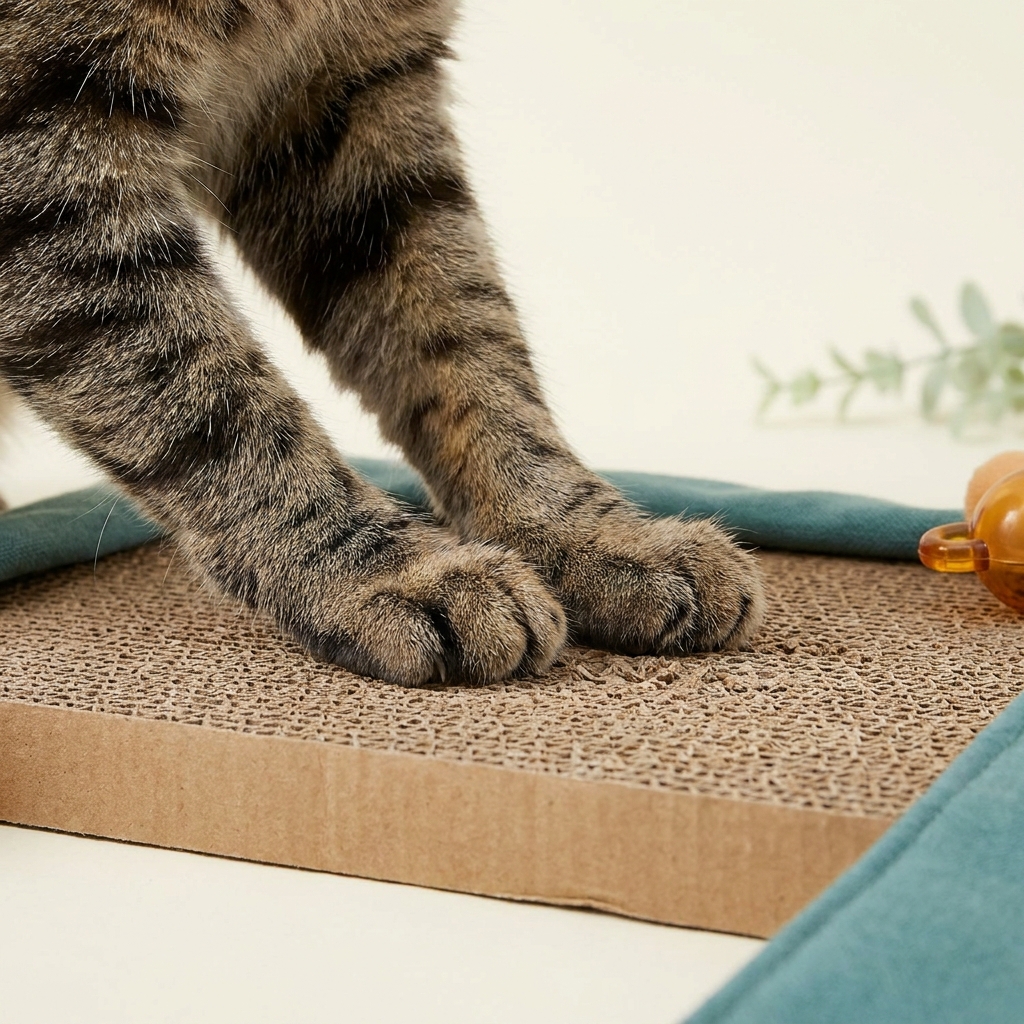
- Match their style: If your cat targets carpets or stairs, offer a horizontal cardboard pad; vertical-only scratchers may be ignored (Cats Protection Behaviour Guide).
- Make it stable: Cats prefer scratching surfaces that don’t wobble. Choose a pad that stays put and, for posts, a heavy base that won’t topple (Cats Protection: Scratching).
- Place it where it matters: Put the pad right next to the spot your cat is already scratching so it’s the easiest alternative. Cats often scratch after waking, so also place one by their bed (Cats Protection: Scratching; Cats Protection Behaviour Guide).
- Provide enough options: In multi-cat homes, each cat should have their own scratching surface in different locations to avoid conflict (Cats Protection: Scratching).
Teach your cat to use the cardboard pad: step by step
- Introduce and scent it: Put the pad in the chosen spot. Sprinkle a little quality catnip on it or place a few kibbles right on the grooves to invite a first sniff and scratch (Cats Protection: Scratching).
- Make the first scratch rewarding: The moment your cat paws at the pad, calmly praise and offer a small treat. Repeat short, positive sessions to build a habit (Cats Protection: Scratching).
- Play onto the pad: Dangle a wand toy so your cat has to step on and rake the cardboard during play. Little-and-often play helps redirect energy away from furniture (Cats Protection: Scratching).
- Make off-limits areas unappealing: Temporarily cover previous targets with thick, smooth plastic sheeting while the new habit forms, then remove once the pad is well used (Cats Protection: Scratching).
- Move it only after success: When the pad is your cat’s go-to, you can gradually shift it to a more convenient location if needed (Cats Protection: Scratching).
- Keep it positive: Praise pad use and ignore attention-seeking scratches on furniture so the pad, not the sofa, earns your attention (Cats Protection: Scratching). Avoid forcing paws onto the pad; overwhelming exposure can backfire (Cats Protection Behaviour Guide).
Troubleshooting common snags
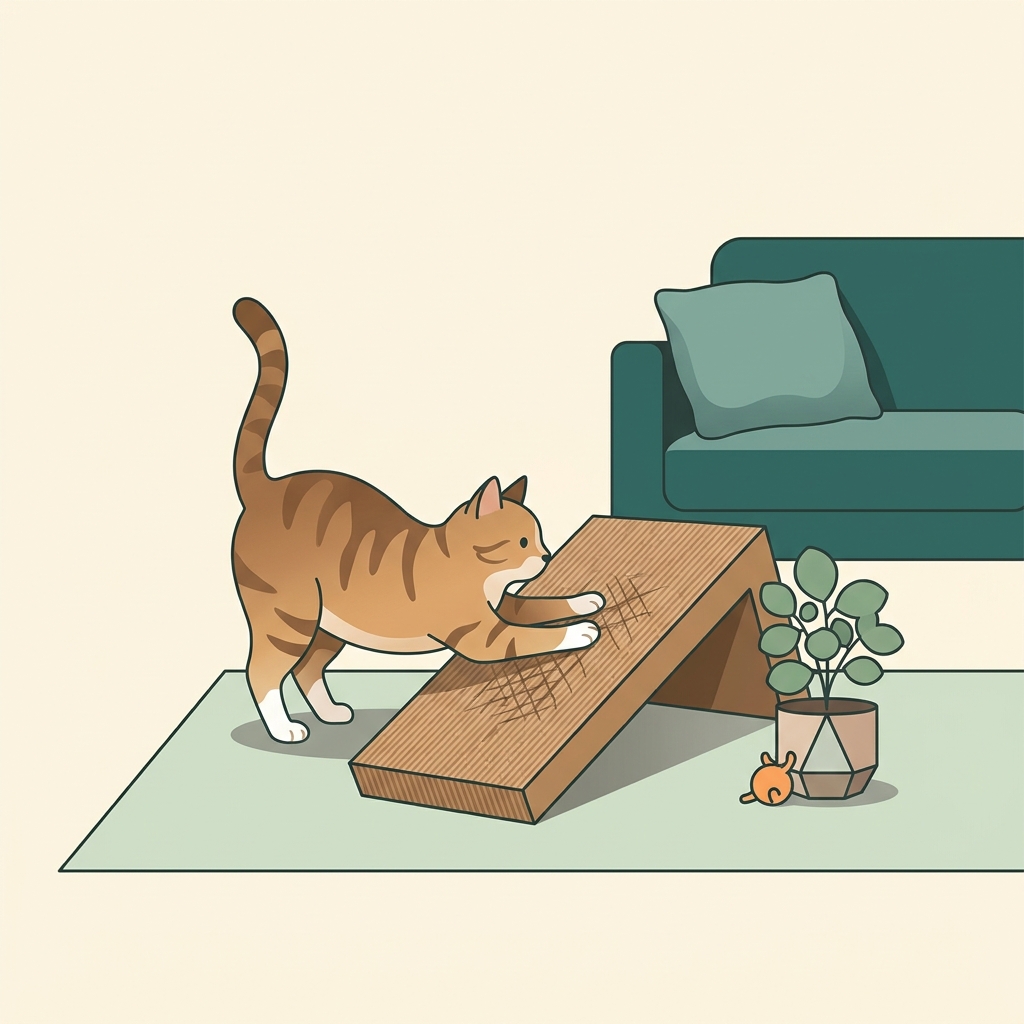
- “My cat still hits the sofa.” Put the pad flush to that exact spot, protect the fabric with smooth plastic, and reward any pad interaction. Many cats scratch for attention; quietly ignore the sofa scratching and engage when they use the pad (Cats Protection: Scratching).
- “They scratch in lots of places.” Scratching in multiple areas, especially near doors or windows, can be communication due to feeling insecure. Add several scratching options and consider what might be worrying your cat; seek qualified behaviour help if needed (Cats Protection: Scratching).
- “Where else should I put pads?” Add one by preferred sleep spots and near any prior scratching locations so your cat can succeed without searching (Cats Protection Behaviour Guide; Cats Protection: Preparing for a cat).
Put this into practice
Place the pad where scratching already makes sense for the cat and reward voluntary investigation. Keep a short observation of use and location; avoid holding or dragging the cat’s paws across the surface.
Quick cardboard scratcher training checklist
Helpful next reads
- Do cats prefer cardboard or sisal? Practical choices for your cat
- What type of scratching post do cats prefer? A practical guide
Short FAQ
Should I use catnip on the cardboard pad? Yes, many pads are infused with catnip. You can also rub quality catnip onto the surface or place a few pieces of food to encourage first use (Cats Protection: Scratching).
How many scratchers do I need? Aim for each cat to have their own scratching surface, positioned in different places to reduce conflict. Add extras by sleep spots and previous scratch areas (Cats Protection: Scratching).
Optional equipment for this guide
A cardboard option can be worth comparing if your cat uses that surface. Keep a suitable existing scratcher rather than replacing it only because another material is available.
As an Amazon Associate I earn from qualifying purchases. These are researched options, not hands-on test results. Check the exact size or model, current price and availability on Amazon.
| Product option | Fit and limits to check | Retailer |
|---|---|---|
| Product imagePetFusion Ultimate scratch lounge | A horizontal cardboard scratching surface and lounging option. Check the footprint and replace it when worn; cats differ in preferred scratching orientation. | View on Amazon |