The journal
Sisal or cardboard: which scratcher is better for cats?
A practical answer on sisal vs cardboard scratchers: what actually matters to your cat, how to choose, where to place them and when to switch.
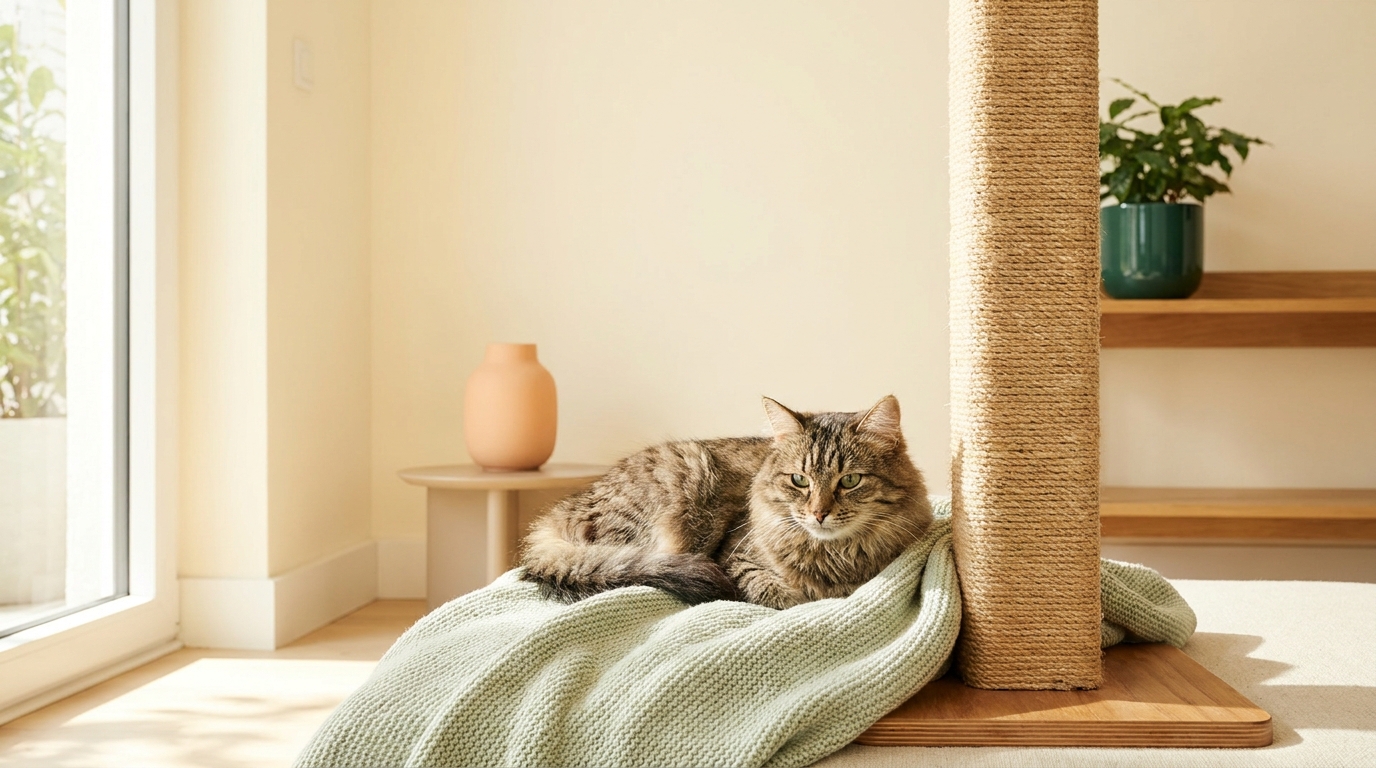
There isn’t a universal “better” choice. Most cats pick the scratcher they like by texture and position, not the label. Offer both sisal and cardboard if you can, place them where your cat already tries to scratch, and keep whichever option your cat uses regularly. Scratching posts are essential for claw care and territory marking, so having more than one is recommended (Cats Protection: Preparing for a cat).
What actually drives your cat’s choice
Instead of debating materials in the abstract, focus on these cat-centred factors:
- Availability and choice: Providing more than one scratching option reduces conflict and gives your cat an outlet they’ll actually use. Cats Protection’s "+one spare" rule for essentials includes scratching posts (Cats Protection: Preparing for a cat).
- Function: Scratching maintains claw condition and lets cats leave scent marks with their paws. Any surface your cat willingly uses can meet those needs (Cats Protection: Preparing for a cat).
- Placement: If your cat targets furniture or carpet, cover the damage and place a scratcher right next to that spot so the alternative is convenient (Cats Protection: Preparing for a cat).
- Quantity over theory: Cats generally keep claws in good condition through scratching, so ensure you provide plenty of scratch-friendly options in your home (Cats Protection: Grooming your cat).
How to compare sisal and cardboard in practice
Both can work well. A simple way to decide for your household is to try one of each:
- Set up a sisal option and a cardboard option in the areas your cat already likes to scratch.
- Watch which one your cat returns to without prompting.
- Keep the winner in place and rotate or relocate the other as a backup.
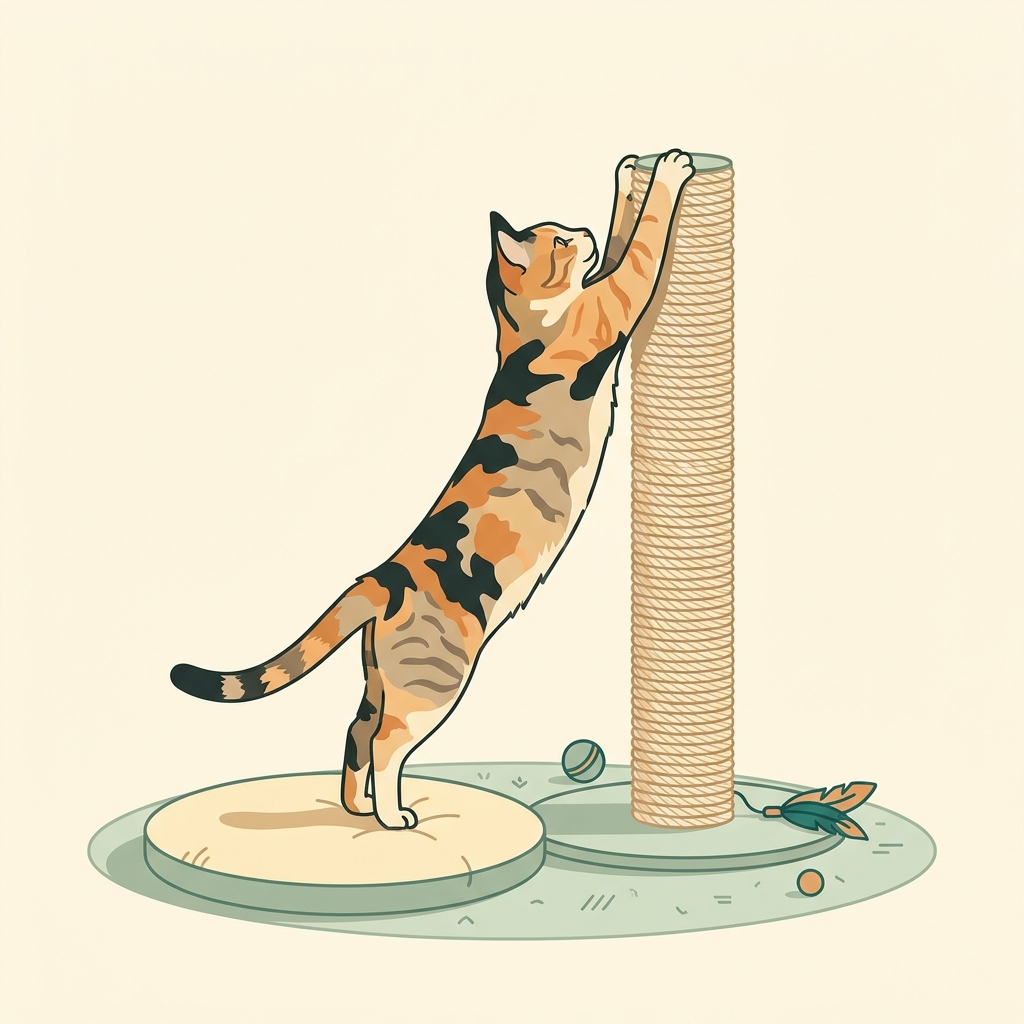
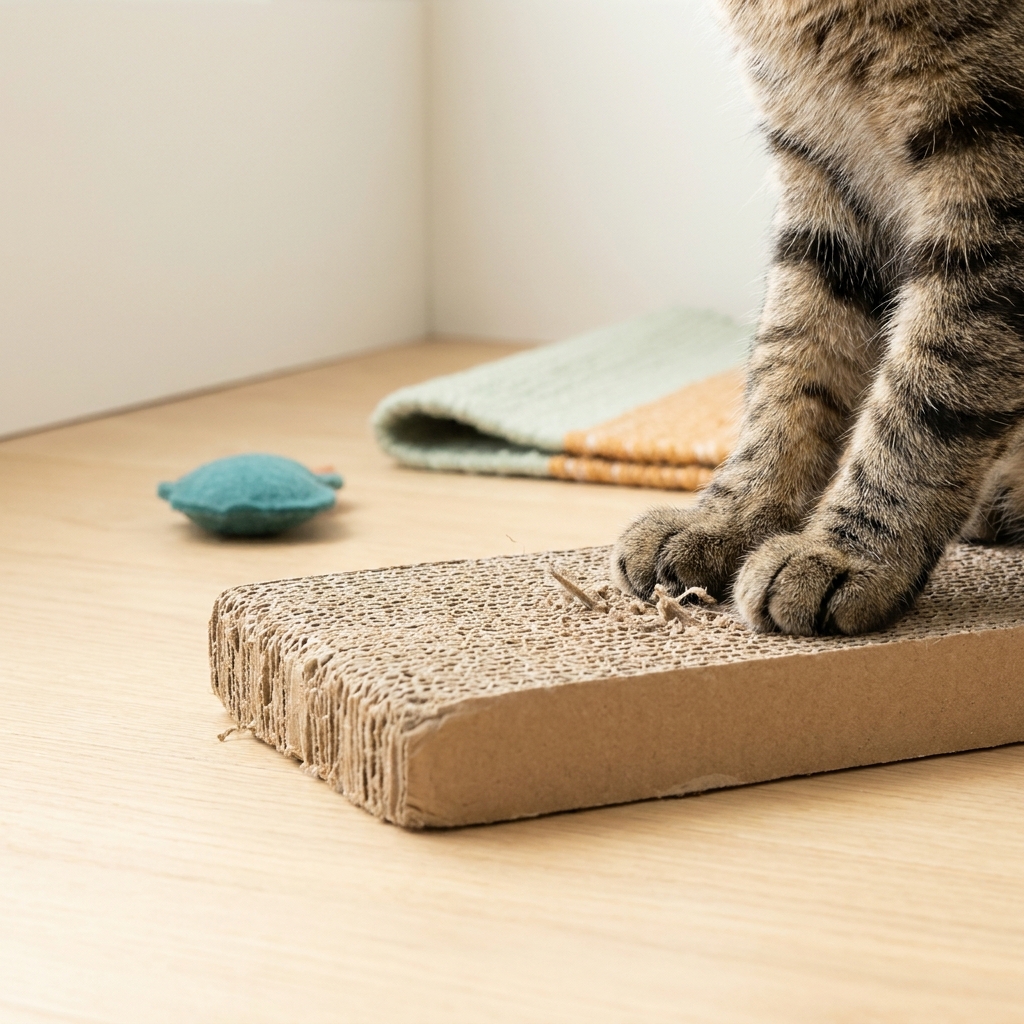
If space or budget limits you to one, start with the style your cat already shows signs of using (for example, if they scratch a sofa arm, try a sturdy, upright post beside that arm; if they scratch rugs, try a low, flat pad nearby). The key is making the approved surface the easiest one to reach where the urge to scratch naturally happens (Cats Protection: Preparing for a cat).
Placement that works (more than the material)
- Put scratchers right next to “problem” spots. Cover previous damage so your cat isn’t drawn back to it, and give a clearly better alternative an inch away (Cats Protection: Preparing for a cat).
- Offer more than one location so your cat can scratch during different daily routes and moods (Cats Protection: Grooming your cat).
- Refresh worn surfaces. A scratcher your cat has shredded flat won’t be satisfying to use.
Simple decision path (example)
Say your cat is scratching a door frame and also clawing at the hallway runner:
- Place a sturdy upright scratcher next to the frame and a flat cardboard pad on the part of the runner your cat targets.
- Cover the door-frame scratches with removable tape or a guard and roll up or cover the runner patch while you’re teaching the alternatives (Cats Protection: Preparing for a cat).
- Keep the surface your cat uses most; move the other to a secondary spot as a backup.
Put this into practice
Compare a stable scratcher in a useful location with the surface your cat already chooses. Change one feature at a time and note actual use before replacing every scratcher with another material.
Quick checklist: pick the right scratcher for your cat
Good to know
- Scratching is normal and important. It maintains claw condition and lets your cat mark territory with paw scent glands (Cats Protection: Preparing for a cat).
- Plenty of scratch-friendly options help cats keep claws in good condition on their own (Cats Protection: Grooming your cat).
FAQ
Can I just use both and rotate?
Yes. Many homes keep more than one scratcher so there’s always an appealing option available, which supports healthy claw care (Cats Protection: Grooming your cat).
My cat ignores the new scratcher. What now?
Move it directly next to the spot your cat is already using, cover the old damage, and try again. Convenience matters more than material for most cats (Cats Protection: Preparing for a cat).
If my cat scratches a lot, will I still need claw trims?
Most cats maintain claws through scratching, but some older or less active cats may still need occasional trimming; ask your vet team for guidance (Cats Protection: Grooming your cat).
More practical help from Cat Nibbles:
- Do cats prefer cardboard or sisal? Practical choices for your cat
- What type of scratching post do cats prefer? A practical guide
Optional equipment for this guide
A cardboard option can be worth comparing if your cat uses that surface. Keep a suitable existing scratcher rather than replacing it only because another material is available.
As an Amazon Associate I earn from qualifying purchases. These are researched options, not hands-on test results. Check the exact size or model, current price and availability on Amazon.
| Product option | Fit and limits to check | Retailer |
|---|---|---|
| Product imagePetFusion Ultimate scratch lounge | A horizontal cardboard scratching surface and lounging option. Check the footprint and replace it when worn; cats differ in preferred scratching orientation. | View on Amazon |