The journal
Is it bad if my cat chews on cardboard scratchers?
Chewing is not the same as swallowing, but do not assume cardboard is safe to eat. Remove loose pieces and ask your vet about repeated ingestion or signs of illness.
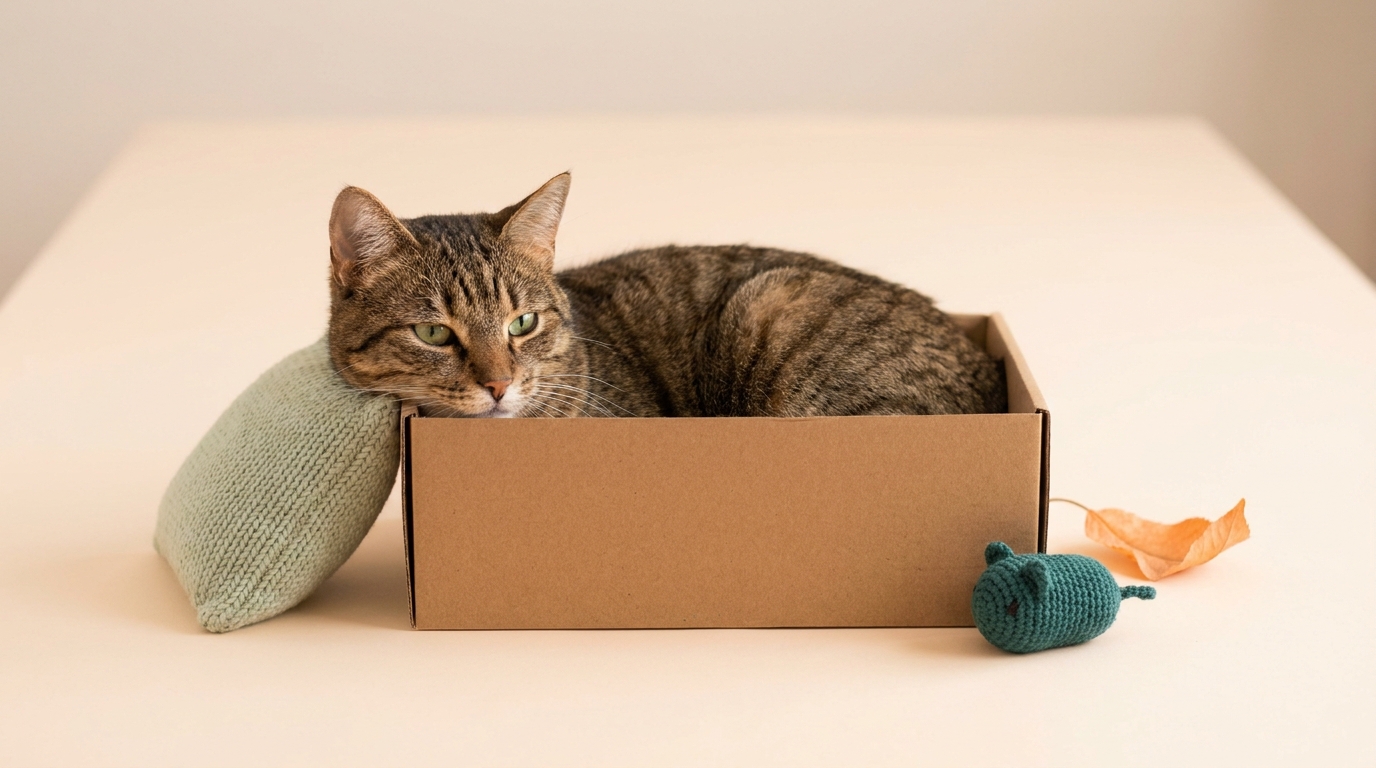
Chewing a cardboard scratcher is a reason to watch what your cat is doing. Tearing an edge is different from swallowing pieces, but it does not establish that the cardboard is safe to eat. If your cat is ingesting it, remove the item and contact your vet for advice rather than letting the behaviour continue.
Look for swallowing, not just a shredded edge
You may find loose cardboard around a scratcher without knowing whether any was eaten. Observe the behaviour without forcing your cat’s mouth open or turning the interaction into a struggle. Put the damaged scratcher out of reach if pieces are coming away, and tell your vet what you saw if ingestion is possible.
VCA’s guide to pica in cats describes persistent eating of non-food items. Medical and behavioural causes need assessment; a cardboard habit by itself does not tell you which explanation applies. Do not diagnose a dietary deficiency or change supplements based on this behaviour alone.
When to contact your vet
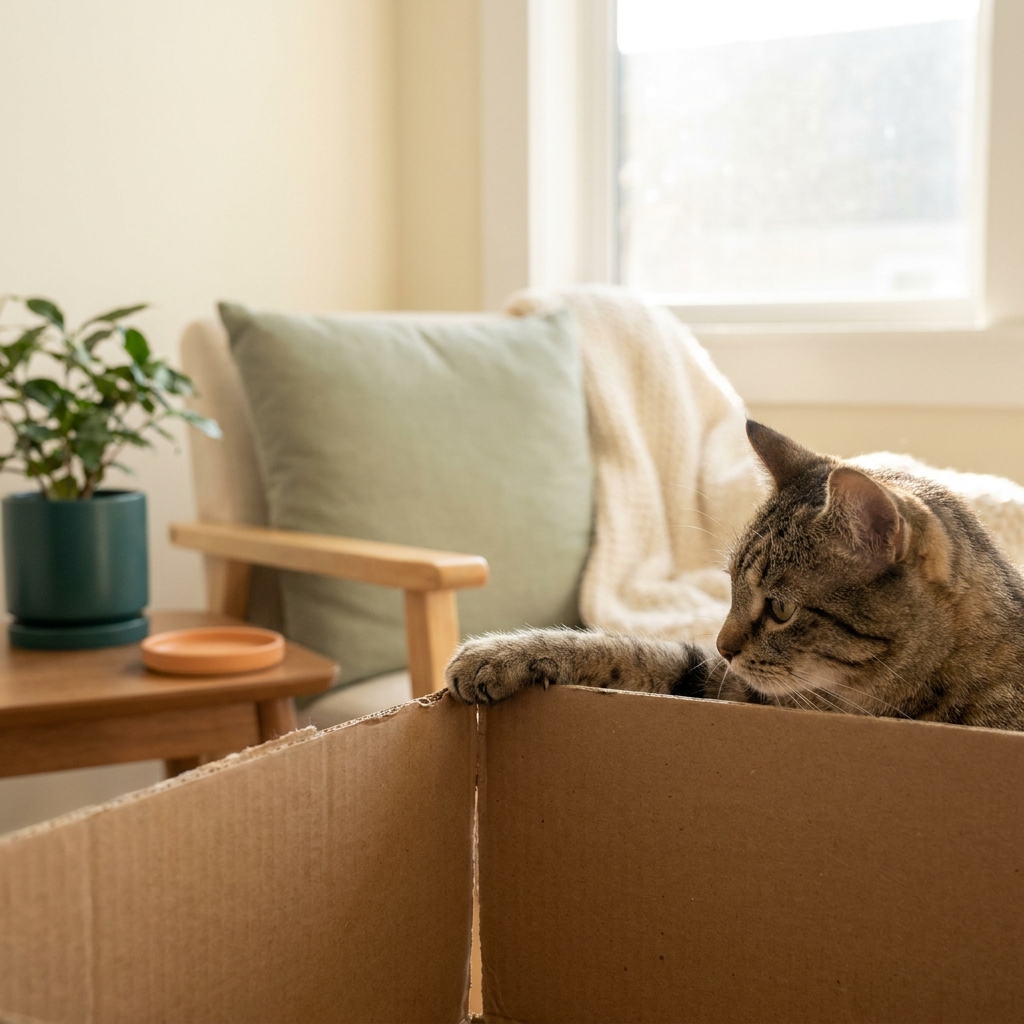
Ask for advice if your cat repeatedly eats non-food material or you are concerned that pieces were swallowed. VCA’s foreign-body guide explains that some objects cause obstruction and do not pass without complications. Vomiting, reduced appetite, abdominal discomfort, lethargy or difficulty passing stool warrant prompt veterinary contact. Do not wait for every sign to appear before calling about a suspected ingestion.
Describe the material, the approximate time and any symptoms you have noticed. Keep the packaging or a photograph if it helps identify the object. The appropriate next step depends on the individual cat and what may have been eaten; a general article cannot determine that from the scratcher’s appearance.
Keep a suitable scratching option available
Removing a chewable item does not remove the need to scratch. Offer another stable scratching surface your cat uses, such as a suitable sisal post, and observe whether they chew that too. Cats Protection’s preparation guide supports providing appropriate scratching resources and supervising items that can be shredded and eaten.
Choose a position where the cat already likes to scratch. Reward voluntary use of the alternative; do not force their paws onto it. Check its condition as part of normal housekeeping, and remove damaged loose components. If chewing persists across different materials, tell your vet rather than repeatedly substituting another edible-looking object.
Put this into practice
Distinguish scratching, occasional mouthing and swallowing pieces when describing the behaviour. Remove damaged material and seek veterinary advice for the warning signs in the guide rather than interpreting persistent chewing as a preference for cardboard.
What to do when cardboard is being chewed
For choosing a replacement, see cardboard and sisal scratchers. Material preference is separate from the question of whether your cat is swallowing non-food pieces.