The journal
Do cats prefer cardboard or sisal? Practical choices for your cat
how to choose a cat scratching post with a behavior-first guide to cardboard vs sisal, a shopping checklist and a two-week test plan.
Quick answer: what matters when choosing a scratching post
One-sentence summary
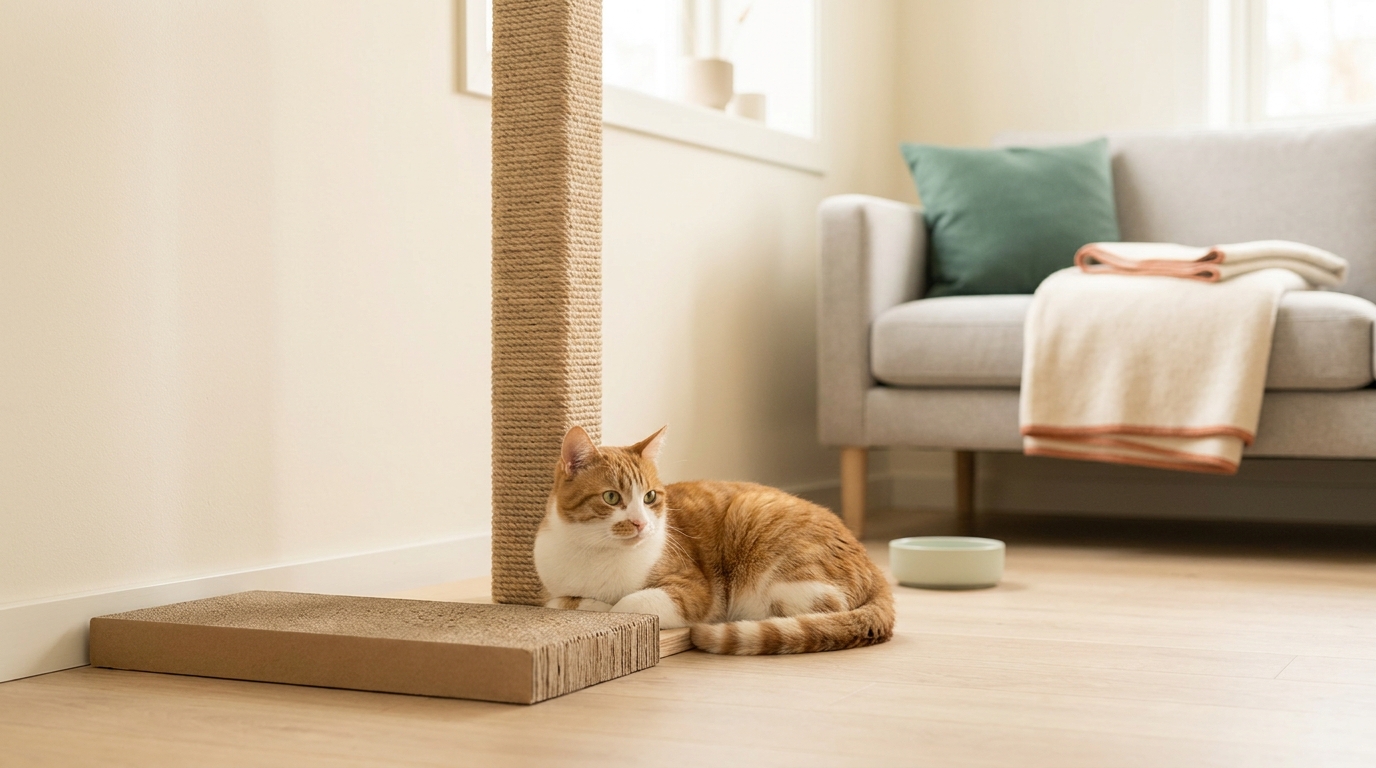
Both cardboard scratchers and sisal rope posts can work well, but the best option depends on your cat's individual preference, the post's stability and the shape you provide for the scratch action; when deciding how to choose a cat scratching post start with what your cat already does naturally and then test two options at home.
When to read the deeper guide
If you have a new kitten, an older cat, multiple cats or limited space, read the deeper sections below for texture, upkeep and a step-by-step selection framework that helps you match material, shape and placement to behavior.
Keep in mind that many cats accept more than one type of surface if the post is the right height and firmly anchored; matching posture, not just material, is often the decisive factor when you choose between a cardboard scratcher and a sisal scratching post.
Cardboard and sisal compared: texture, appeal and upkeep
How cardboard appeals to cats
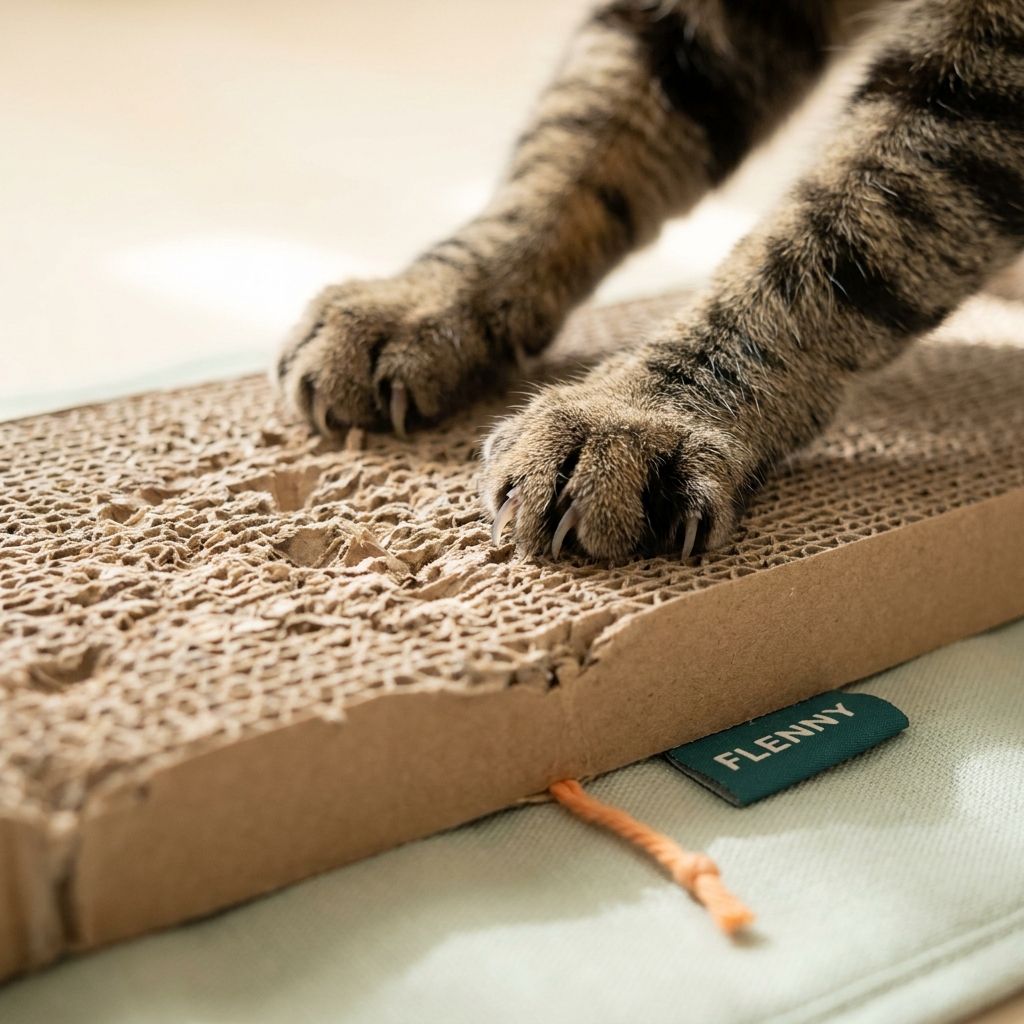
Corrugated cardboard gives under the claw and often tears in a way that satisfies the hooking and shredding action many cats enjoy, so a cat that kneads or works at a surface with short, rapid swipes will often like a well-placed cardboard scratch pad.
Cardboard scratchers tend to produce a satisfying shredding sound and visible progress as the top layers wear, which some cats find rewarding; they are typically flatter and often used horizontally, though there are standing cardboard designs that mimic vertical posts.
How sisal appeals to cats
Sisal rope and sisal-covered vertical posts offer a firmer, fibrous surface that resists ripping and encourages longer, full-body stretches where the cat extends its front limbs and digs in; cats that prefer a solid resistance under their paws and enjoy stretching up the side of furniture are often drawn to sisal rope wrapped around a post.
Sisal's fibrous texture lets claws catch and pull in a different way than cardboard, which can make it better for cats that perform long, anchored scratches while pushing off with their hind legs.
Maintenance, smell and longevity
Cardboard scratchers show wear quickly as layers loosen and tear; they are lightweight, inexpensive and simple to replace once the shredding becomes excessive, but they may need to be swapped more often in a busy household.
Sisal rope will fray over time but generally lasts longer for frequent scratchers and can sometimes be rewound or replaced on modular posts; both materials can hold light odors from cats, so regular inspection and occasional vacuuming or airing can keep them fresher between replacements.
Quick at-home checklist to compare two scratchers side by side
Cleaning differs by material: cardboard is not washable but can be vacuumed or brushed to remove loose bits, while sisal can sometimes be spot-cleaned and brushed to remove loose fibers; choose the material that fits how often you want to replace or maintain the item.
For households concerned about visible wear, a replaceable scratch pad or modular sisal wrap can be easier to manage than a single-use cardboard board, so think about whether you prefer replacing inexpensive pads periodically or investing in a durable post with replaceable parts.
For example, if your cat prefers vertical scratching but you only have room for a compact unit, prioritize a tall-but-narrow post with a weighted base over a wider but unstable model so posture is preserved even in limited space.
How to choose a scratching post: a simple 4-step framework
Step 1: Observe your cat's scratching style

Start by watching your cat for a few minutes at different times of day: does your cat scratch horizontally on the floor, vertically up a corner, or both? Note whether the cat uses short, shredding swipes or long, anchored stretches. This observation is the basis for how to choose a cat scratching post because it tells you the orientation and material your cat finds comfortable.
If your cat stretches fully on vertical surfaces and pushes back with its hind legs, a taller vertical post wrapped in sisal rope may be a better fit; if it crouches and works at a surface with repeated short motions, a corrugated cardboard scratch pad laid flat or at a slight angle could be more attractive.
Do cats prefer cardboard or sisal for scratching?
Cats do not universally prefer one material; preference depends on their scratching posture and texture preference, so observe behavior and run a short home test to find what your cat favors.
Step 2: Match material and shape to behavior
Translate what you observed into choices: for long vertical stretches pick a stable vertical post tall enough for a full-body stretch; for short horizontal or low-angle scratching choose a flat or slightly inclined cardboard scratcher or a low horizontal sisal pad if the cat likes a firmer surface.
Consider also whether your cat prefers the tactile give of corrugated cardboard or the firm bite of sisal rope and match the product description to those sensory cues rather than choosing by price alone.
Step 3: Consider durability and household factors
Look at whether the post has a wide, heavy base and check the attachment method between post and base; a wobbly post, even if covered in the preferred material, will often be ignored. If you have furniture or curtains nearby, a taller vertical sisal post or a sturdy cardboard alternative placed strategically can protect those surfaces by offering the same posture the cat seeks.
For multi-cat households prioritize durability and replaceable parts so one well-used post can be refreshed without a full replacement; in small apartments, choose a compact vertical option with a small footprint but a heavy base or wall attachment to save space while keeping stability.
Step 4: Try and iterate
Introduce two options side by side or in rotation and observe which the cat prefers over several days; keep the favorite in a resting area where the cat already sleeps or relaxes to increase chances of use, and be prepared to switch orientation or material if initial trials fail.
When testing, avoid forcing the cat to use a post and instead encourage interaction with gentle play nearby, or by placing a toy or a small amount of catnip on or near the scratch surface to create positive associations; after a week, you should see a clear leaning toward one material or the other, and you can adjust from there.
Decision criteria and a practical buying checklist
Priority criteria ranked (cat behavior first)
Rank your priorities before shopping: 1) the cat's demonstrated preference and scratching posture, 2) base stability and secure anchoring, 3) correct height or angle for full-body stretches, 4) material durability and ease of replacement, and 5) footprint and aesthetics for your space. Use the ranking to resolve trade-offs when a product fits some but not all needs.
What to check in product descriptions
When you read listings and labels, check for base size and weight, stated post height, whether the surface is corrugated cardboard or sisal rope, and whether scratch elements are replaceable; a product with a replaceable scratch pad or a modular wrap can save money and reduce waste over time.
Also look for notes on how the material is attached: glued wraps may be harder to service than screw-on panels or removable pads. If the product mentions that parts are replaceable, plan how easy and economical that replacement will be in your household before you buy.
Budget, space and multipet households
If budget is tight, cardboard scratchers often provide immediate appeal at low cost and are easy to replace, but if you expect heavy use consider investing in a sisal post with replaceable wraps to reduce frequent repurchases. In a multi-cat household, choose multiple smaller stations or one larger, highly stable post depending on how your cats share territory.
Space-constrained homes should prioritize vertical height and a narrow but weighted base or wall-mounted options to allow full stretches without occupying a large floor area; if you cannot provide height, a sturdy horizontal sisal or cardboard pad placed near favored rest spots can still protect furniture.
Common mistakes and troubleshooting
Mistakes when introducing a new post
Common missteps include placing a new post in an out-of-the-way spot, offering only one orientation when the cat uses both, and expecting immediate use without an adjustment period. If a cat ignores a perfectly good post, placement is the first thing to check.
Another frequent mistake is choosing a post that looks sturdy in photos but wobbles in practice; always test stability at home and, if possible, anchor or add weight to the base before giving up on a design you otherwise like.
Why cats ignore otherwise good posts
Cats may ignore a new post because it is the wrong texture, the wrong orientation, too far from their favorite resting area, or because it moves during use; they often prefer a surface close to where they nap so they can scratch immediately after waking. Punishment for scratching elsewhere will make the cat wary and does not teach what to use instead, so prioritize positive reinforcement.
To increase acceptance, try moving the new post to where the cat already scratches or naps, rub a little catnip or a familiar scent on the surface, and play with toys that direct the cat to scratch in the desired spot; these gentle adjustments are usually more effective than changing the post itself.
When to replace a worn post
Replace a cardboard scratcher when it has lost its structural integrity or the shredding creates trip hazards; replace sisal when the wrap is deeply frayed, exposes internal supports, or the post becomes unstable. Regularly inspect the post and plan replacements as part of normal care rather than waiting for visible damage to become severe.
If you notice a sudden drop in use for a once-popular post, reassess placement, stability and the cat's health, as changes in scratching behavior can sometimes indicate discomfort or weight-shifting that merits observation or veterinary advice.
Examples and next steps: scenarios and a 2-week test plan
Scenario A: kitten who loves to pounce and scratch
For an active kitten that pounces, leaps and uses short, vigorous swipes, a low-profile cardboard scratch pad or a short horizontal sisal pad placed near play areas is often a good fit; kittens quickly learn where the texture is and the shredding feedback of cardboard can be instantly attractive.
Because kittens grow and change, start with inexpensive cardboard options and observe whether the kitten later shifts to longer vertical stretches; if so, move to a taller, stable sisal post that supports full stretches as the kitten grows.
Scenario B: older cat with fragile claws
An older cat with thinner claws or joint stiffness may prefer softer give and lower effort scratching, so a corrugated cardboard pad or a low-incline cardboard ramp can be gentler on the paws and easier for the cat to use without jumping. Pair the surface with a stable base and place it near the cat's favorite resting spot to encourage use without extra exertion.
For senior cats that still enjoy vertical stretches but have reduced grip, a sisal post with broader strands or a sisal fabric that is less abrasive can provide resistance without discomfort; always watch for signs of avoidance that indicate the texture is too harsh.
2-week testing and replacement plan
Day 1: Place two options (cardboard and sisal) in the two locations where your cat most often scratches or naps, making sure each is stable and accessible. Day 2-3: Observe and record short sessions, noting orientation, duration and whether the cat prefers one surface consistently. Day 4-7: Rotate positions and keep noting interactions to rule out location bias. Day 8-10: Offer slight modifications such as angle changes or moving a post closer to a resting spot. Day 11-14: Decide whether to keep one, keep both, or replace one with a different height or firmness based on frequency of use and how comfortably the cat engages the surface.
Use clear criteria for the final decision: keep a post if the cat uses it multiple times per day and shows full engagement, swap if use is inconsistent or the cat avoids it, and combine materials if the cat uses each for different purposes such as digging versus stretching. This structured two-week test gives you data to act on without guessing.
Frequently asked questions
How often should I replace a cardboard scratcher?
Replace it when the layers are loose or the surface no longer offers resistance; for many cats this can be every few months depending on use.
Can I use both cardboard and sisal in the same home?
Yes. Offering both types in different locations can satisfy different scratching behaviors and reduce wear on any single post.
What if my cat still scratches furniture after I buy a post?
Check placement, stability and texture, and encourage use with play or positive reinforcement rather than punishment; consider moving the post closer to where the cat already scratches.
A thoughtful choice about scratching surfaces starts with watching your cat and testing a couple of options. With a short, structured trial you can identify what your cat prefers and choose a post that protects furniture while fitting your space and budget. If you stay observant and flexible, most cats accept at least one good option and owners find a steady replacement or maintenance rhythm that fits their household.
References
Product options for this topic
As an Amazon Associate I earn from qualifying purchases. These are researched options, not hands-on test results. Check the exact size or model, current price and availability on Amazon.
| Product option | Fit and limits to check | Retailer |
|---|---|---|
| Product imagePetFusion Ultimate scratch lounge | A horizontal cardboard scratching surface and lounging option. Check the footprint and replace it when worn; cats differ in preferred scratching orientation. | View on Amazon |