The journal
What deters cats from scratching wood (and makes the cat tree the better choice)
A humane, practical plan to protect wood while guiding your cat to a sturdy, wobble-free scratch spot they’ll actually use.
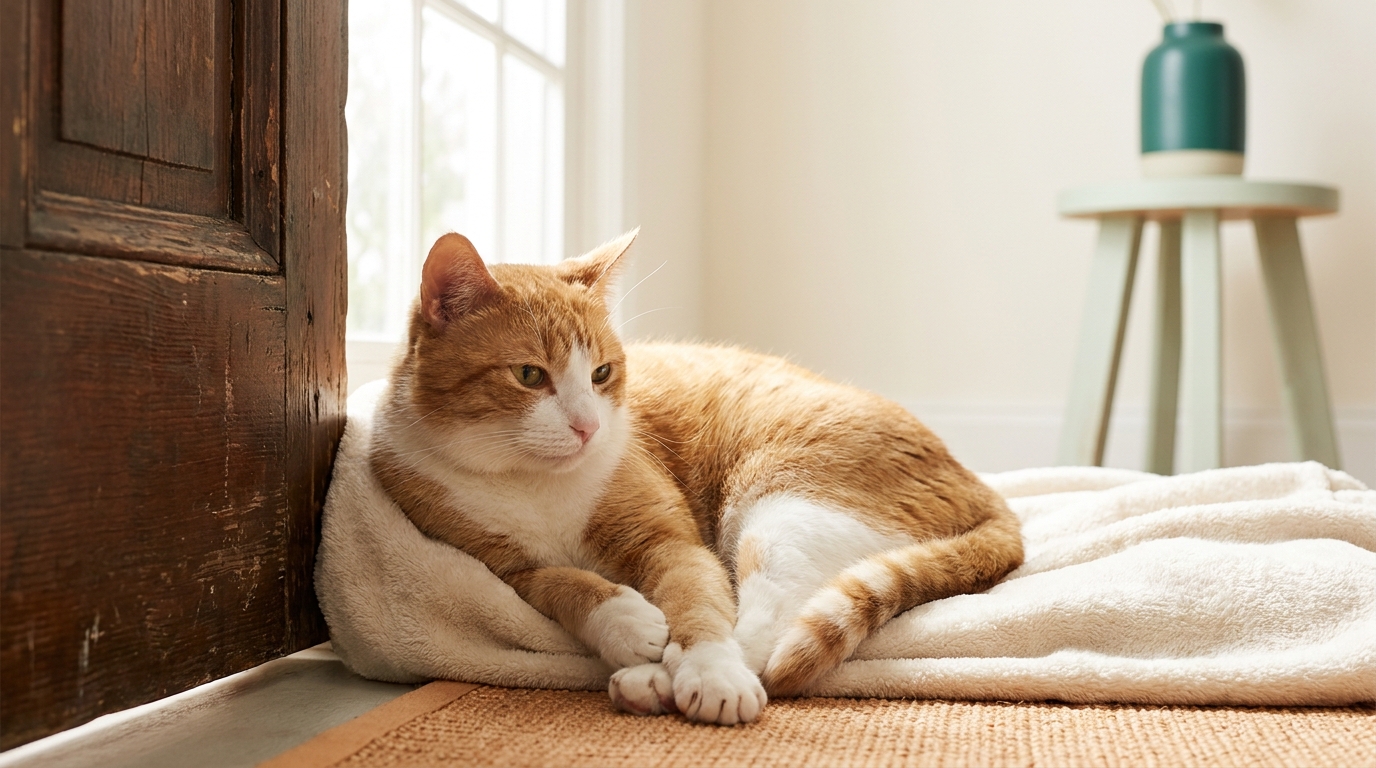
The most reliable way to deter cats from scratching wood is a two-part plan: protect the wood temporarily with gentle surface deterrents, then make a sturdy, well-placed scratcher the easiest and most rewarding option. Punishment is not recommended; redirect and reward instead (Alley Cat Allies: Redirect Scratching; PetMD: Stop Cats From Scratching Furniture).
Why cats scratch and why redirection works
Scratching is normal feline behavior used for stretching, claw maintenance, marking and stress relief. You won’t eliminate it, so the goal is to meet the need in the right place and texture (PetMD: Stop Cats From Scratching Furniture). Both sources emphasize placing alternatives where your cat already scratches and reinforcing their use, rather than trying to stop scratching entirely (Alley Cat Allies: Redirect Scratching).
Deterrents that actually make wood less appealing
Physical surface deterrents
Use short-term barriers on the precise area your cat targets:
- Double-sided tape
- Aluminum foil
- Clear plastic/vinyl guards or covers
These reduce traction and make the wood unrewarding to scratch while you teach the alternative. Remove them once your cat reliably chooses the scratcher (Alley Cat Allies: Redirect Scratching; PetMD: Stop Cats From Scratching Furniture).
Scent and sensory options
Some cats avoid citrus scents; if you use a deterrent, choose one specifically labelled for use around cats and follow its instructions. Do not improvise with essential oils or household cleaners; a physical cover and an appealing scratcher avoid reliance on scent (PetMD: Stop Cats From Scratching Furniture; Alley Cat Allies: Redirect Scratching).
Make the scratcher the easy, obvious choice
Match orientation, texture and stability
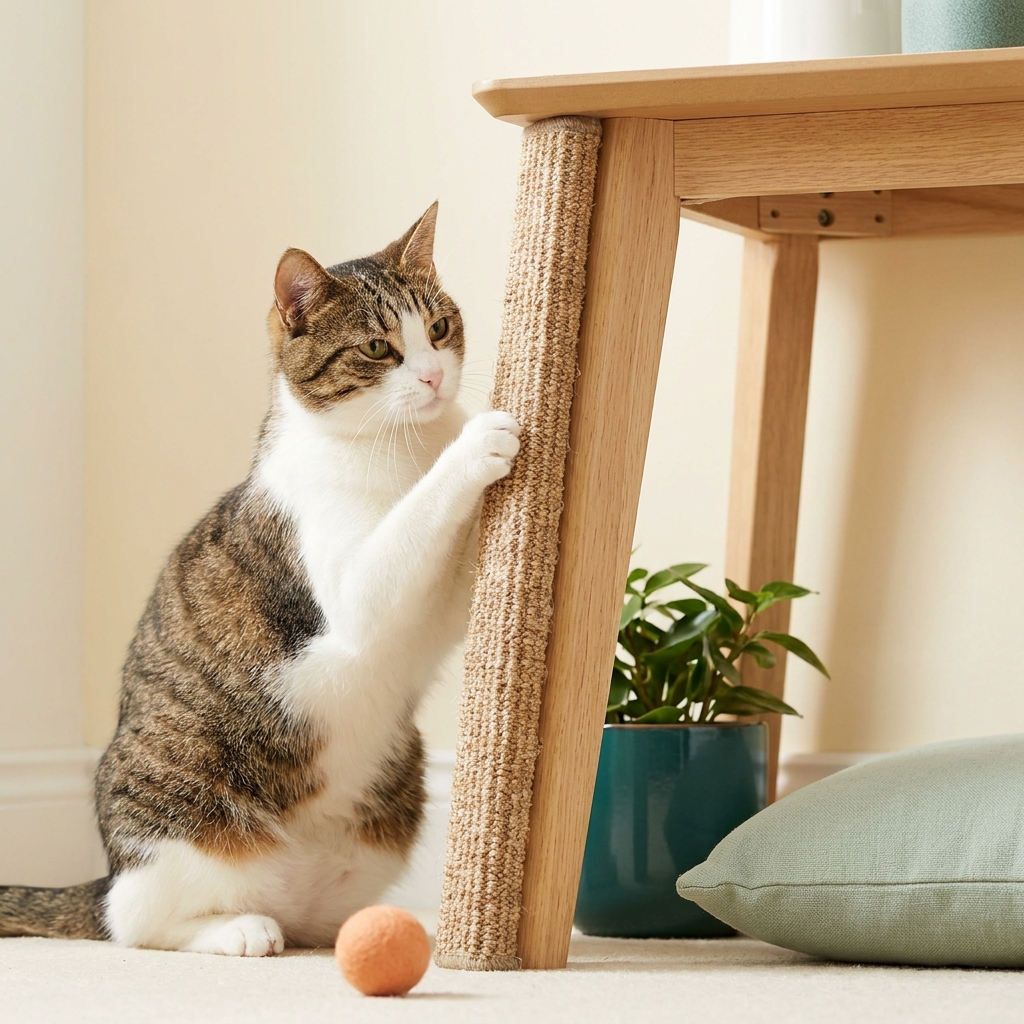
Offer what your cat prefers: tall vertical posts (often sisal) for vertical scratchers or sturdy horizontal pads (often cardboard) for floor scratchers. The post should be tall enough for a full stretch and solid enough not to tip. Stability matters; wobbly scratchers are quickly abandoned (PetMD: Stop Cats From Scratching Furniture; Alley Cat Allies: Redirect Scratching). For help choosing, see What type of scratching post do cats prefer? and Do cats prefer cardboard or sisal?.
Placement and reinforcement
Place the scratcher right beside the wood your cat targets, not across the room. Sprinkle a little catnip if your cat enjoys it, and reward with a treat or play immediately after they use the scratcher. Gentle interruption and redirection beat scolding every time (PetMD: Stop Cats From Scratching Furniture; Alley Cat Allies: Redirect Scratching).
Stop a cat tree wobbling so your cat actually uses it
If your scratcher is part of a cat tree, fix wobble first. Cats avoid unstable surfaces. Diagnose where movement begins before taking action (SOPAPETS: Cat Tree Stability Guide):
- Sliding: whole base shifts on smooth floors. A non-slip mat can help sliding, but it won’t fix loose joints.
- Rocking: one base edge lifts. Check that the floor and base are flat, free of debris, and undamaged.
- Joint play: a post or platform moves relative to the part below. Reassemble correctly, confirm all hardware, spacers and inserts are seated, and avoid overtightening that can strip materials.
- Upper sway: base is planted but top sways. Inspect all connections from the bottom up and verify geometry and connectors.
Follow the manufacturer’s assembly and, if supplied or recommended, their wall-anchoring instructions. Do not use an anchor to hide a damaged structural joint. If a post is cracked, threads are stripped, the base is warped, or movement immediately returns after correct reassembly, remove the tree from service and seek supported replacement parts or replace the unit (SOPAPETS: Cat Tree Stability Guide).
Nail care and short-term damage control
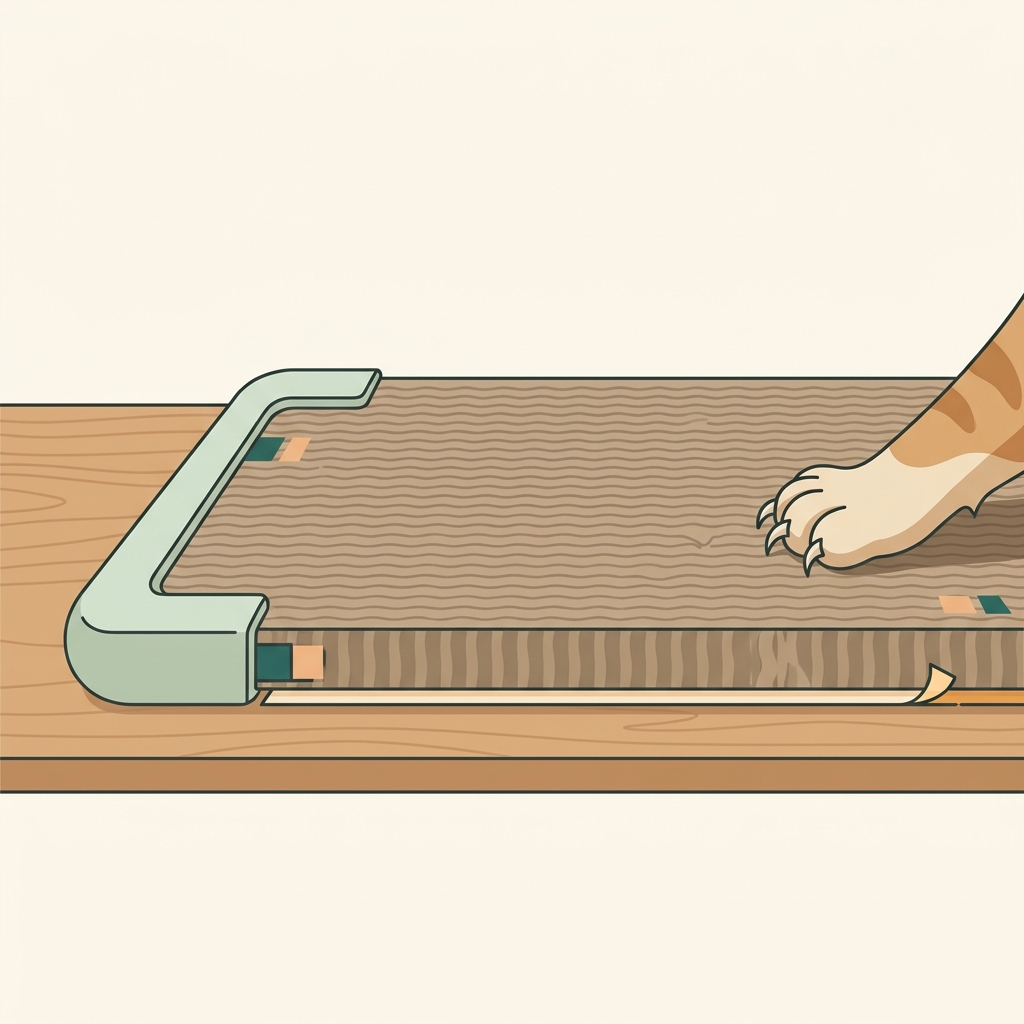
Regular nail trims reduce damage while you train, and soft nail caps can be a temporary aid if your cat tolerates them. These do not replace providing proper scratching outlets (Alley Cat Allies: Redirect Scratching; PetMD: Stop Cats From Scratching Furniture).
Common mistakes and when to get extra help
- Relying only on punishment or startle tactics can increase stress and won’t teach where to scratch. Redirect and reward instead (PetMD: Stop Cats From Scratching Furniture).
- Placing scratchers far from the problem area reduces success. Keep alternatives right at the target spot.
- Ignoring wobble. Unstable trees are often avoided; fix the structure first (SOPAPETS: Cat Tree Stability Guide).
If scratching suddenly increases or comes with appetite, litter box or behavior changes, speak with your veterinarian (PetMD: Stop Cats From Scratching Furniture).
One-week plan to protect wood and fix wobble
Quick FAQ
Do I need to wall-anchor my cat tree? Follow the product’s instructions. If the manufacturer provides or recommends an anti-tip restraint, use compatible hardware as instructed; don’t anchor to conceal damaged joints (SOPAPETS: Cat Tree Stability Guide).
Related guides
Product options for this topic
As an Amazon Associate I earn from qualifying purchases. These are researched options, not hands-on test results. Check the exact size or model, current price and availability on Amazon.
| Product option | Fit and limits to check | Retailer |
|---|---|---|
| Product imagePetFusion Ultimate scratch lounge | A horizontal cardboard scratching surface and lounging option. Check the footprint and replace it when worn; cats differ in preferred scratching orientation. | View on Amazon |