The journal
Why cats chirp at birds: what it means and how to respond
When your cat “talks” to birds with quick chirps or jaw-clicks, it’s usually normal hunting arousal. Learn the likely reasons, simple enrichment that helps, and when to call your vet.
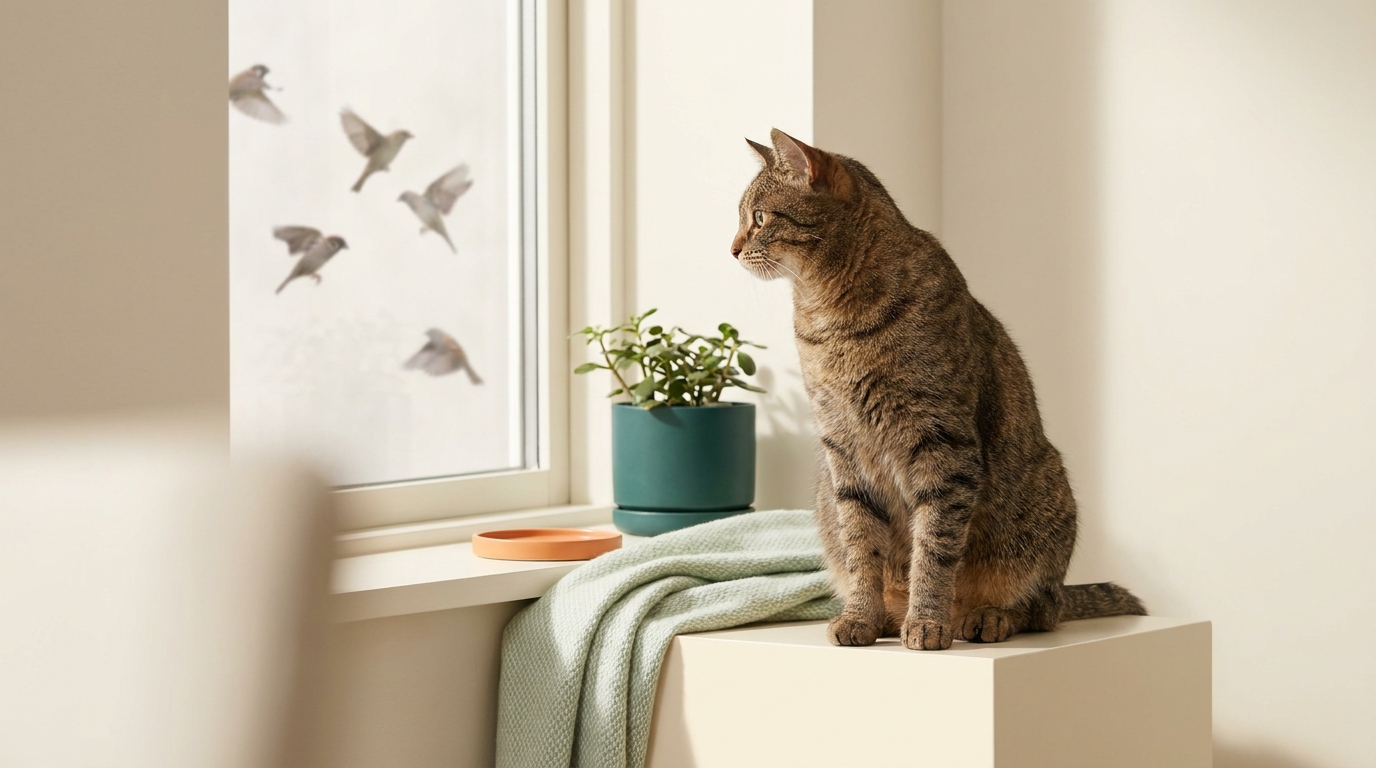
Short answer: most cats aren’t holding a conversation with birds. They’re chattering or chirping because prey has their full attention, and that sound often appears when a cat sees birds or squirrels it can’t reach. It’s usually normal predatory arousal, not a social meow Cats Protection: why cats chatter and chirp; Hill’s Pet: cat chirping explained.
What you’re hearing and seeing
Chattering is a rapid open-close of the jaw with clicking or stuttering sounds, sometimes mixed with high chirps. Typical body language includes a fixed stare, tense body and tail movement while watching prey through a window Cats Protection; Cats.com: chattering overview.
Why cats make that sound
Excitement or blocked access
Seeing prey can trigger excitement and adrenaline. If the bird is out of reach (like behind glass), cats may chatter from arousal or frustration at not being able to pounce Cats Protection.
Part of the hunting sequence
Chirping often shows up as cats lock onto potential prey and begin the early “prey sequence” of staring and getting ready to stalk or chase Chewy: Why cats chirp at birds.
Other theories you may notice
- Mimicry: some observers think the bird-like sounds may imitate prey calls, potentially helping cats get closer Cats Protection; Cats.com.
- “Kill-bite” rehearsal: the jaw motion may resemble the rapid bite used to dispatch prey; this is a hypothesis, not a proven rule Cats Protection; Cats.com.
What to do at home
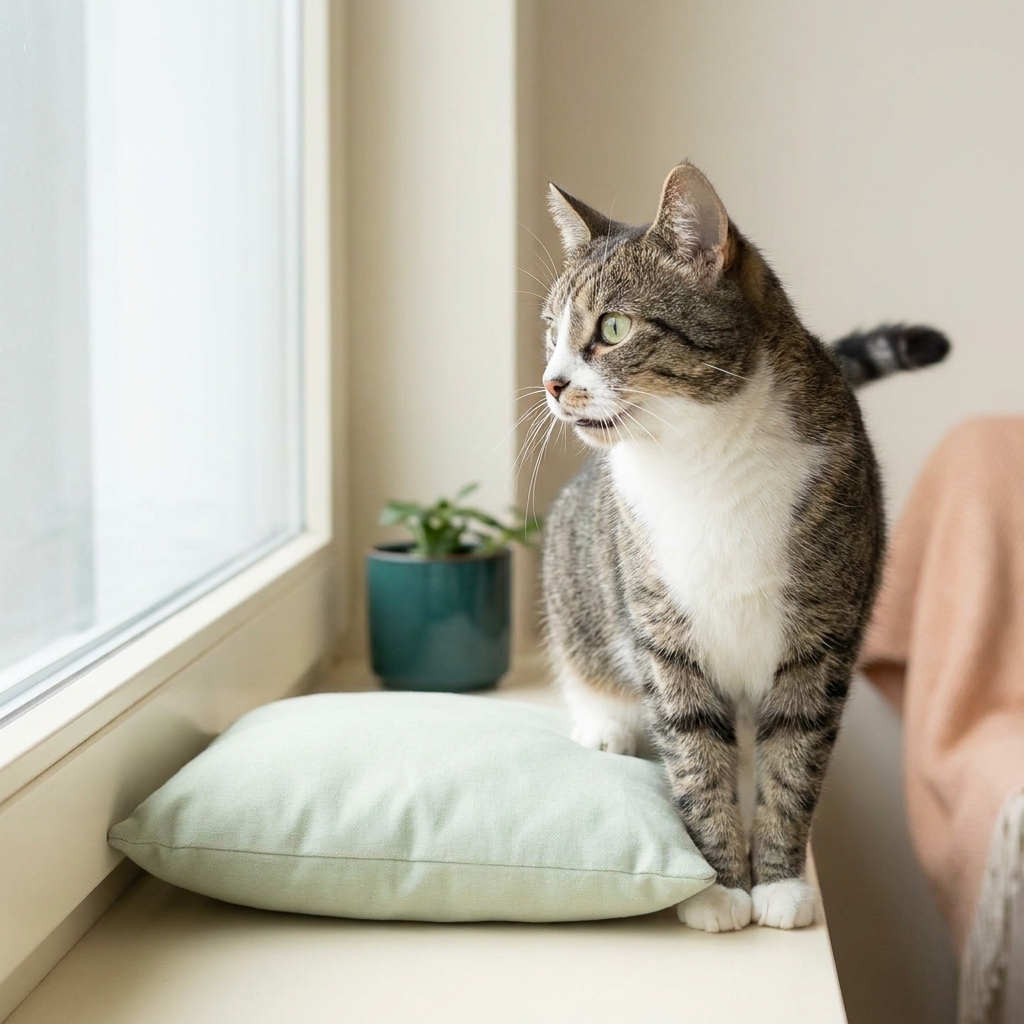
For most cats, chattering at birds is normal and doesn’t need to be stopped. Focus on giving safe outlets for that drive and reducing frustration when wildlife appears.
- Schedule short, daily play. Interactive “fishing rod” or wand sessions that mimic prey (ground skitter for rodents, swoops for birds) let your cat stalk, pounce and “catch,” which can reduce window-triggered arousal Cats Protection.
- Time play around meals. Playing before you feed helps satisfy the hunt-stalk-catch-eat sequence and leaves cats more settled afterward Chewy: Why cats chirp at birds.
- Offer foraging and puzzles. Puzzle feeders and treat-dispensing toys channel energy into problem-solving and foraging-like activity Chewy: Why cats chirp at birds. For a gentle start, see Do cats enjoy puzzle feeders? Practical steps for calm introductions.
- Manage the view if needed. If your cat seems distressed or fixated, block the lower part of favored windows with opaque film or stickers to reduce triggering sights Cats Protection.
- Redirect rather than scold. If the sound ramps up, invite a brief wand-toy session and then let your cat return to calm window time Cats Protection.
For more daily structure, try our simple routine here: How to entertain an indoor cat: a simple daily plan.
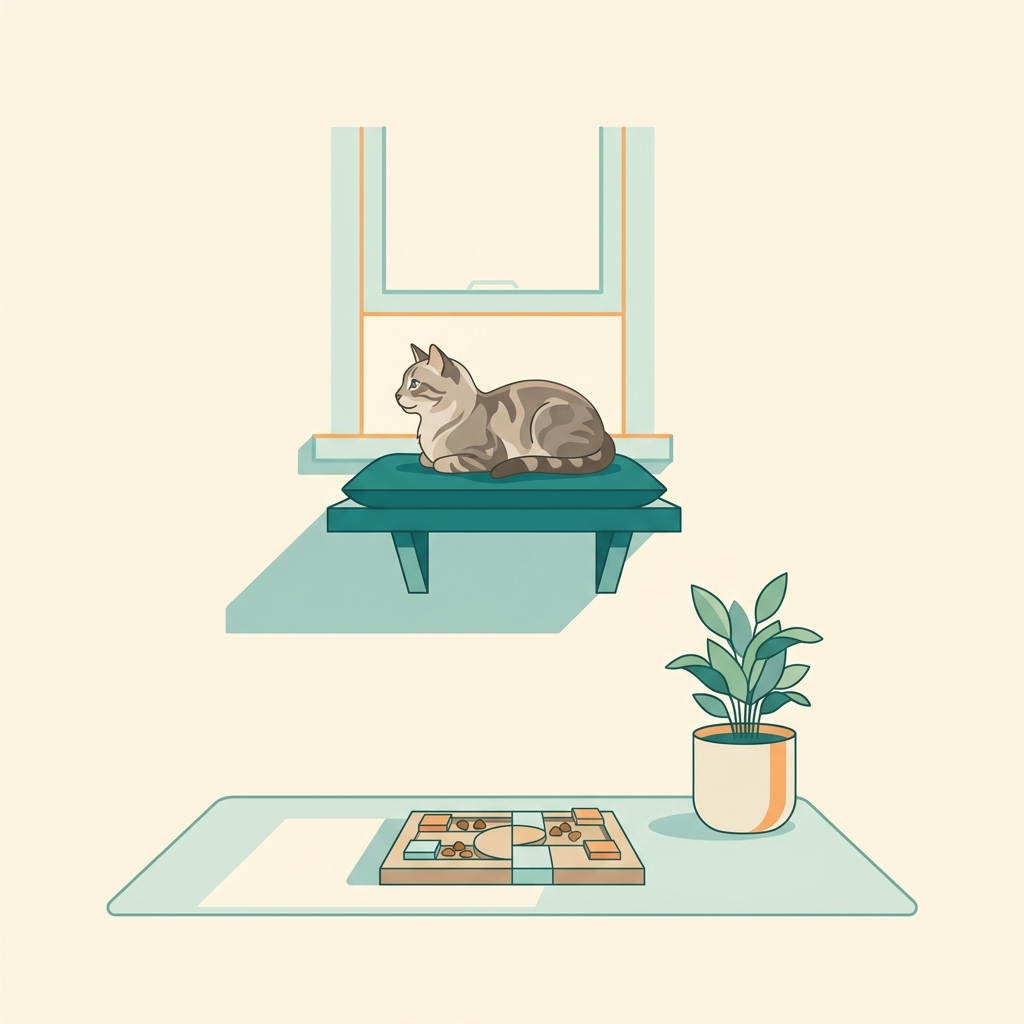
Quick routine to channel bird-watch energy
When to seek veterinary or behavior help
Chirping and chattering are typically harmless. Do contact your veterinarian if either of the following is true:
- The behavior is new for your cat or has suddenly increased in frequency or intensity Cats Protection.
- You notice signs of distress or other changes (for example, drooling, pawing at the mouth, bad breath, or eating on one side), which can indicate oral pain or another medical issue Cats.com.
Share a brief timeline, triggers you’ve observed and any other behavior or health changes. A certified behaviorist can also help if fixation on outdoor wildlife is impacting welfare.
Common mistakes to avoid
- Assuming it’s “attention-seeking.” For many cats this is prey-driven, not a social request. Meet the need with play and foraging Hill’s Pet.
- Letting frustration build. A quick, well-timed play session or window management usually helps more than trying to “shush” the sound Cats Protection.
FAQ
Is my cat actually talking to the birds?
Probably not. The sounds are more consistent with predatory arousal and preparation than social communication with wildlife Cats Protection.
Should I stop the chirping?
Usually no. Provide short interactive play and mental enrichment, and manage the window view if your cat appears stressed Cats Protection; Hill’s Pet.