The journal
Why do cats raise their butts when you pet them? What it means and how to respond
Most cats lift their rear because it feels good and they’re inviting more contact. Learn normal reasons, when to pause, and simple ways to respond, including offering a nearby scratching surface.
Short answer
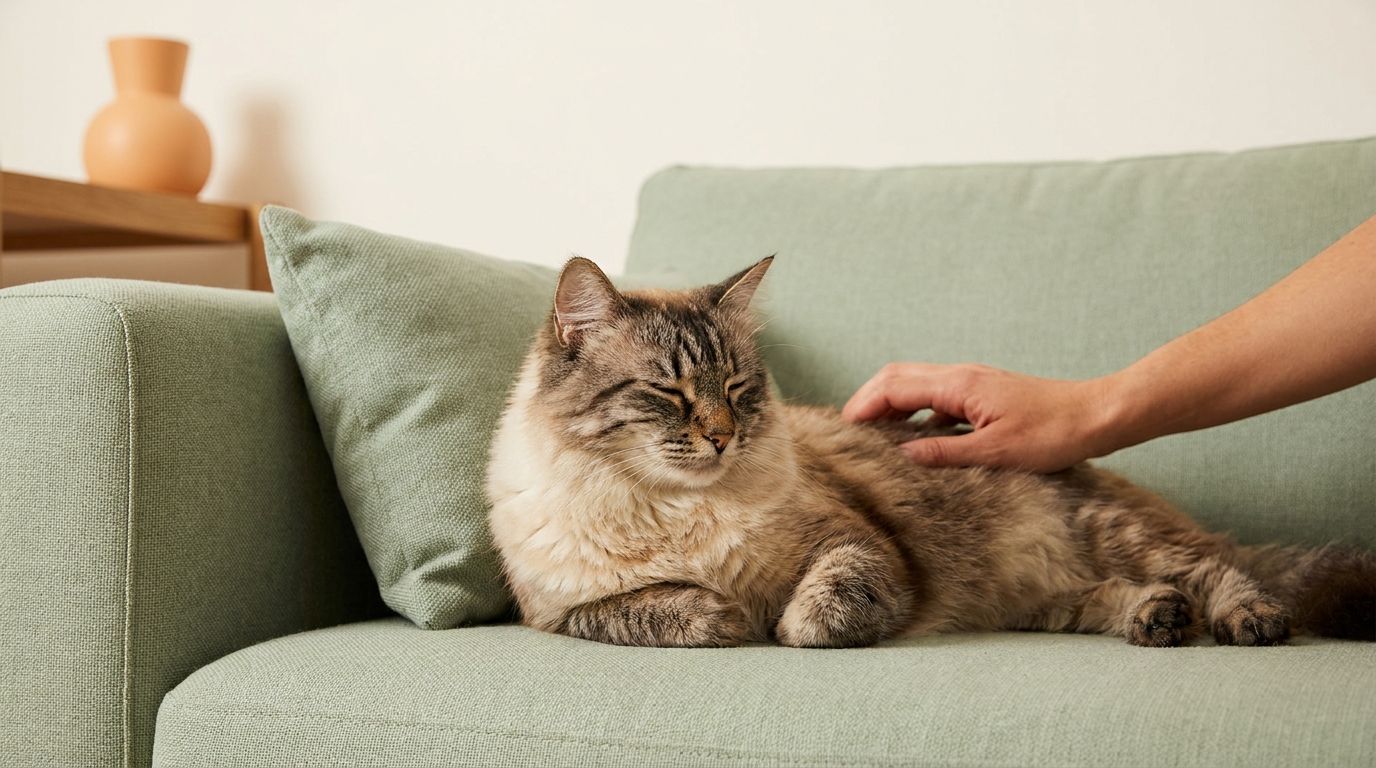
Cats often raise their butts when you pet them because it feels good and they want more attention. Many enjoy touch near the tail base and will lift to increase pressure or guide your hand to the spot (OVRS), (Cats.com). Scent can play a role too: cats have scent glands in the skin, including around the tail base, and contact helps transfer familiar pheromones (Cats.com). If your female cat is not spayed, the raised rear with the tail to one side can also be an in-heat (estrus) posture (Cats.com).
What the behavior can mean
Enjoyment and invitation
Many cats lift their hindquarters because they are enjoying the petting and want you to keep going. Lifting can increase contact pressure and signal trust and comfort with you (OVRS), (Cats.com).
Greeting and scent
Cats communicate heavily by scent. They have scent glands in several areas, including around the tail base, and rubbing or being stroked there can aid pheromone transfer (Cats.com).
Estrus in females
Unspayed females may raise the rear and hold the tail to one side (lordosis) when in heat. You might also notice increased vocalizing and rubbing behaviors (Cats.com), (OVRS).
Kitten-time instincts
Some cats may show remnants of early-life grooming behaviors, pushing the rear up much as kittens do during maternal grooming (OVRS).
Itch or discomfort
If your cat suddenly craves intense scratching in one area, check for itch or fleas (look for flea dirt, red bumps, or overgrooming). Changes in back or tail posture can also reflect pain or skin issues; a vet check is sensible if this is new for your cat (Cats.com).
When to pause or see the vet
- New or escalating butt-raising paired with yowling, skin redness, scabs, or overgrooming (Cats.com).
- Reluctance to be touched at the tail base or sudden sensitivity in the back or tail (Cats.com).
- Unspayed female showing persistent estrus signs; discuss spay timing with your veterinarian (Cats.com).
How to respond in the moment
- Let the cat choose. Offer brief strokes, pause, and watch body language. Continue only if they re-engage.
- Keep sessions short. Shift to play or a treat break if excitement or tail-twitching builds.
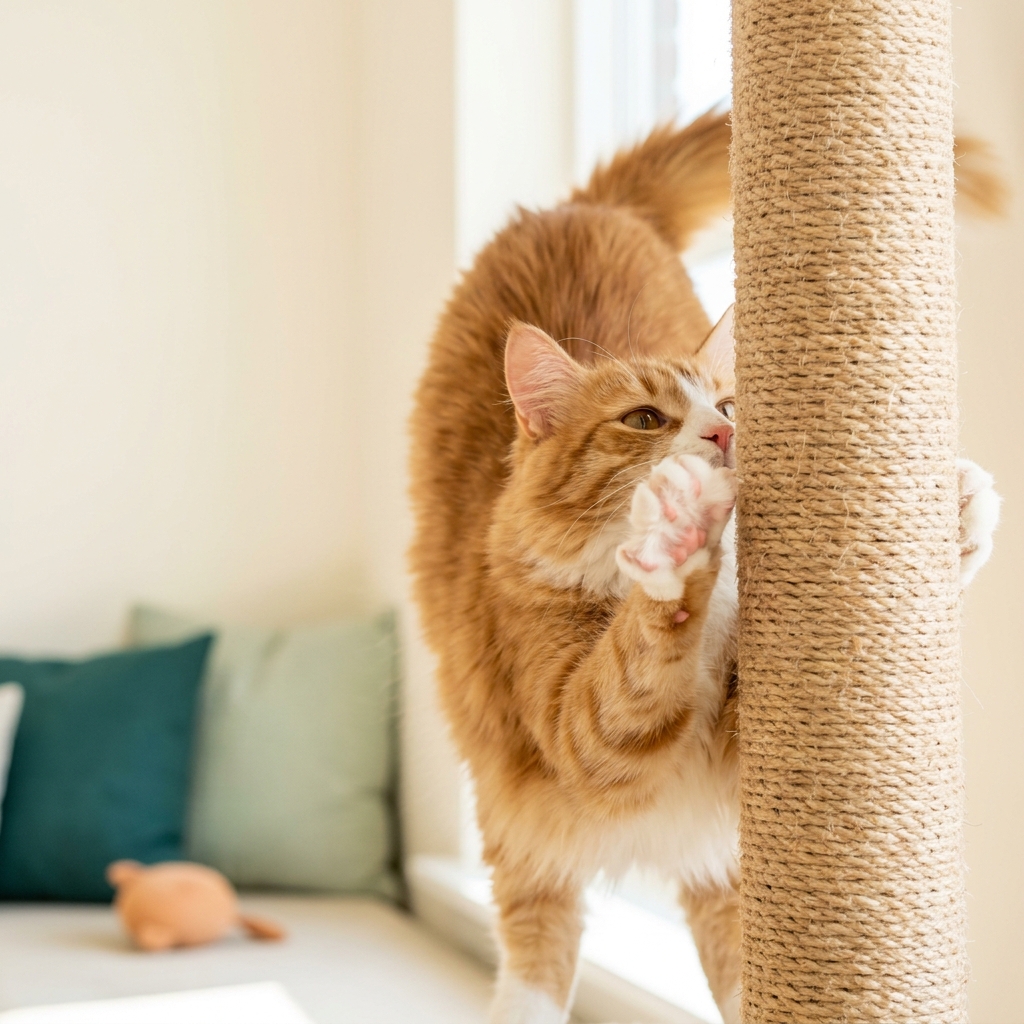
- If they solicit a stretch, invite them to a nearby scratching surface to finish with a full-body stretch.
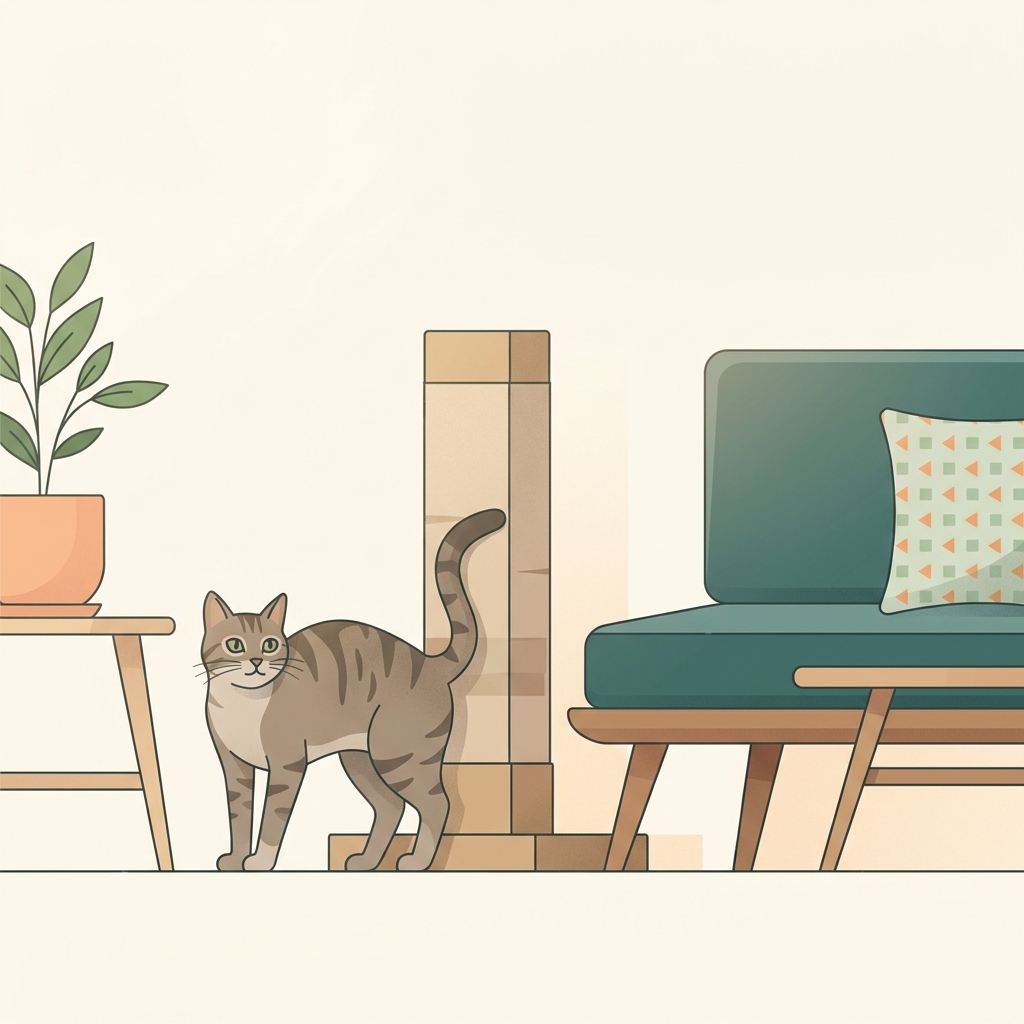
Scratching posts: simple ways to support stretch and redirect scratching
After a pleasant petting session, many cats like to stretch or scratch. Place a stable, tall scratcher near favorite petting spots so your cat can move naturally between contact and a good stretch. If you are choosing between textures or formats, see our practical guides: Do cats prefer cardboard or sisal? and What type of scratching post do cats prefer?
Quick selection tips
- Prioritize stability and usable height so your cat can extend fully.
- Offer the texture they already choose elsewhere (e.g., sisal rope, sisal fabric, or cardboard).
- Place scratchers along cat traffic routes and near resting or greeting spots.
Common placement mistakes
- Hiding the post in a low-traffic corner. Instead, put it where your cat already asks for attention.
- Choosing a wobbly or too-short post. If it wobbles, most cats will ignore it.
- Moving the post frequently. Keep locations consistent while you build the habit.
Guide your cat from couch to post after petting
Short FAQ
Is butt-raising always sexual?
No. Most of the time it signals enjoyment and an invitation for more petting. In unspayed females, a raised rear with the tail to one side can be an in-heat posture (Cats.com).
Will a scratching post stop the behavior?
Not necessarily. Butt-raising is often social and may continue. A nearby, stable scratcher simply gives your cat an appropriate place to stretch or scratch right after petting.