The journal
What should you wash cat bowls with?
Clear guidance on what to wash cat bowls with, how often to clean, safe tools and detergents, plus practical steps for different materials.
Short answer
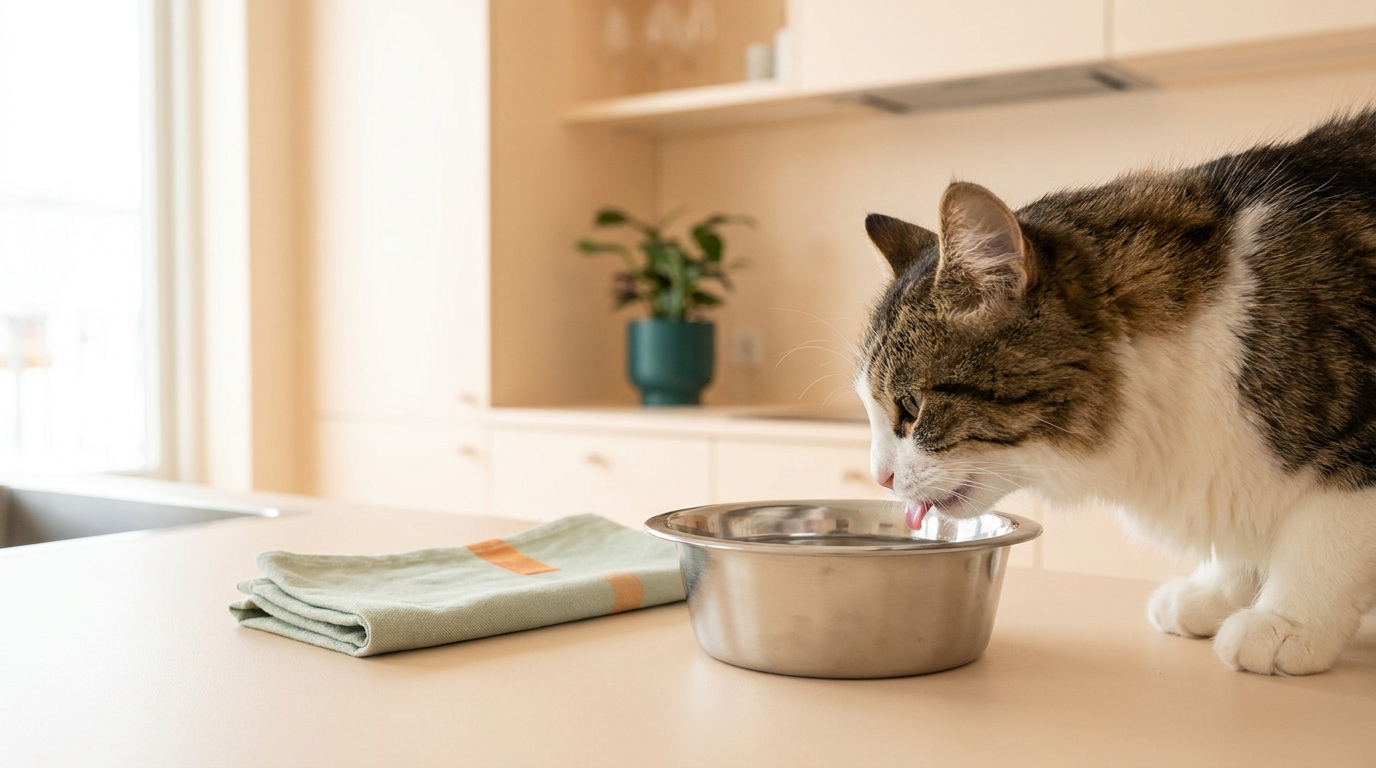
Use unscented dish soap and hot water to wash cat bowls. Clean them daily, and wash bowls after every wet or raw meal. If a bowl is specifically labeled dishwasher-safe, running it in the dishwasher is an effective way to clean and sanitize (source).
Why cleaning matters and how often to do it
Leftover residue supports microbial growth and can lead to foodborne illnesses; unpleasant odors and rancid fats can also put cats off their food and water. Daily cleaning in hot, soapy water keeps bowls sanitary and more appealing to your cat (source).
- Daily: Wash all food and water dishes in hot, soapy water and dry thoroughly (source).
- After every wet or raw meal: Wash bowls thoroughly right away (source).
- Dishwasher: Use it for bowls that are labeled dishwasher-safe; dishwashers do an excellent job of cleaning and sanitizing pet dishes (source).
For bowl choice and comfort, see our guide to whisker-friendly bowls and materials, and for placement see why keeping the water bowl away from food helps.
Step-by-step: routine washing
- Scrape any leftovers into the trash.
- Rinse the bowl with warm water.
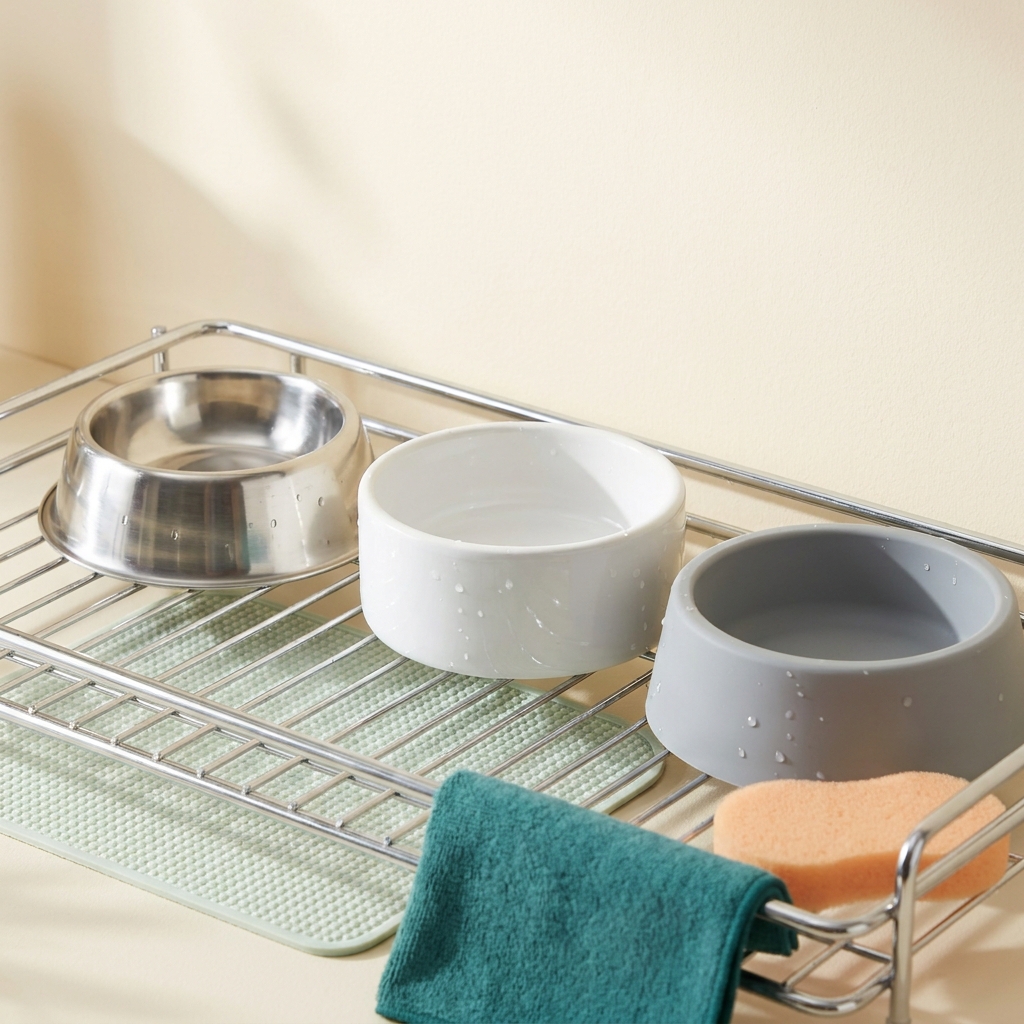
- Wash with hot water and unscented dish soap using a soft sponge or brush to avoid scratching surfaces (source).
- Rinse thoroughly so no soap remains.
- Dry completely with a clean towel or air-dry before refilling.
Material-specific notes
Stainless steel and glazed ceramic: Follow the care label. If marked dishwasher-safe, the dishwasher is a convenient option. Hand wash with a non-scratch sponge and dry well to prevent water spots.
Plastic and silicone: Oils can cling and scratches can trap debris. Use non-abrasive tools, inspect surfaces, and retire bowls that are heavily scratched or difficult to get truly clean, since scratching promotes debris and bacterial buildup on glazed or plastic surfaces (source).
What to avoid and when to take extra care
- Skip strongly scented cleaners and concentrated bleach; lingering odors can lead to food or water rejection, and harsh chemicals are unnecessary for routine cleaning (source).
- Avoid abrasive scrubbers on glazed or plastic bowls to reduce micro-scratches where grime can accumulate (source).
- If you feed raw meals, wash those dishes separately, use a separate sponge or rag, and wash your hands afterward to limit cross-contamination (source).
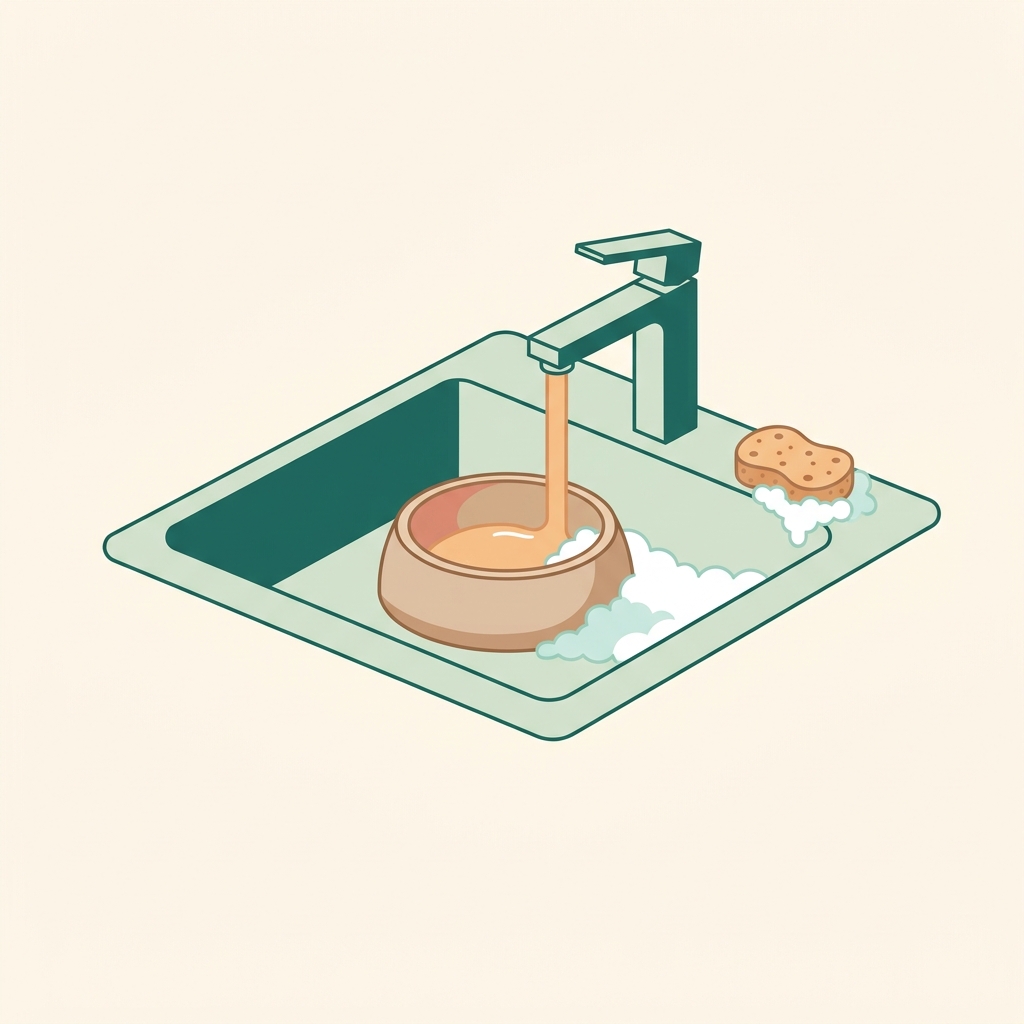
Daily cat bowl cleaning checklist
Common mistakes and quick fixes
- Letting food harden in bowls: Soak briefly in warm water to loosen, then wash in hot, soapy water.
- Using harsh or perfumed cleaners: Stick to unscented dish soap and hot water to avoid odors that put cats off eating or drinking (source).
- Scratching surfaces with abrasive pads: Choose non-scratch tools; scratches in glazed or plastic bowls can harbor grime and microbes (source).
- Not separating raw-food cleanup: Wash those bowls separately and use a dedicated sponge; wash hands after handling (source).
FAQ
Can I use bleach on cat bowls?
Avoid concentrated bleach and strongly scented cleaners. For routine cleaning, hot water and unscented dish soap are recommended (source).
Is the dishwasher OK for cat bowls?
Yes, if the bowl is labeled dishwasher-safe. Dishwashers clean and sanitize pet dishes effectively (source).
Do I need a separate sponge?
It’s a good idea if you feed raw meals. Use a separate sponge or rag for those bowls to reduce cross-contamination, and wash your hands afterward (source).
A simple daily wash with hot, unscented soapy water keeps bowls clean and inviting. Check care labels, avoid abrasives, and separate raw-food cleanup for a healthy, low-fuss routine.