
The journal
How long does a cat need to adjust to new litter?
Plan a gradual litter change, keep a familiar tray available and recognise when toileting changes need veterinary attention rather than another experiment.
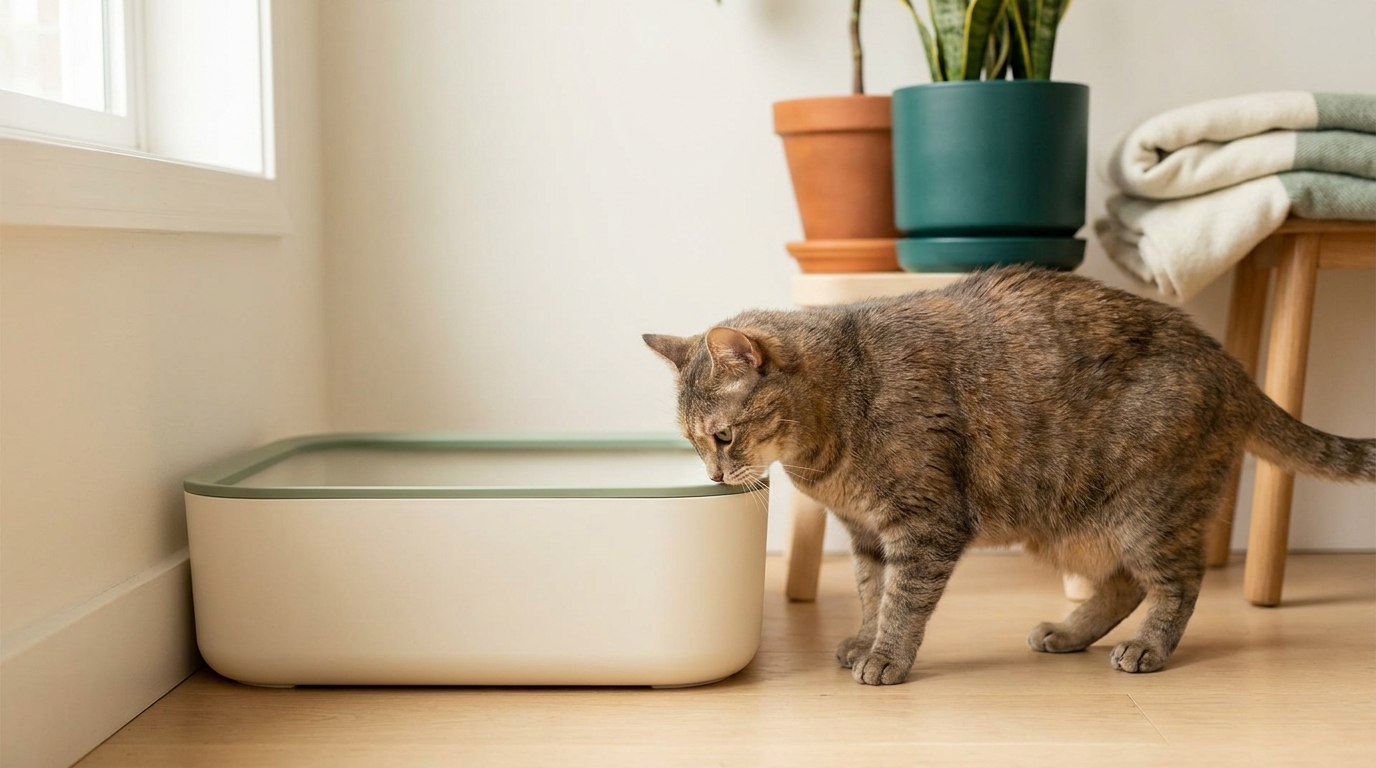
Key takeaways
- Allow a gradual change over about a week as a starting point, and slow down if your cat is reluctant.
- Keep a familiar option available. Some cats reject a particular new texture even with time.
- Straining or producing little or no urine needs immediate veterinary advice, not a slower litter experiment.
How long should the change take?
Plan a gradual introduction over roughly a week rather than an overnight replacement. That is a starting approach, not a deadline every cat will meet. The RSPCA recommends mixing a new litter in gradually over a week or offering it in a separate tray so the cat can choose.
A different texture, smell or feel can make the new tray less appealing. VCA's guidance on changing litter materials advises easing into the change and returning to the old litter if the cat is not adjusting. There is no reason to force completion on day seven.
This guide concerns a cat already using a tray normally. A cat that is suddenly avoiding its usual tray or showing discomfort needs a different response: speak to your vet instead of assuming the litter is the cause.
Make one change at a time
Before opening the new bag, write down the current litter, tray type and location. Keep those notes simple. If you change the litter, tray size and room on the same day, it becomes difficult to identify what your cat dislikes.
Leave the familiar tray accessible while introducing the new option. Keep normal cleaning consistent rather than allowing one tray to become unpleasant to steer the cat towards another. The aim is a usable choice, not a contest between a clean new tray and a dirty old one.
For kittens, start with the type they already know and obtain age-appropriate advice before changing products. Cats Protection's kitten guidance recommends gradual changes, quiet locations away from food and water, and one tray per cat plus an extra. It also stresses that the route to a tray should not be intimidating.
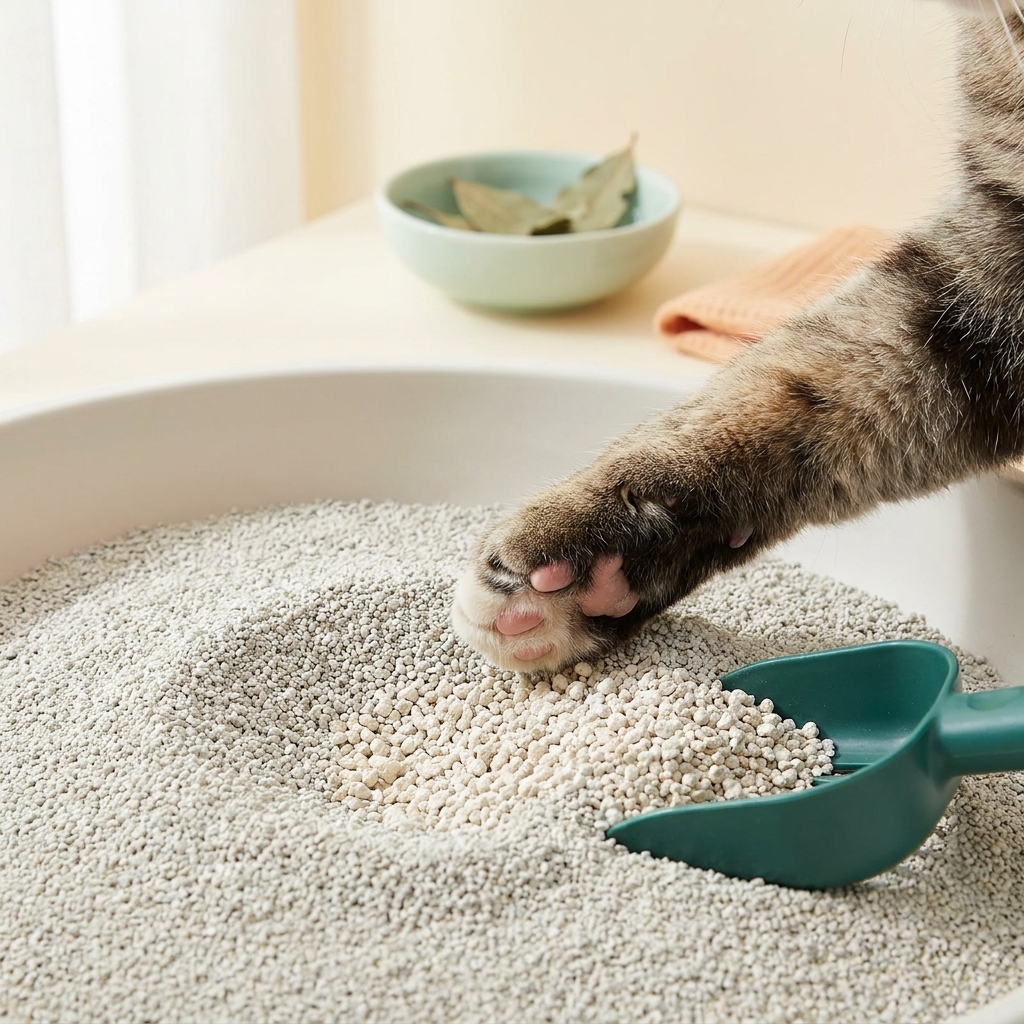
Use a gradual introduction without a rigid percentage table
- Offer a small amount of the new material mixed into familiar litter, or put the new material in an additional suitable tray.
- Watch for normal use before increasing the proportion. Keep a familiar fallback rather than removing it to force acceptance.
- Make the next increase only when the current arrangement is working. If the cat hesitates or avoids the tray, return to the last comfortable arrangement.
- Review the product if repeated small changes are unsuccessful. A different material may be more suitable than extending the same trial indefinitely.
Follow product and veterinary guidance where materials have different maintenance requirements. A fixed 25/50/75-percent timetable can look reassuring but does not establish that a particular cat is comfortable. The useful signal is normal toileting, not the calendar date.
Keep a short observation log
Use one line per day: date, litter arrangement, normal use observed, accidents or unusual behaviour, and the next action. For example, “small amount added; normal use observed; keep unchanged” is more informative than “day three passed”. This is a proposed note-taking format, not a validated behaviour test.
Before changing the mix again
The checklist records your observations; it cannot assess urinary health. Do not postpone a veterinary call because several boxes are ticked.

When to stop and call the vet
Cats Protection identifies inability to pass urine as an emergency. Straining, repeated trips with little output, pain or blood also require prompt veterinary advice. If your cat is struggling to urinate or you suspect a blockage, contact a vet immediately. Do not wait for the litter transition to improve.
Accidents are information, not misbehaviour to punish. Restore the familiar setup and discuss sudden or persistent changes with your vet. A litter preference and a health problem can occur at the same time.
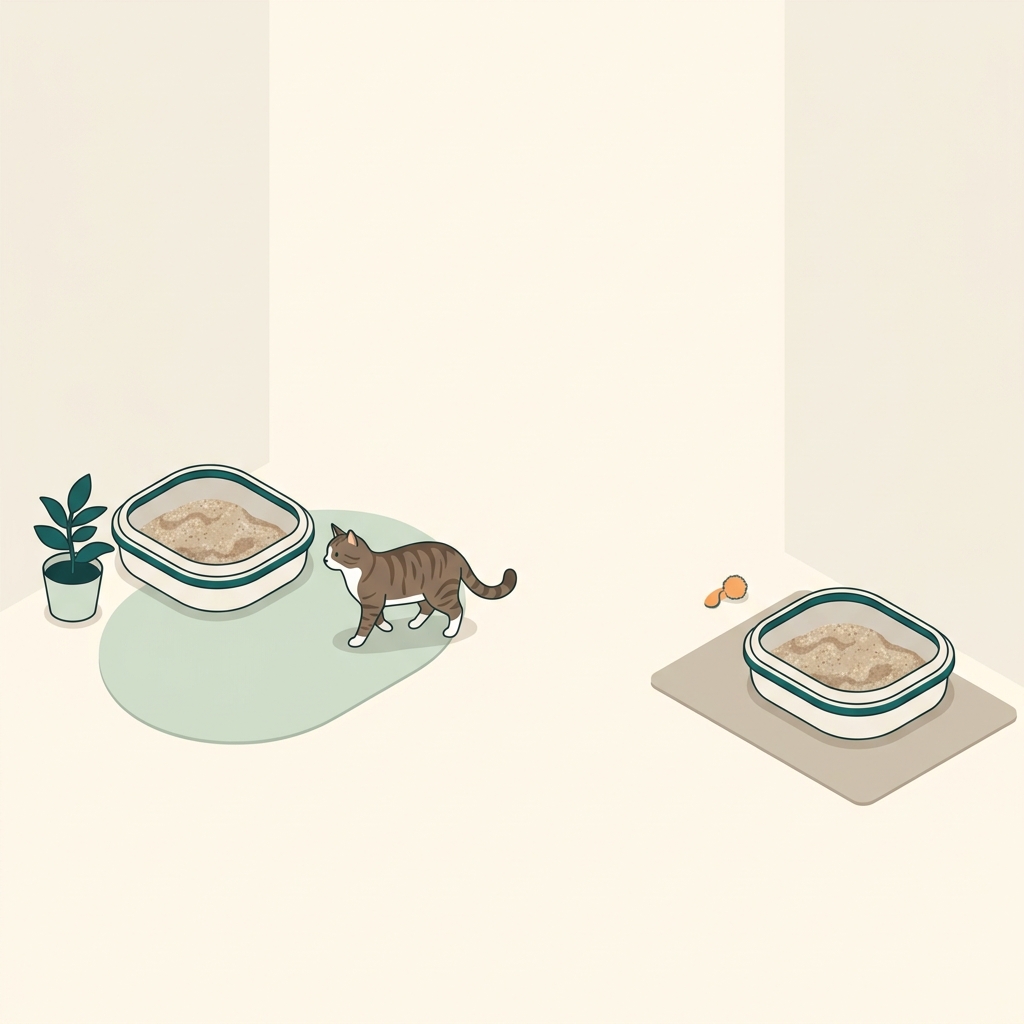
Choose a workable endpoint
Completion means your cat is using the intended arrangement normally and the cleaning routine works for your household. It does not mean accepting any product you bought. If a careful introduction repeatedly fails, reconsider the texture or scent and ask for advice instead of buying a larger supply.
Use our litter-box setup guide to review the wider environment. For other care topics, browse the Cat Nibbles guides.
Common questions
Must my cat accept the new litter within a week?
No. A week is an introduction starting point, not a guaranteed adjustment period. Slow down or reconsider the product if it is not working.
Should I remove the old litter to encourage a switch?
Keep a familiar option available rather than forcing acceptance. A separate tray can let your cat choose.
What if my cat repeatedly tries to pee but produces little or nothing?
Contact a vet immediately. This can be an emergency and must not be treated as a litter-training setback.