The journal
How often should you rotate cat toys? A simple plan to beat boredom
Rotate cat toys regularly when interest fades, keep favourite safe toys available and store wand or string toys after supervised play. Use a simple interest-led rotation plan.
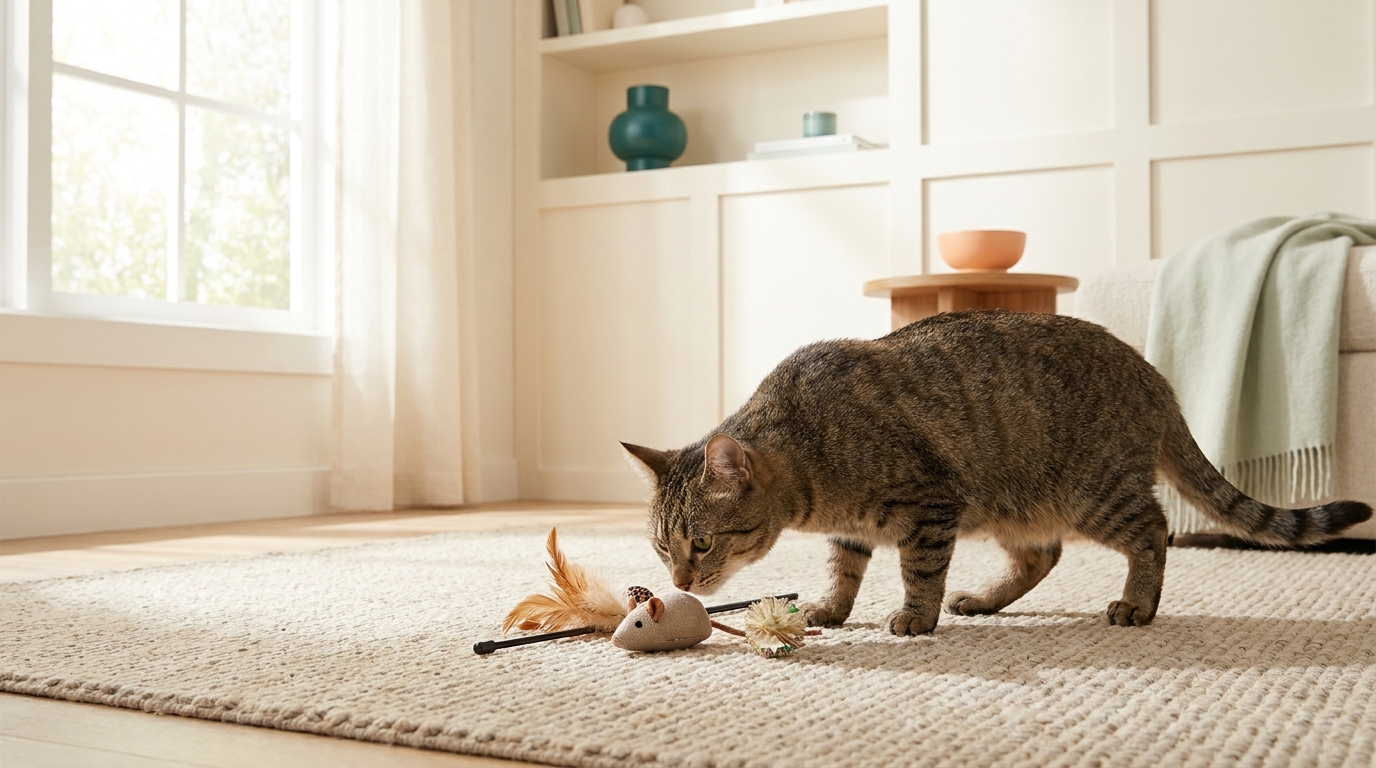
Rotate your cat's toys regularly, using their interest rather than a fixed seven- or ten-day deadline. If a toy is being ignored, put it away and bring out a different safe option. Keep a favourite available if your cat still enjoys it. Cats Protection recommends regular swaps, but does not prescribe one interval for every cat.
Start with a small selection you can observe
Choose a few different ways to play rather than buying many similar toys. Your active selection might include a ball for batting, a soft toy for carrying or kicking, and an appropriate puzzle feeder. That is an example, not a required shopping list or a scientifically optimal toy count.
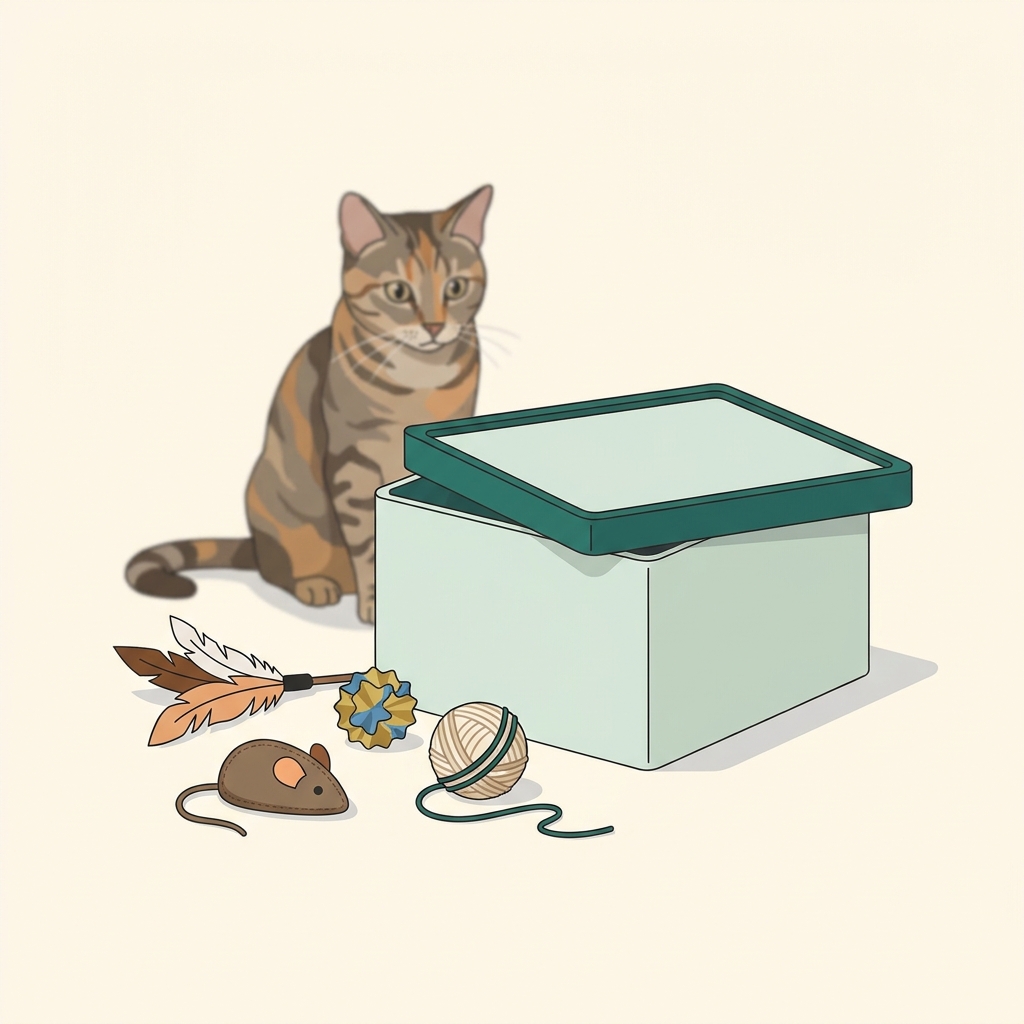
Keep the rest in a closed storage box. Separate toys that are suitable for independent play from those requiring you to supervise. Cat Adoption Team explains how wand toys support interactive play and why they should be put away afterward (wand-toy play guidance).
Use interest as the signal to swap
Notice which toys your cat approaches, chases or carries. When most of the active set attracts little attention across several calm opportunities, try swapping one or two items. Changing everything at once makes it harder to learn what your cat actually preferred.
A review reminder can help you remember the task. It is a household organisation tool, not a promise that novelty expires on that date. If a favourite is still popular, leave it in the selection. If a new item causes avoidance, remove it and offer a familiar option instead.
An illustrative rotation for one household
- Write down the current toys and one short observation about each, such as “chased twice” or “ignored during evening play”.
- Put away an ignored toy and bring out a previously stored one. Inspect it first.
- Keep the rest of the play setting familiar so you can compare interest.
- At your next review, decide whether to keep, swap or retire each item.
You have now created a repeatable routine without assuming that every cat needs the same schedule. For the wider daily routine, see how to entertain an indoor cat.
Rotation does not replace interactive play
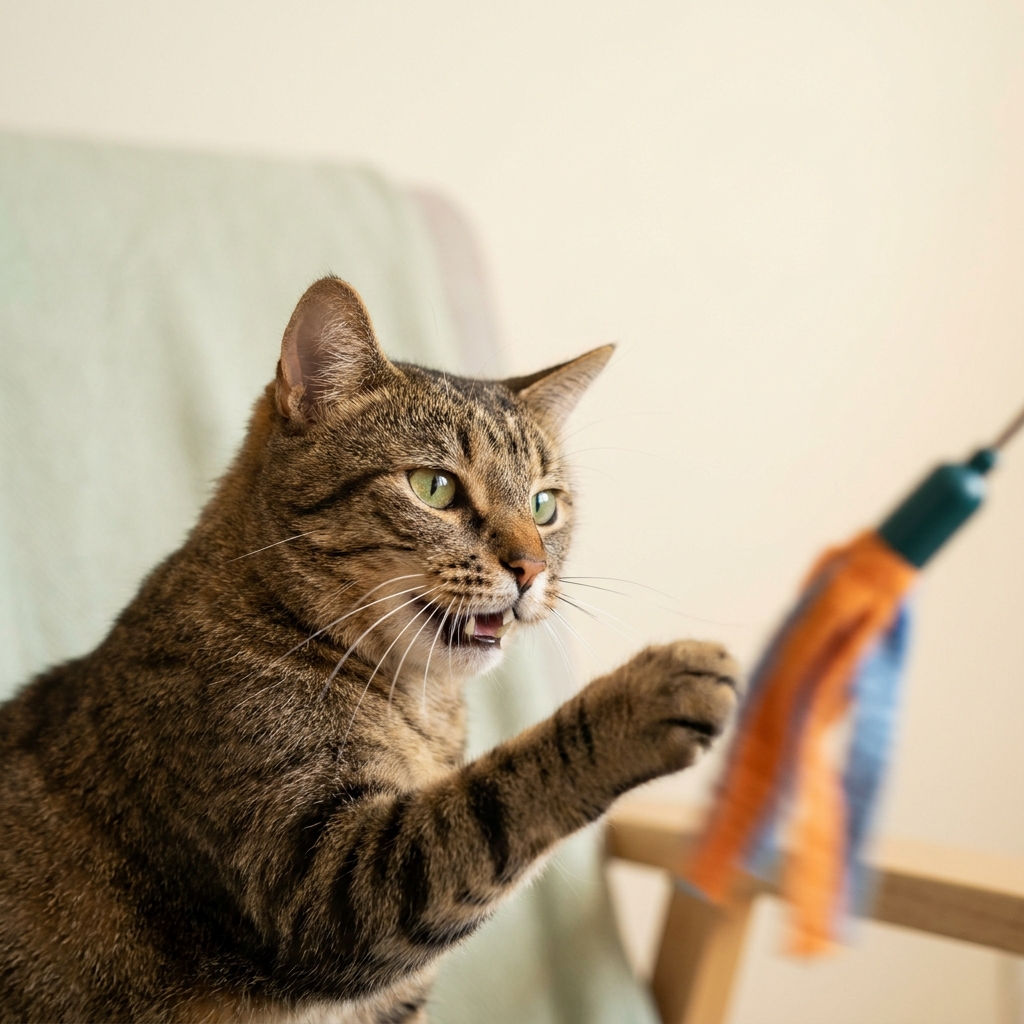
A toy left on the floor and a moving toy controlled by you provide different opportunities. Offer short, responsive play and let the cat pause or disengage. Keep the toy away from hands and feet, and allow opportunities to catch it rather than teasing indefinitely. Adapt movement to the individual cat's mobility and interest (Cats Protection play guidance; Cat Adoption Team).
Before the next toy swap
Inspect toys before bringing them back
Storage does not make a damaged toy safe again. Check for loose pieces, fraying, exposed filling and anything that could be swallowed or cause entanglement. Remove unsuitable or damaged items. Do not leave a cat alone with a toy it could shred, swallow or get tangled in (Cats Protection toy-safety advice).
A sudden, persistent loss of interest accompanied by changes in eating, movement or general behaviour deserves a veterinary conversation, rather than an assumption that another toy will solve it. For an optional enrichment idea, read what silvervine is used for with cats; it is not necessary for a successful rotation.
Do all toys need to disappear between sessions?
No. Keep suitable favourites available when they remain safe and enjoyable. Reserve toys that need supervision for times you can actively play. The aim is an interesting, safe selection tailored to your cat, not an empty room or a compulsory weekly purchase.
Related guides
Optional equipment for this guide
A toy already enjoyed by your cat is enough. If you need another option, choose one that supports supervised play and is easy to put away.
As an Amazon Associate I earn from qualifying purchases. These are researched options, not hands-on test results. Check the exact size or model, current price and availability on Amazon.
| Product option | Fit and limits to check | Retailer |
|---|---|---|
| Product imageCat Dancer 101 interactive toy | An interactive toy to rotate into short, supervised sessions. Keep wire and cardboard parts away between sessions and replace damage; use the toy as prey rather than encouraging attacks on hands. | View on Amazon |