
The journal
How long does it take for a cat to learn a cat flap? Introducing an automatic flap
A practical answer to how long cats take to learn a cat flap, with a step-by-step plan for microchip (automatic) flaps, troubleshooting, and a worked example.
Quick answer
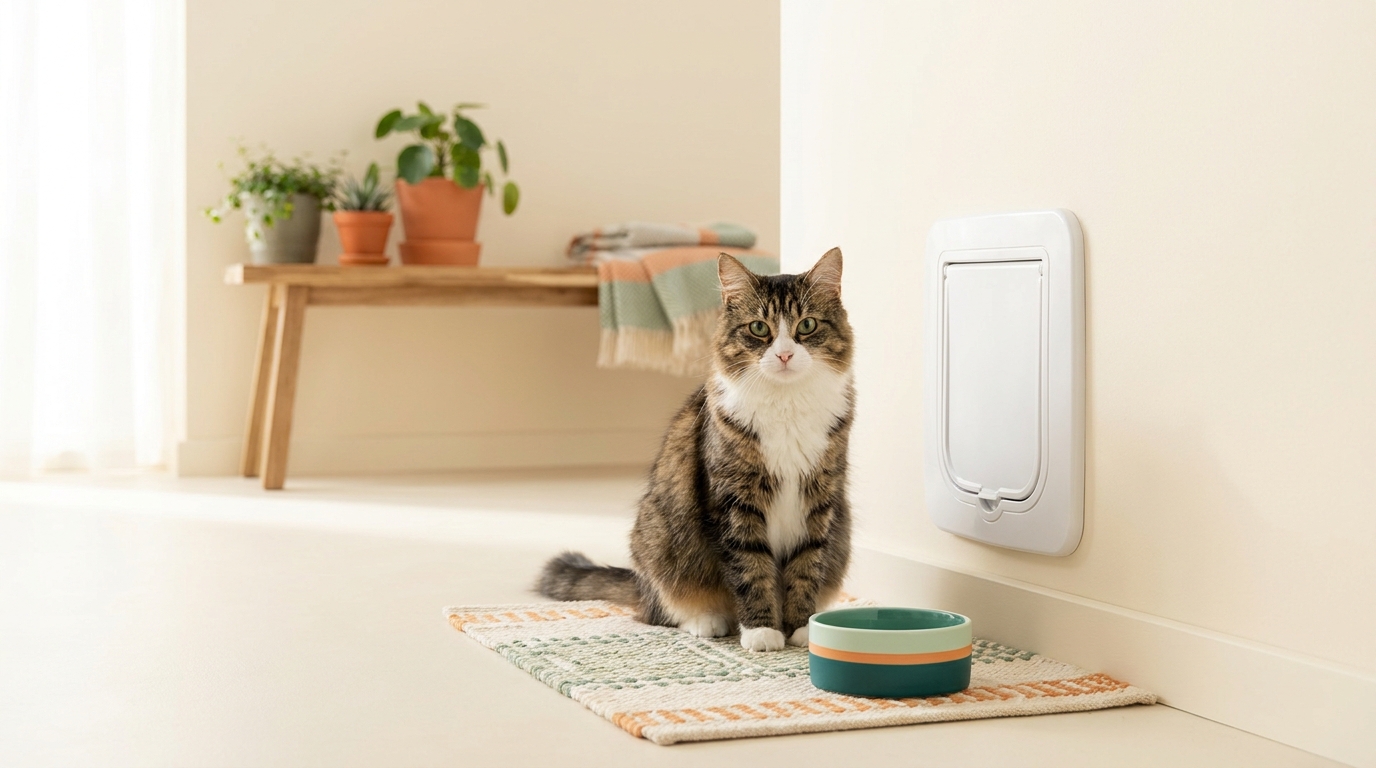
There isn’t a fixed number of days. With an automatic (microchip) cat flap, expect progress over multiple short sessions: some cats figure it out quickly, while others take more time. PetSafe offers two spaced ten-minute sessions as one training example, starting with the flap held open and lowering it gradually. Treat this as an example rather than a minimum or a deadline; stop sooner when the cat disengages or becomes uneasy. Follow your model’s instructions for temporarily holding a flap open PetSafe: train your cat to use a cat door. Many cats settle within a few days of calm practice, but cautious cats may need longer Lords & Labradors: train a cat to use a cat flap.
Why timing varies with automatic cat flaps
Movement and sound
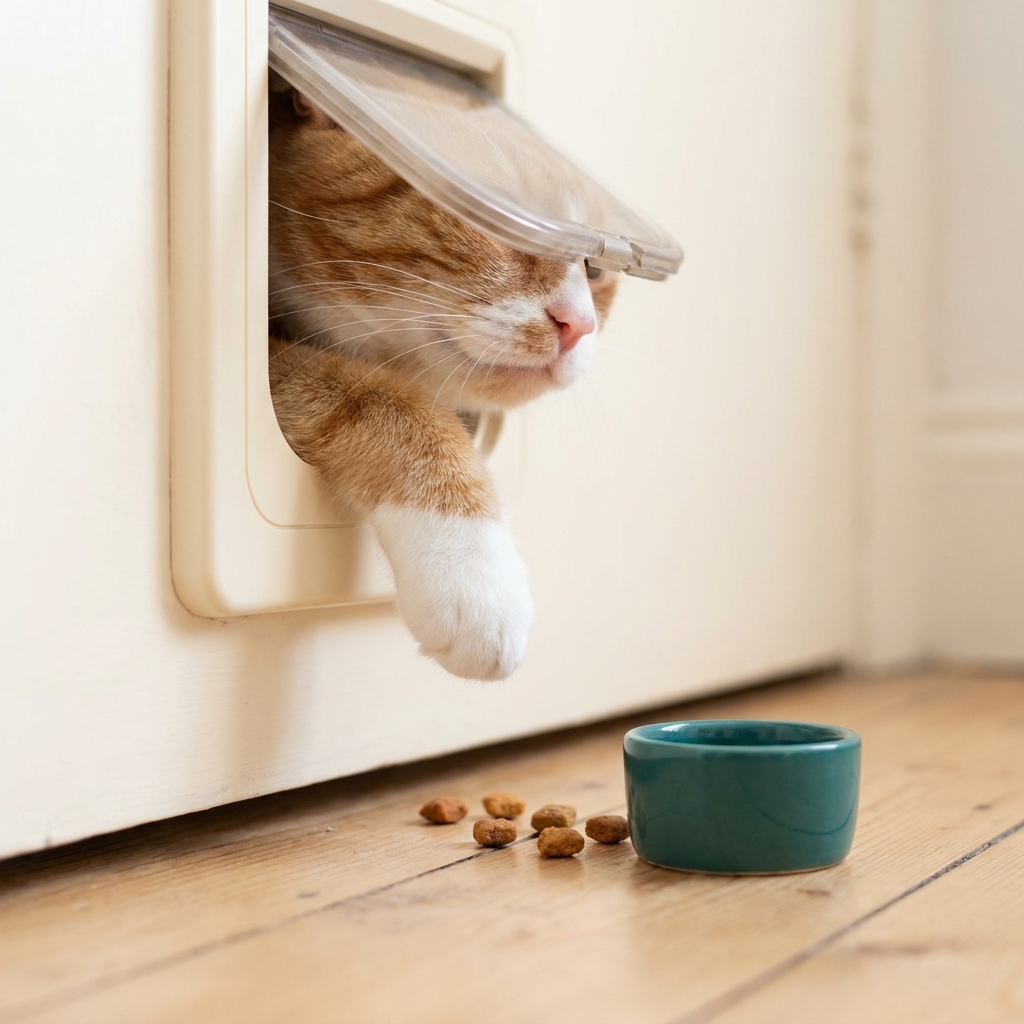
Flap movement and noise can cause hesitation. Start with the flap taped open, then lower it in stages, and let your cat hear the flap close gently so the sound is predictable PetSafe: train your cat to use a cat door.
Recognition and fit
Microchip flaps unlock for a paired microchip or collar key so only your cat can enter. The technology uses a sensor to detect a stored chip ID before unlocking PetSafe: train your cat to use a cat door Flappie: how microchip cat flaps work. Also ensure the flap size is comfortable so your cat feels confident passing through PetSafe: train your cat to use a cat door.
A simple, reward-based plan for a microchip flap
1) Set up for easy first wins
Tape the flap fully open so there’s no movement. Stand on the other side and lure with a high-value treat or favorite toy, then reward when your cat steps through. Keep practice brief and positive; the manufacturer’s suggested session length is an example, so shorten it to suit the cat PetSafe: train your cat to use a cat door.
2) Add gentle movement
Lower the taped flap a little so your cat has to nudge it. Gradually lower it further across sessions until it swings freely. Let your cat hear you close the flap softly so the sound isn’t surprising PetSafe: train your cat to use a cat door.
3) Let the lock do its job
Once your cat is calmly pushing the flap, allow the microchip lock to operate normally so your cat experiences any click as part of the routine. Keep rewarding voluntary passes and avoid rushing or forcing PetSafe: train your cat to use a cat door.
Automatic cat flap setup checklist

Troubleshooting and when to slow down
- Don’t push or shove your cat through the flap; that creates negative associations PetSafe: train your cat to use a cat door.
- If your cat hesitates, step back to the previous, easier stage and keep sessions short and positive. Some cats simply need several uses to get used to it PetSafe: train your cat to use a cat door.
- Check the basics: size and fit, gentle movement, and predictable sounds. These comfort factors make learning faster PetSafe: train your cat to use a cat door.
Worked example: four short sessions
This example shows how to pace the early steps. It’s a structure, not a promise of results.
- Session 1: Flap taped fully open. Lure through both directions; reward.
- Session 2: Flap lowered to leave a wide gap. Cat nudges lightly; reward each pass.
- Session 3: Flap lowered further so it brushes the head/shoulders; reward calm pushes.
- Session 4: Flap free-swinging. Introduce normal locking so your cat hears the click; reward.
For broader handling and gradual-change tips, see our explainers on getting an unwilling cat into a carrier and how long cats take to adjust to new litter.
FAQ
Is there a typical time for learning?
No fixed time. Some cats pick it up quickly, others take longer. Short, upbeat sessions with a gradually lowered flap are recommended, and some cats may take a few days to feel confident PetSafe: train your cat to use a cat door Lords & Labradors: train a cat to use a cat flap.
Should I start with the flap propped open?
Yes. Taping the flap fully open gives your cat a clear view and removes resistance, then you gradually lower it as confidence grows PetSafe: train your cat to use a cat door.
Will a microchip flap work with my cat’s chip?
Many microchip doors unlock for a paired ISO-style microchip or a compatible collar key. Always check your specific model’s compatibility and pairing steps; for example, PetSafe notes its microchip door works with 15‑digit microchips and reads common FDX‑B formats PetSafe: train your cat to use a cat door.