The journal
What kind of brush for a long-haired cat?
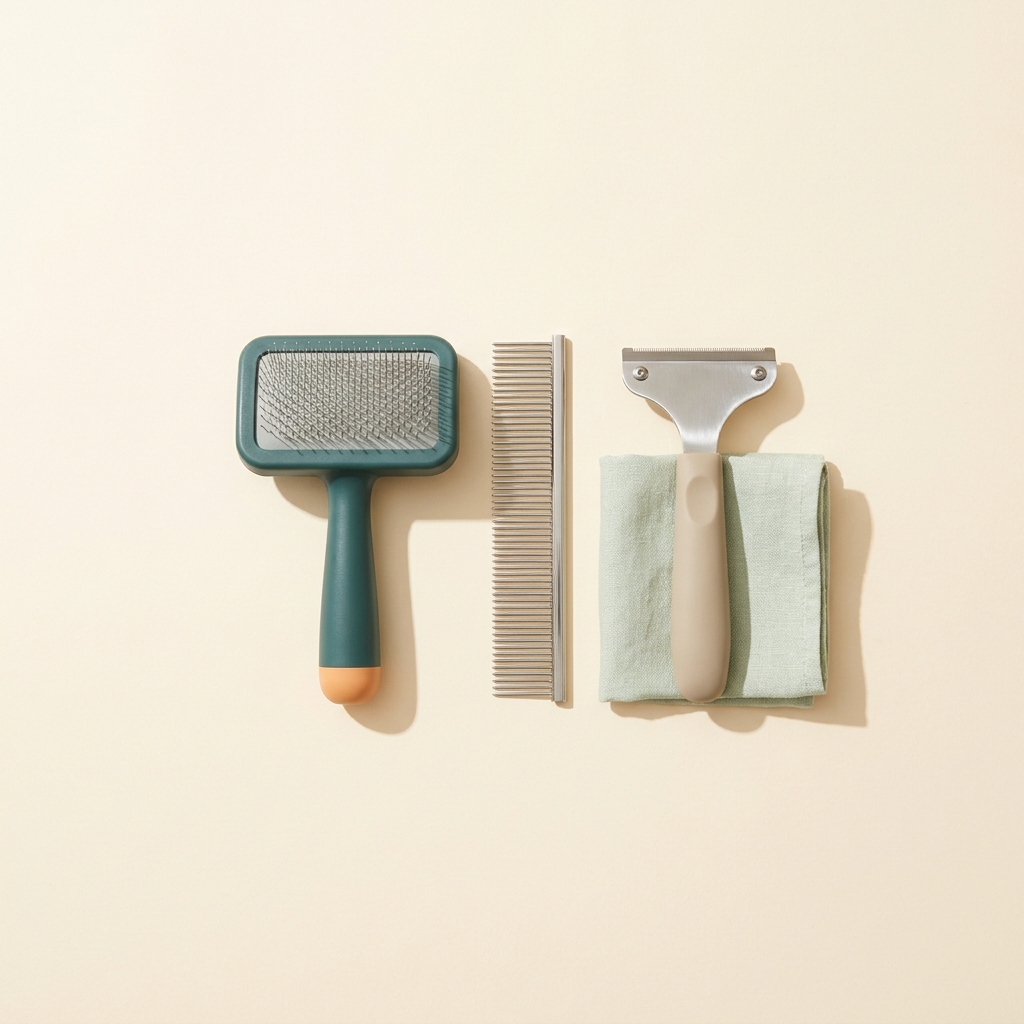
Start with a soft or medium-pin slicker, follow with a metal comb, and add a de-shedding tool only if your cat has a dense undercoat. Be gentle; stop for tight mats or sore skin.
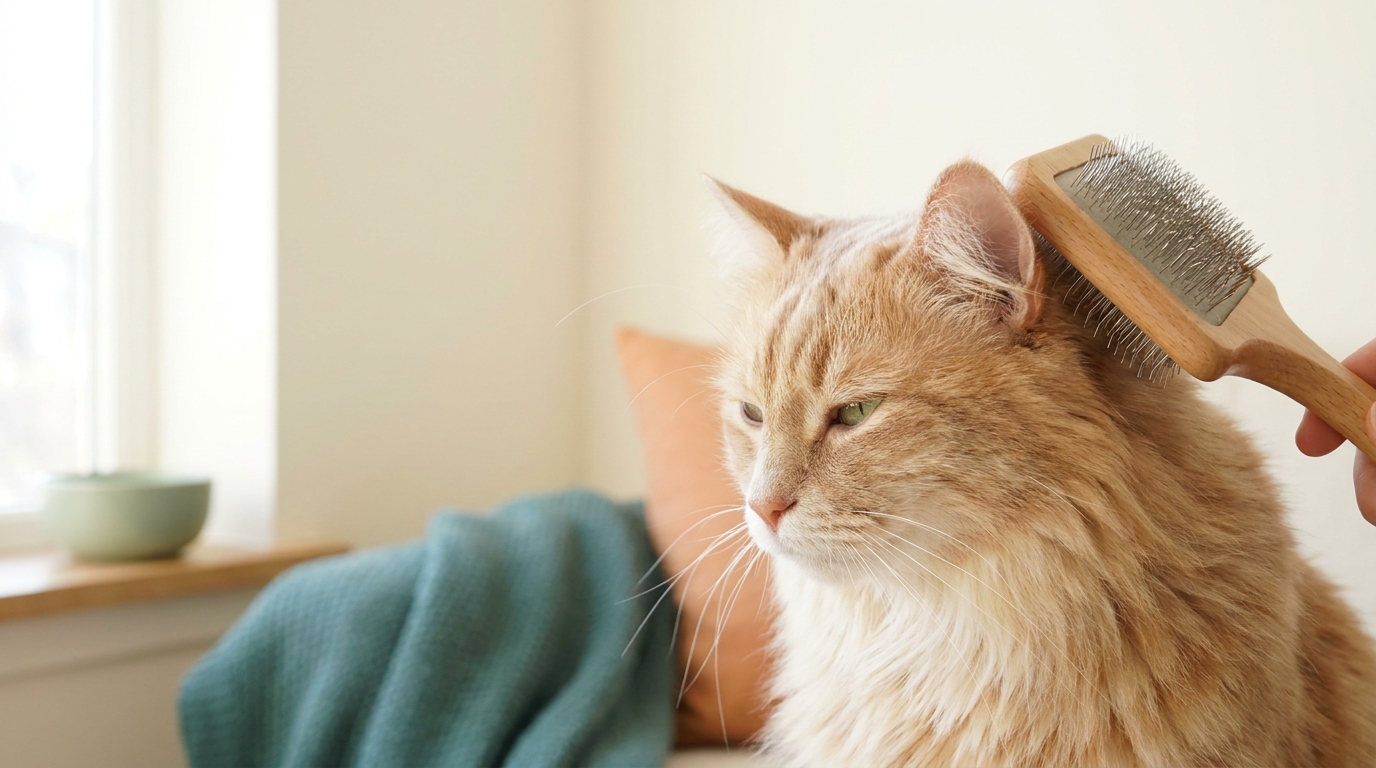
Use a soft or medium-pin slicker to lift loose hair, then a metal comb with both wide and fine teeth to find and ease small tangles. Add an undercoat de-shedding tool only if your long-haired cat has a dense undercoat. Work lightly, and if you hit a tight mat or sore skin, stop and book a groomer or your vet for safe removal (PetsRadar vet guide; PetO: Choosing the Best Brush).
For a fuller routine and frequency tips, see our explainer Do long-haired cats need brushing?
Why long coats benefit from a small toolkit
Long fur tangles easily near the skin and traps loose undercoat. That is why owners often pair tools with different actions: a slicker to lift and separate, a comb to locate and finish small knots, and, when needed, a de-shedding tool to thin loose undercoat. Vets and grooming guides list slickers, pet combs and de-shedding tools among the main options for long-haired cats (PetsRadar vet guide; PetO: Choosing the Best Brush).
Essential tool types and how they differ
Slicker brush (for daily loose hair and light detangling)
Thin metal pins lift shed hair and surface debris and can help loosen light tangles. Use a gentle touch; retailer guidance cautions that pressing too hard may scratch skin or break coat, especially on long hair (PetO: Choosing the Best Brush). Some professional groomers prefer soft bristles or combs over slickers on sensitive cats because slickers can scrape if misused (Groomer to Groomer: Brush or Comb).
Metal comb (to find and finish tangles)
A metal comb with wide and fine teeth helps find snags the brush misses and smooths the coat. Use wide teeth first, then the finer side. Trade and vet sources recommend combs to locate hidden knots and work carefully in friction areas (armpits, belly, behind ears) (Groomer to Groomer: Brush or Comb; PetsRadar vet guide).
De-shedding tool (only if there is a heavy undercoat)
Undercoat rakes or de-shedding brushes remove loose undercoat to reduce seasonal shedding. They are an add-on, not a replacement for slicker-and-comb work (PetsRadar vet guide).
Optional finishing tools
Pin brushes and bristle brushes can smooth and add shine at the end. Bristle brushes are typically a finishing step for longer coats; pin brushes can help neaten medium and long hair (PetO: Choosing the Best Brush).
A simple sequence for brushing a long-haired cat
- Start with light slicker strokes along the back and sides to lift loose hair. Avoid pressing pins into the skin (PetO).
- Switch to the metal comb. Work from hair tips toward the skin in short strokes on armpits, belly and behind the ears to ease small tangles (Groomer to Groomer).
- If your cat has a dense undercoat, make a brief pass with a de-shedding tool in the direction of hair growth on the back and flanks (PetsRadar).
Stop if the skin looks irritated or your cat becomes distressed; resume later or ask your vet or a groomer for help (PetsRadar).
Worked example: matching tools to coat
Dense double coat (for example, a Maine Coon-type mix): choose a slightly wider-pin slicker, a long-tooth comb, and include an undercoat rake for seasonal sheds. Groomers note that longer, widely spaced comb tines help on very thick coats (Groomer to Groomer).
Fine, silky long hair: use a soft or medium-pin slicker and a close-tooth metal comb as your core set; finish with a soft bristle brush if you want extra shine (PetO).
Common mistakes and when to get help
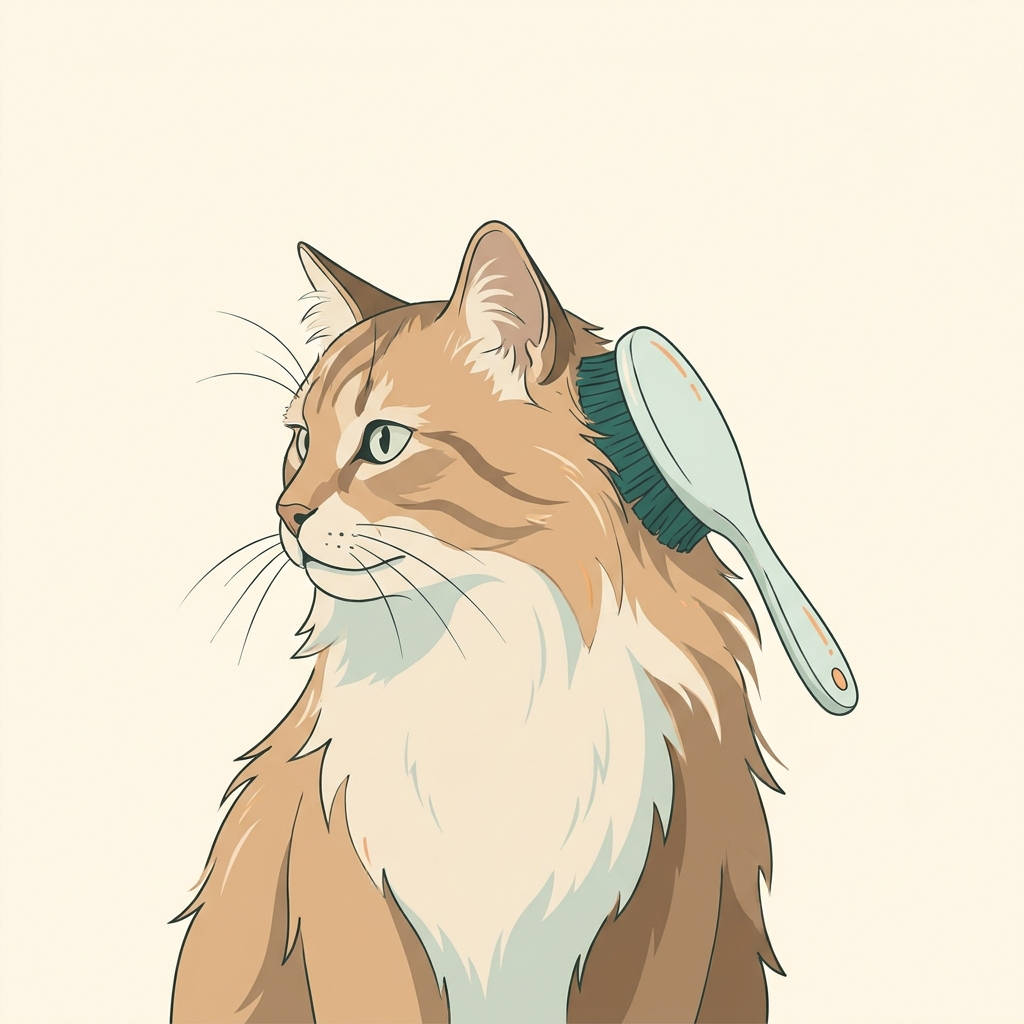
- Don’t force or cut tight mats. Mats often form close to the skin; removal is safest at a vet clinic or with a professional groomer. Some cats need sedation for severe matting (PetsRadar).
- Don’t press slicker pins into the skin. If your cat seems sensitive, switch to softer pins or rely more on a comb (PetO; Groomer to Groomer).
If you also have a short-haired cat
Short coats generally do well with rubber or bristle brushes for quick maintenance; add a fine comb to check for tangles and fleas. Choose tools based on coat texture and tolerance (PetO). For broader care beyond brushing, see How to trim your indoor cat’s claws safely.
Pick and use a starter brush set for long hair
Quick FAQ
How often should I brush a long-haired cat?
Daily short sessions help prevent tangles and mats in long coats (PetsRadar vet guide).
Are slicker brushes safe for sensitive cats?
They can be, but use a very light touch and consider soft pins. If your cat’s skin is sensitive, prioritize a comb and use rubber or bristle brushes for finishing (PetO; Groomer to Groomer).
Related guides
Optional equipment for this guide
Choose grooming tools for the actual coat and your cat’s comfort. A brush is not a substitute for professional help with painful or tight mats.
As an Amazon Associate I earn from qualifying purchases. These are researched options, not hands-on test results. Check the exact size or model, current price and availability on Amazon.
| Product option | Fit and limits to check | Retailer |
|---|---|---|
| Product imageHertzko self-cleaning slicker brush, Purple | A slicker option for gently lifting loose hair from a suitable long coat. Check the pins and use light pressure; follow with an appropriate comb if needed, and do not pull through tight mats. | View on Amazon |