
The journal
How to make a wobbly cat tree sturdier
Practical steps to stop a cat tree wobbling: tighten hardware, diagnose where movement starts, stabilize the base for carpet or hard floors, use manufacturer-approved wall straps, and know when to replace.
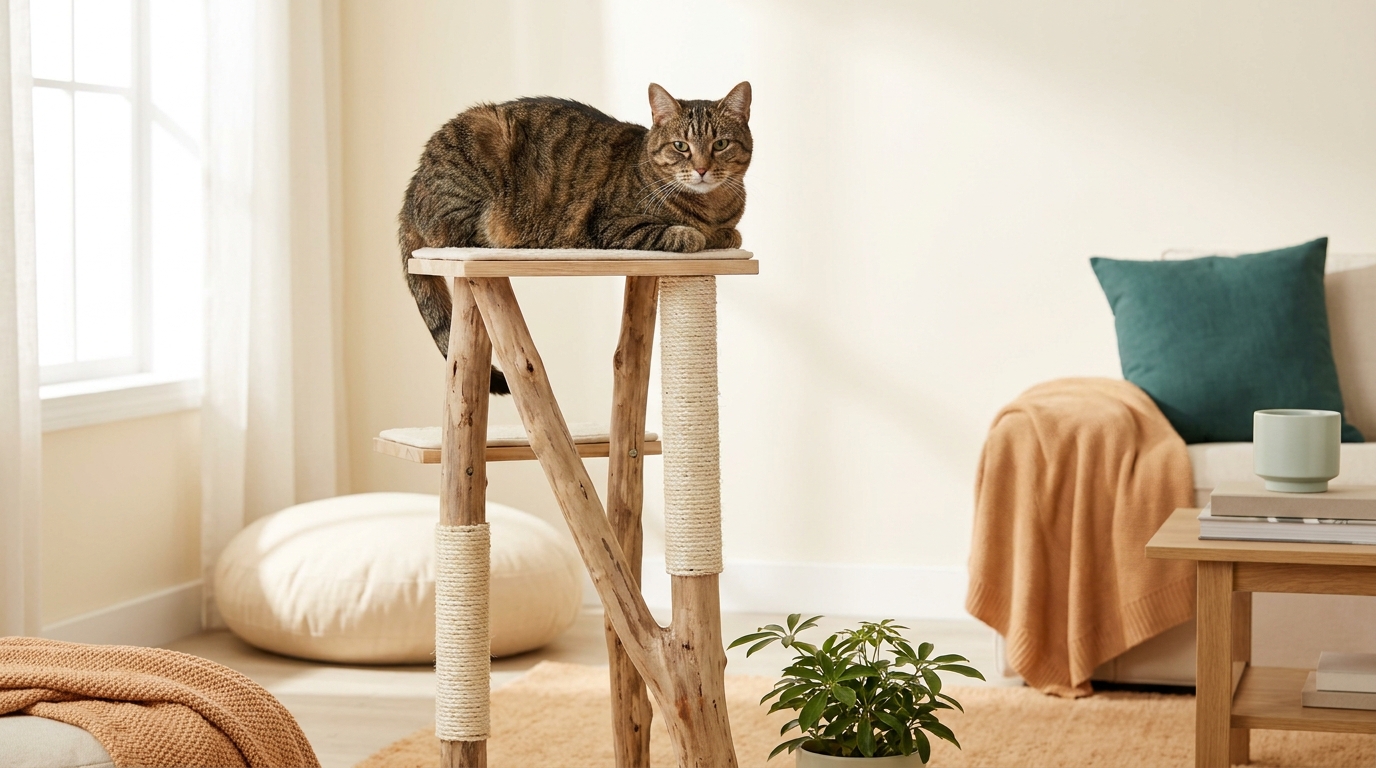
Start by tightening every screw and bolt, then find exactly where the movement begins. Plant the base on a flat, appropriate surface, add a board under the base on carpet or non-slip pads on hard floors, use sensible placement, and only then consider a manufacturer-approved wall restraint. Replace the tree if the base or joints are damaged and won’t hold tension again (Cat Tree Haven; SOPAPETS stability guide).
Quick safety check
Before working, remove your cat and inspect the unloaded tree. Identify the first place where unwanted movement appears: sliding at the floor, rocking at a base edge, play in a joint, or sway that increases higher up the structure. Solving the exact cause is more effective than a generic “make it heavier” fix (SOPAPETS stability guide).
Simple fixes first
1) Tighten hardware and confirm assembly
Most wobble is caused by loose fittings. Use the correct screwdriver or Allen key, start from the base and work upward, and confirm washers, spacers, and parts match the assembly order. Avoid over-tightening that can damage inserts or boards (Cat Tree Haven).
2) Match the base to your floor
- On carpet: compression can make a solid tree feel unstable. Place a flat timber board under the base to spread load and reduce wobble.
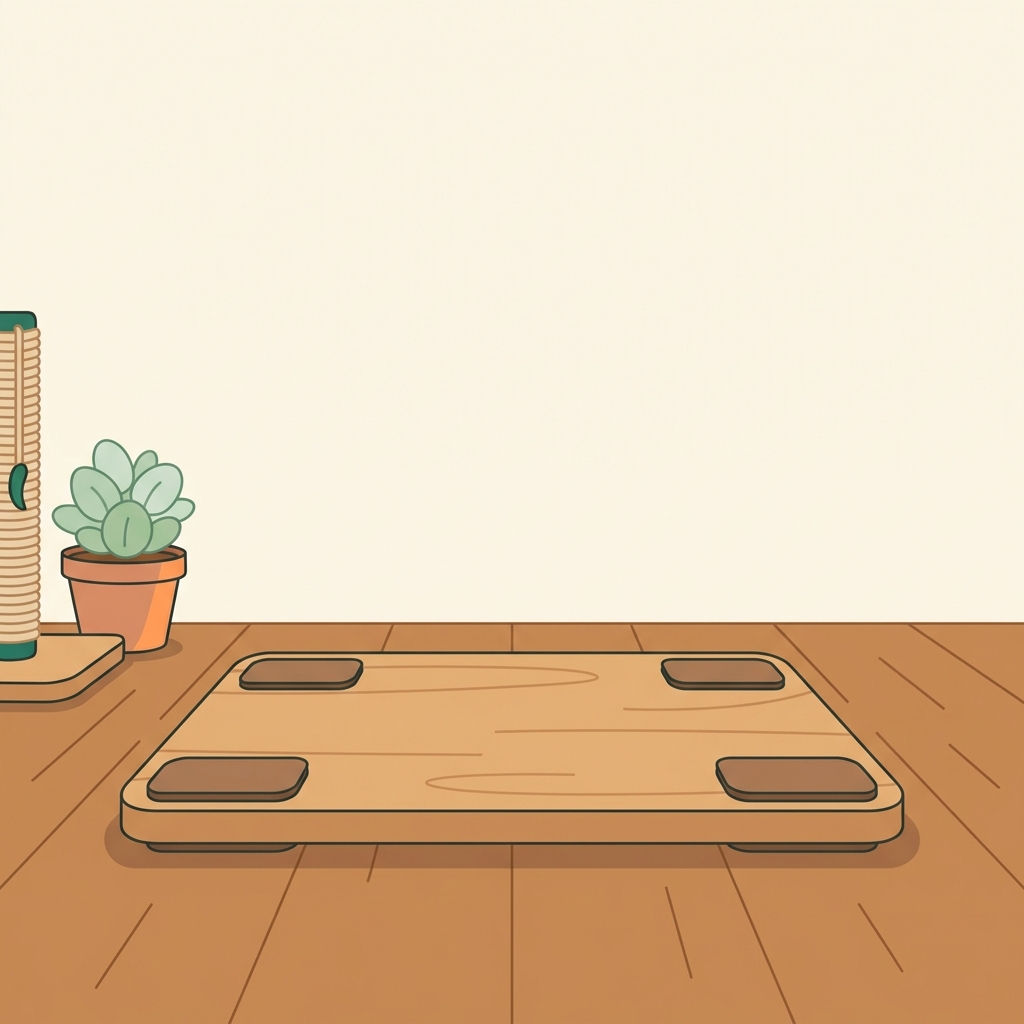
- On hard floors: thin rubber or non-slip furniture pads help stop sliding and vibration.
Repositioning also helps: place the tree in a corner or against a wall so it moves less under real use (Cat Tree Haven).
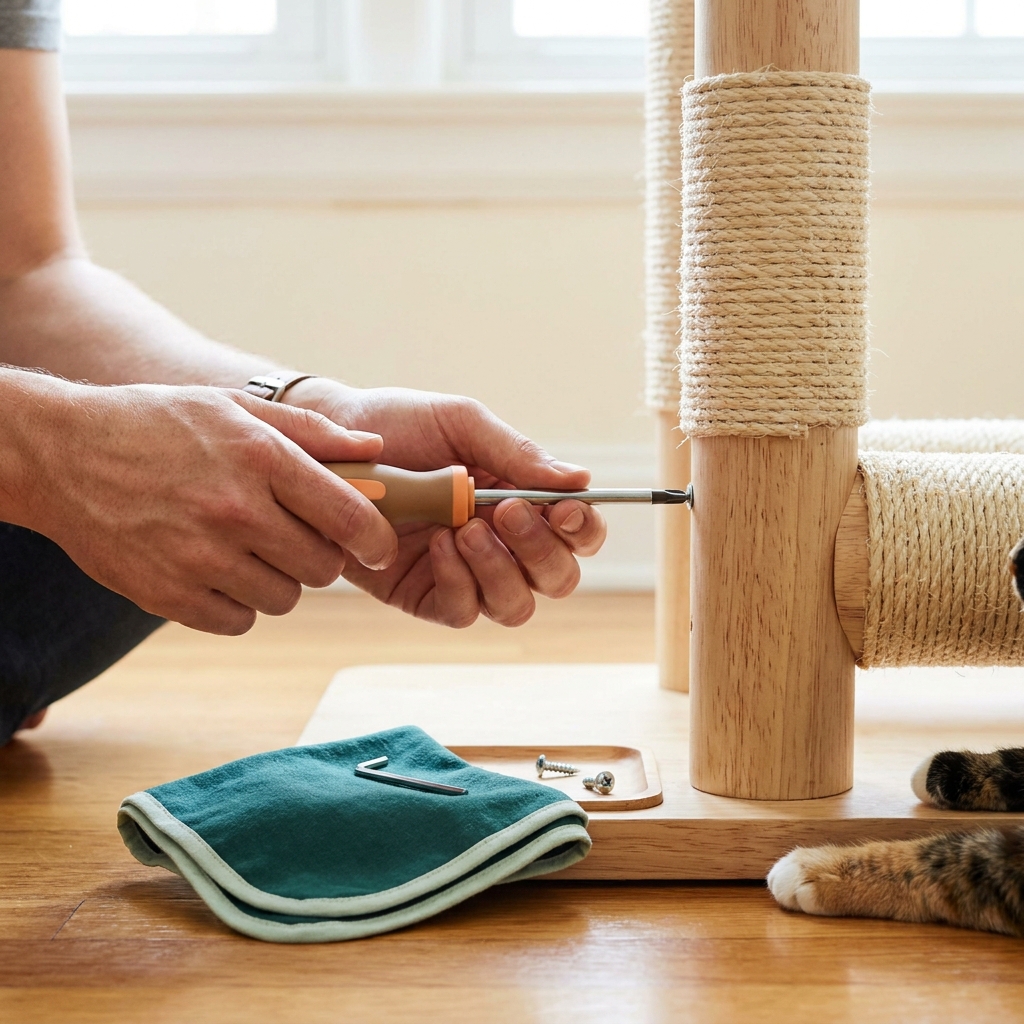
3) Re-test after each change
After each small correction, gently push at different heights. If the base now stays planted but movement shows up between two parts, focus on that connection next (SOPAPETS stability guide).
Fix the real source of the wobble
If a joint or connector moves
Stabilize the lower part with one hand and test the part above for relative movement. Reseat hardware in the correct order; check for a threaded insert that spins, stripped threads, a crushed tube, or splits. If a connection can’t reliably hold tension after correct reassembly, use the manufacturer’s replacement parts or support process. Do not rely on endless retightening or a wall strap to hide a damaged structural joint (SOPAPETS stability guide).
If the base rocks or the surface is uneven
Confirm the base sits fully flat and that no debris, rug edges, or transitions lift a corner. A grip pad will not correct a warped or cracked base board. Address base damage before moving on (SOPAPETS stability guide).
Anchoring options (when to use them)
For tall or top-heavy designs that still wobble after the fixes above, an anti-tip restraint can add a safety layer. Follow the product’s instructions, use compatible hardware, and fasten into suitable wall structure (for example, studs or appropriate masonry anchors). Do not substitute adhesive strips for mechanical anchoring, and don’t use a strap to compensate for a cracked base or a loose load-bearing joint (SOPAPETS stability guide).
If you’re weighing other vertical setups, see our installation safety checks for perches: Can a cat window perch break a window?
Maintenance that keeps wobble from coming back
- Schedule regular checks. Cat Tree Haven recommends checking and tightening fittings monthly, especially in the first few months (Cat Tree Haven).
- Reinspect whenever you notice new movement, noise, or a lean. There is no single universal interval; respond to what you observe (SOPAPETS stability guide).
- Reduce uneven wear from scratching by rotating the tree occasionally and providing additional scratching options, which can take pressure off high-use posts (Cat Tree Haven). For choices that cats actually like, read What type of scratching post do cats prefer?
When to replace instead of repair
Take the tree out of service and plan to replace it if you find a cracked or warped base, a permanent lean on a flat surface, a connector that spins or strips, a crushed or split structural part, or joints that become loose again immediately after correct reassembly (Cat Tree Haven; SOPAPETS stability guide).
Stabilize your cat tree: quick, safe steps
FAQ
Is a little movement normal?
Minor movement during active play can be normal, but consistent wobbling or a lean when the tree is not in use should be addressed promptly (Cat Tree Haven).
Should I just add weight to the base?
Not as a first step. Added mass doesn’t repair a loose joint or a warped base and can create new hazards. Diagnose sliding, rocking, and joint play first; use approved restraints only as instructed (SOPAPETS stability guide).
How often should I tighten the hardware?
Check regularly. Monthly checks are sensible early on, and recheck after any new movement, noise, or relocation of the tree (Cat Tree Haven; SOPAPETS stability guide).