The journal
Is hide-and-seek stalking play good for cats? How to do it safely
A practical answer on whether hide-and-seek stalking games help cats, with step-by-step play, safety limits, and when to stop.
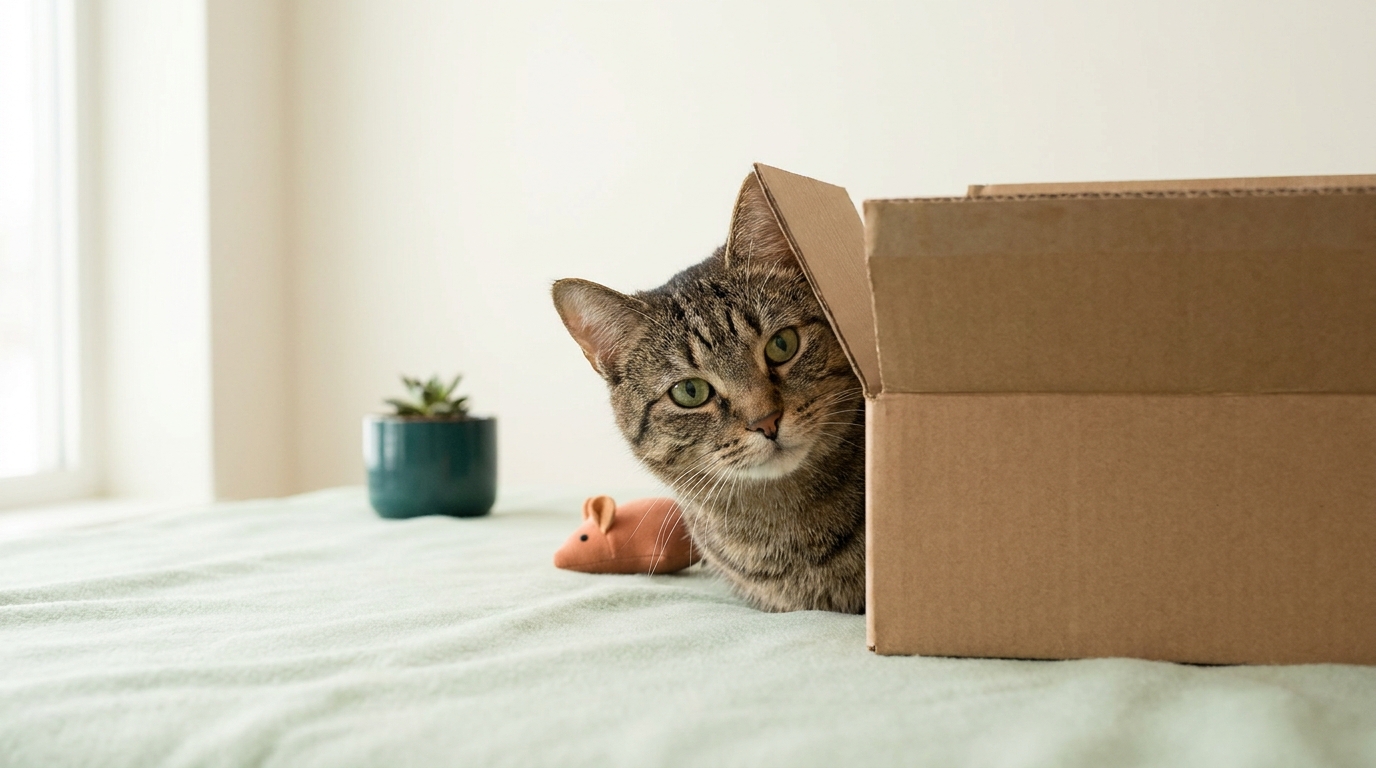
Short answer: yes, hide-and-seek stalking play can be good for many cats when it is toy-led, very short and the cat can choose to engage or leave at any time. Predatory-style play helps cats express natural hunting behaviors and can support wellbeing when done safely, with brief sessions and chances to “catch” the toy (Cats Protection: Cats and play).
What the game is, and why it can help
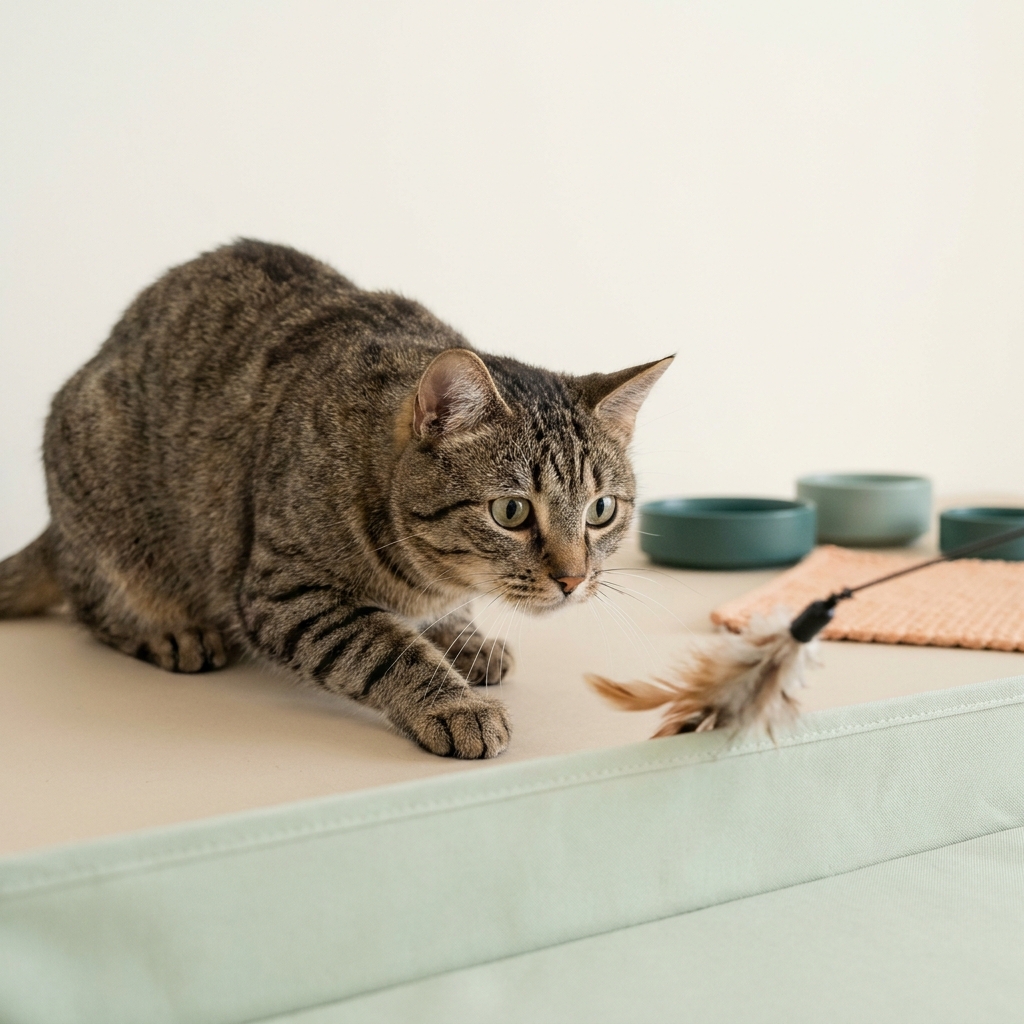
Hide-and-seek in this context means you use a toy (ideally a fishing-rod/wand toy) that briefly disappears behind a box, sofa edge or doorway, inviting your cat to search, stalk and pounce. Let the cat approach on their terms, and build in easy “wins” by allowing regular catches to prevent frustration (Cats Protection: Cats and play). Short, engaging play taps into the hunt sequence and provides an opportunity for normal hunting-style play and activity (Cats Protection: Cats and play).
Who should go gently or wait
If your cat is newly arrived and still settling, prioritize safe hiding places and predictable routines before starting higher-arousal games. Cats benefit from quiet spaces, elevated perches and hideaways that help them feel secure (Cats Protection: Preparing for a cat). If play becomes suddenly rough or aggressive when it didn’t before, speak to your vet first and then a qualified behaviourist as needed (Cats Protection: Cats and play).
How to play hide-and-seek with your cat: a simple run-through
- Pick your toy and space. Choose a fishing-rod style toy that keeps hands out of the action, and a quiet room with easy exits.
- Start visible and slow. Begin with the toy in view and moving gently, then briefly slip it behind a box edge or furniture corner.
- Invite, don’t chase. Pause and let your cat decide to stalk and pounce. Avoid pursuing or cornering them.
- Allow frequent catches. Let your cat catch and “kill” the toy at intervals to avoid frustration (Cats Protection: Cats and play).
- Keep it very short. One to two minutes is fine for many cats; stop while interest is positive (Cats Protection: Cats and play).
For a broader daily plan that balances active and calm activities, see How to entertain an indoor cat: a simple daily plan.
Safety and when to stop
- Use toy-led play. Avoid using hands or feet as prey; this can teach unwanted targeting of people (Cats Protection: Cats and play).
- Supervise string toys. Don’t leave your cat alone with toys that could be shredded, eaten, or that they could get tangled in (Cats Protection: Preparing for a cat).
- Give choice and escape routes. Provide clear paths and hiding places so your cat can disengage at any time. Freedom to move and access to refuges supports welfare (EveryCat Health Foundation review).
- Stop if play targets you. If your cat grabs ankles, bites or escalates, end the session and switch to toy-only play. Sudden changes in play intensity warrant a vet check (Cats Protection: Cats and play).
Common pitfalls
- Too long, too intense. Short bursts work best. Build pauses and catches into the sequence (Cats Protection: Cats and play).
- No “wins.” Never make the toy impossible to catch; that risks frustration (Cats Protection: Cats and play).
- Chasing or cornering. Keep it cat-led with clear escape routes and safe perches/hideaways available (EveryCat Health Foundation review).
Gentler alternatives if hide-and-seek isn’t a fit
Rotate lower-arousal options like rolling a soft ball in the open, stationary batting play, cardboard hideouts, and puzzle feeders. Puzzle-style feeding adds mental work and helps break mealtime monotony (EveryCat Health Foundation review). For step-by-step help, see Do cats enjoy puzzle feeders? Practical steps for calm introductions.
Quick checklist: run a safe hide-and-seek session
FAQ
How often should I include hide-and-seek? Older cats often enjoy three or four short play times a day, while younger cats may want many brief bursts. Very short games of one to two minutes are fine (Cats Protection: Cats and play).
Can I hide myself, not just the toy? Keep the hiding and chasing focused on a suitable toy. There is no need to hide yourself or surprise the cat; avoid jump-scares and games that make hands or feet the target.
Related guides
Optional equipment for this guide
A toy already enjoyed by your cat is enough. If you need another option, choose one that supports supervised play and is easy to put away.
As an Amazon Associate I earn from qualifying purchases. These are researched options, not hands-on test results. Check the exact size or model, current price and availability on Amazon.
| Product option | Fit and limits to check | Retailer |
|---|---|---|
| Product imageCat Dancer 101 interactive toy | An interactive toy to rotate into short, supervised sessions. Keep wire and cardboard parts away between sessions and replace damage; use the toy as prey rather than encouraging attacks on hands. | View on Amazon |