
The journal
How cats express emotions with their ears (and whiskers)
A clear guide to reading cat ear positions with whisker cues, plus a practical checklist for safe, calm interactions.

Cats express emotion through their ears by changing ear position and movement: forward and relaxed often signal interest, sideways or flattened can mean worry or stress, and rapid swiveling usually reflects vigilance. These ear cues are most reliable when read together with whiskers, eyes and overall posture, which indicate whether to approach, wait or give space (Cats Protection body language guide; Hill's Pet cat ear language).
What ear positions usually mean
Ears forward and upright
Often indicates curiosity or a relaxed, friendly mood, especially when matched with soft eyes and loose body posture (Cats Protection body language guide; Hill's Pet cat ear language).
Sideways or “airplane” ears
Common during nervousness or uncertainty. It’s a signal to slow down and give the cat choice and space (Hill's Pet cat ear language; Cats Protection body language guide).
Pinned back or flat
This can indicate fear, stress or defensive behaviour; interpret the whole cat and the context. Pause interaction and reduce stimulation until the cat relaxes (Hill's Pet cat ear language; Cats Protection body language guide).
Rapid swiveling and scanning
Usually reflects active listening and vigilance. Cats can rotate the outer ear (pinna) up to about 180 degrees to locate sounds, so quick movements often mean “what’s that?” rather than “pet me now” (Hill's Pet cat ear language).

Read ears together with whiskers
Whiskers add essential context to ear signals:
- Relaxed mood: ears forward and rounded; whiskers relaxed and closer to the face (Cats Protection body language guide).
- Curious/alert: ears forward and pointy; whiskers pushed forward (Cats Protection body language guide).
- Stressed/anxious: ears to the side or flat; whiskers forward or curving down, often with wide pupils and a tense body (Cats Protection body language guide).
For a broader overview of feline body language signals you can use every day, see our explainer How to say I love you in cat language.
A simple three-step check before touching a cat
- Note the ears: forward and relaxed vs sideways/flat vs rapidly scanning.
- Glance at whiskers and eyes: relaxed whiskers and soft eyes support approach; forward or drooping whiskers with wide pupils suggest caution (Cats Protection body language guide).
- Add context: new guests, loud sounds or handling can tilt the meaning toward stress. Let the cat choose contact when signals are mixed.
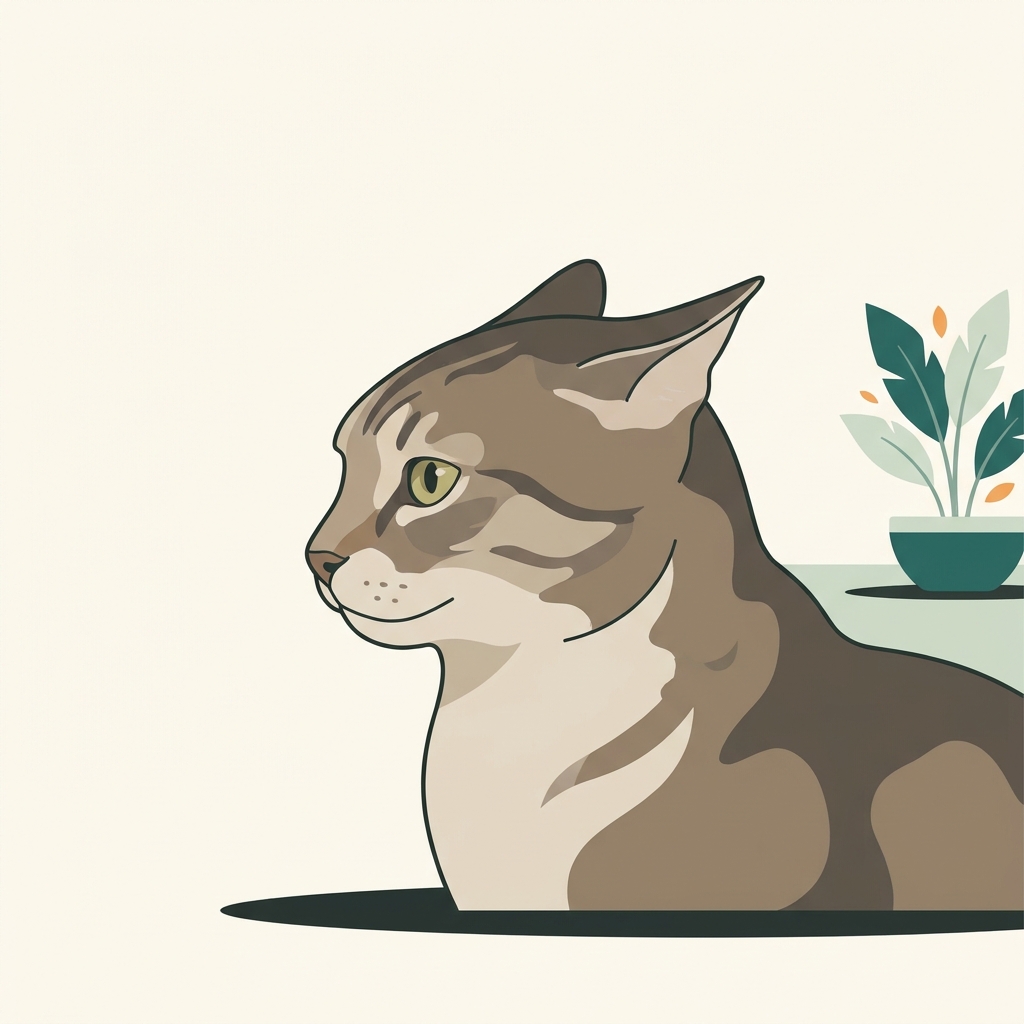
Worked example
Guest arrives: your cat’s ears go slightly sideways, whiskers push forward, pupils widen. This likely reflects uncertainty. Pause, ask the guest to sit quietly, and allow the cat to observe from a distance. If the cat’s ears return forward and eyes soften, let the cat initiate any greeting (Cats Protection body language guide).
How to respond safely
If ears and whiskers look relaxed
Approach slowly and let the cat sniff your hand. Many cats welcome contact when ears are in a neutral, forward position and the rest of the body is loose (Hill's Pet cat ear language).
Quick ear-and-whisker check before petting
If ears are sideways or pinned back
Pause, reduce stimulation and give space. Respecting this signal reduces the chance of escalation (Hill's Pet cat ear language).
If ears are rapidly swiveling
Scan for noises or movement in the environment. This is often sound-tracking and hunting focus rather than an invitation to touch (Hill's Pet cat ear language). If your cat frequently twitches ears and paws at them, contact your veterinarian to rule out ear problems (Hill's Pet cat ear language).
Common mistakes
- Reading ears in isolation. Context and other body cues, including whiskers, improve accuracy (Cats Protection body language guide).
- Assuming “forward ears” always mean friendliness. If pupils are wide and the body is stiff, forward ears can reflect arousal or stress. Wait and reassess (Cats Protection body language guide).
FAQs
Do cats really rotate their ears that much?
Yes. The outer ear can rotate up to about 180 degrees to locate sounds, which explains rapid ear movements during alert listening (Hill's Pet cat ear language).
Can ear position hint at illness or pain?
Possibly. Low, outward-facing ears alongside other changes can signal a cat isn’t feeling well; speak with your veterinarian if you notice this pattern or any sudden change in behavior (Hill's Pet cat ear language).
For stress-heavy moments like travel, see our step-by-step handling tips in How to get an unwilling cat into a carrier.

Practice the quick checklist in calm moments. When signals are mixed, let your cat decide; sudden behavior changes or frequent distress signals warrant a veterinary chat.